
Review

By Pixel Perfect
A Game Awards mic‑drop that actually shipped
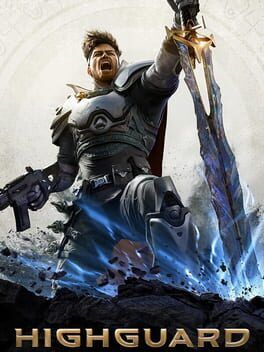
Highguard arrives carrying the sort of expectations you don’t buy with marketing. Being the surprise closer of The Game Awards put it on a pedestal, but the real weight comes from the pedigree: former Titanfall and Apex Legends leads now at Wildlight, promising another shot at movement‑driven FPS glory.
After spending launch day bouncing between live servers and the studio’s tightly produced “launch showcase” stream, one thing is clear. This is not some quick, investor‑chasing imitation. Highguard is a confident, sometimes brilliant PvP shooter that borrows the right lessons from its lineage while trying to carve its own niche as a “raid shooter.” What’s less clear is whether that niche is big enough to sustain it.
Movement: Respawn in everything but name
The clearest Titanfall/Apex DNA shows up the second you touch a controller or mouse. Highguard’s Wardens snap into a fluid, low‑latency sprint that transitions into slides, mantles, and lateral dodges with almost no friction. There’s no wall‑running here and no double‑jump, but the designers use subtle assists and generous climb angles to keep you moving more often than not.
Map geometry is built around this speed. Ramps exit into high‑ground overlooks, zip‑line equivalents bridge major objectives, and curved ledges catch you mid‑slide rather than clipping you into an awkward stop. It never feels as acrobatic as Titanfall 2 at its best, but it absolutely carries that Respawn emphasis on momentum, readable silhouettes, and clear traversal lines. You can tell the same kind of people who obsessed over bunker entrances on Apex’s World’s Edge are placing jump‑pads and grapple routes here.
The launch showcase leaned hard into this, with the devs ghost‑running ideal routes in a “shield run” segment, chaining slides and grapples through a canyon before crashing a mount straight into an enemy base. In live matches, you don’t hit that level of flow right away, but the ceiling is there. The result is a movement model that feels crisp and expressive in the hands of veterans without being utterly hostile to new players.
Gunplay: Classic Respawn snap, new fantasy dressing
Guns in Highguard feel like they were built by people who know exactly how an R‑301 should kick. Recoil patterns are learnable, bloom is restrained, and time‑to‑kill sits comfortably between Apex’s armor‑heavy duels and Call of Duty’s faster lethality. Headshots matter, but they aren’t everything, and weapon audio has that same sharp clarity that lets you parse fights by sound before you see them.
The twist is the arcane‑fantasy framing. You’re not firing an assault rifle so much as an etched “arc repeater” or a hand‑cannon style sidearm that channels sigil‑charged rounds. On paper that sounds like a Destiny knockoff. In practice, it mostly works because the underlying numbers feel grounded. Projectile speeds are readable, bullet magnetism is modest, and hit‑reg at launch is, crucially, not a disaster.
The Titanfall influence emerges in how firefights reward repositioning. Abilities exist, but they are closer to Apex’s utility tools than hard “I win” buttons. One Warden class drops a short‑lived bulwark that deflects projectiles, another can snap to an enemy’s last known position in a shadow‑step. They create windows to re‑engage, but your aim and your movement still do the real work.
During the launch showcase, Wildlight walked through a multi‑crew raid, pausing to highlight “combat readability.” It sounded like marketing boilerplate until you see it in action. Enemy silhouettes are strongly contrasted against the mythic backdrops, muzzle flashes are legible even when abilities are popping, and hit indicators stay clean. You’re juggling a lot of information in a raid lane, but the core shooting never gets lost.
Maps and mode: The PvP raid fantasy actually has teeth
Highguard brands itself as a “PvP raid shooter,” which initially sounds like another way to say objective‑based arena. The truth is more specific and more interesting. Matches revolve around the Shieldbreaker, a movable raid macguffin that crews brawl over across a lane‑based map. Secure it in the field, escort it through contested territory while defending against both enemy players and environmental hazards, then smash it into the enemy stronghold to open up a final base‑destruction phase.
The Titanfall/Apex heritage shows up in how the maps are layered rather than purely wide. Think three‑lane structures with heavy verticality and cross‑lane sightlines, reminiscent of Titanfall 2’s best multiplayer spaces. There’s always a flanking stairwell, always a low tunnel, always a rooftop route that rewards a squad willing to risk the high ground.
Wildlight’s launch showcase did a good job communicating this layout logic, pulling back the camera for overhead flythroughs, then dropping to first person to show how those routes interlock. In live play, that design mostly holds up. Early games feel chaotic and noisy, but as you learn the maps you start treating them like raids: here is the chokepoint where a bulwark Warden anchors, here is the tempo corner where mounts can crash through to break a stalemate, here is the backdoor route for your designated base‑breaker.
There are pain points. Some stronghold interiors are visually busy and cluttered, hurting target acquisition in hectic final pushes. And while the larger arenas flow nicely, a couple of the more experimental outdoor maps balloon into frustrating mount‑chase marathons when crews disengage rather than contest. But the overall impression is of a map team that understands how to support skillful movement and readable engagements.
The free‑to‑play model: surprisingly sane, with one big asterisk
Highguard’s monetization was a giant question mark going into launch. Free‑to‑play competitive shooters have burned this audience one too many times. The good news: Wildlight’s launch implementation is, at least on day one, restrained.
There are no stat perks on paid gear. Wardens, their abilities, and their core weapons are all available out of the gate. What you’re paying for looks to be cosmetics and progression accelerators. The primary spend hooks are a seasonal “Warden’s Oath” battle pass, a rotating premium shop with skins and finishers, and optional XP boosters that unlock cosmetic tracks faster.
Crucially, the studio avoided energy systems or match‑ticket limits. If you want to grind ranked Shieldbreaker runs all night, nothing stops you. Daily and weekly challenges layer on top for extra currency, but they are broad enough that you’re rarely forced into playing against your instincts just to clear a task.
The asterisk is pricing and pacing. Cosmetic bundles are pitched at the now‑standard premium level, with some legendary Warden skins verging on full indie game prices. The battle pass progression rate, at least on launch day, feels tuned slightly slow to push players toward XP boosts. It is nowhere near the aggressive grind of something like early Halo Infinite, but the “just one more level” drag is noticeable.
From the launch showcase, it is obvious Wildlight wants to sell the idea that this is a living platform: a year one roadmap teased new regions, additional Warden archetypes, and recurring raid‑like events. Whether the current monetization stays this measured once that live‑service pressure ramps up is the real long‑term concern.
Live “launch showcase” as a statement of intent
As an actual broadcast, the Highguard launch showcase was efficient and refreshingly light on fluff. The structure mirrored a direct‑style presentation: a tight cinematic recap of the Game Awards trailer, a guided walkthrough of a full Shieldbreaker match, quick segments on movement and mount design, then a monetization and roadmap overview.
What mattered most was what Wildlight chose to emphasize. There was almost no time spent on esports ambitions or influencer tie‑ins. Instead, the focus was on mechanical clarity and teamplay fantasy. Developers talked through why they reduced hard crowd control, how they built encounter spaces to avoid instant death crossfires, and which readability lessons they carried over from Apex. It played like a message to lapsed Titanfall fans: “We care about how this feels minute to minute.”
There was some obvious stage‑managed friction missing. Enemy crews in the demo made mistakes at perfect cinematic beats, and you did not see the awkward spawn traps or stomps that sometimes crop up in live matches. Still, paired with day‑one experience, the showcase felt honest in its broad strokes. What you saw is roughly what you get.
Can Highguard survive the shooter pileup?
The question hanging over Highguard is less “Is this good?” and more “Why this instead of everything else?” Modern players already juggle Apex, Valorant, Fortnite, Call of Duty, Destiny, and a rotating cast of smaller favorites. Highguard attempts to answer that by occupying a middle ground that none of those quite touch.
The PvP raid framing gives matches a narrative arc that battle royales and round‑based tactics shooters rarely achieve. Crews remember the time they yoinked a Shieldbreaker with seconds left, or when a desperate mount push cracked a base that seemed impregnable. The mix of macro objectives and tight micro skirmishes scratches both strategy and twitch aims.
That uniqueness is also a risk. Highguard is at its best when six players commit to its structure and learn its maps, but the genre space it occupies is more demanding than dropping into a battle royale with strangers. Solo queuing is volatile; a single teammate ignoring the objective can ruin a run. Apex and Valorant survive that via sheer cultural momentum and massive player pools. Highguard has neither yet.
A lot will ride on Wildlight’s ability to respond quickly. Balance patches, new maps that soften the learning curve, better in‑game teaching tools for Shieldbreaker flow, and strong anti‑cheat support will all be essential. The launch showcase hinted at a studio ready for that grind, but promises on a stream are easy. Delivering in an oversaturated market is not.
Verdict: A sharp debut that earns its pedigree
Highguard does not feel like a lazy monetization vessel or a hollow nostalgia act from ex‑Respawn devs. It feels like a real attempt to synthesize the best parts of Titanfall and Apex movement and gunplay into something structurally new. The maps are smartly built, the shooting is satisfying, and the free‑to‑play model is, for now, fairer than many competitors.
Whether that is enough to carve out lasting space beside today’s entrenched giants will only become clear over the coming months. For launch day, though, Highguard justifies its Game Awards spotlight and then some. If you have ever loved the way a Respawn shooter feels in your hands and you are willing to learn a more involved objective mode, this is absolutely worth installing.
If you are looking for a mindless queue‑and‑frag with no investment, Highguard may feel like homework. For everyone else, it is one of the most promising new competitive shooters to arrive in years, and a strong foundation for whatever Wildlight builds next.
Final Verdict
A solid gaming experience that delivers on its promises and provides hours of entertainment.