
Review

By Pixel Perfect
From Lonely Skirmishes To Actual Battles
At launch, Highguard’s 3v3 format felt like it was constantly fighting against the promise of its own design. Maps were built with long sightlines and flanking lanes, objectives encouraged spread-out play, and the hero kits clearly wanted layered crossfires and overlapping utility. Then you’d load in, see only two blue arrows on your HUD, and realize just how thinly three bodies get stretched across that space.
The result was a pacing problem more than a pure balance one. Too many rounds were defined by running between objectives or rotating after a wipe instead of trading shots. If your two random teammates played timidly or chased duels off-objective, you spent long stretches jogging through empty lanes, waiting for the match to actually start feeling like a firefight. The 3v3 format technically worked, but it rarely felt alive.
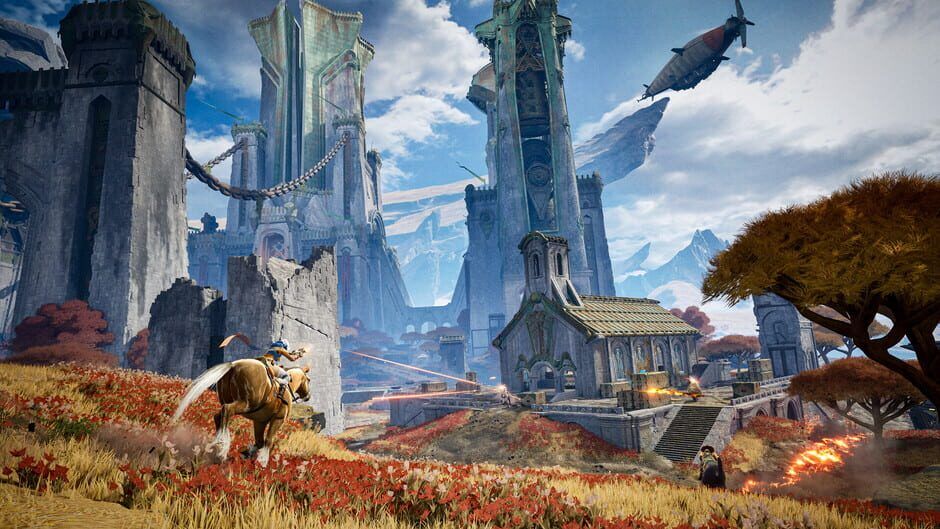
The new 5v5 limited-time mode immediately changes that baseline. The same maps and Conquest-style rules are in play, but the extra four bodies on the field fill in the dead air the launch version kept tripping over. Rotations are shorter in practice because someone is almost always already near the next hot spot. Fights break out organically without needing a full-team commit every time, and there is usually a skirmish to join within seconds of respawning.
Highguard finally feels like it has enough players to match its own geography.
How 5v5 Changes The Flow
With ten players instead of six, Highguard’s fundamentals snap into sharper focus. Sightlines that used to be barren for half a round now have a sniper holding an angle or a support quietly anchoring a lane. Flanks stop being coin-flip solo hero plays and become coordinated pushes, because you can send two or three players wide without completely emptying the point.
Time-to-action is noticeably shorter. In 3v3, losing a fight often meant a full reset, a long run, and then a cautious re-entry to avoid instantly donating more tickets. In 5v5, someone almost always survives to contest or at least stall, which keeps the frontline closer to the objectives and turns more engagements into rolling brawls instead of isolated duels. Matches feel less like rounds of stop-start chess and more like a continuous tug-of-war.
The flip side is chaos. When ultimates chain together and abilities start overlapping, 5v5 can border on sensory overload. Choke points that were readable in 3v3 can devolve into messy ability soup, particularly on tighter sections of the Soul Well base and some of the interior control rooms. But crucially, that chaos works in Highguard’s favor. This is a hero shooter about flashy movement, timing big cooldowns, and exploiting disorder. The earlier problem was too much quiet, not too much noise.
Importantly, 5v5 also unlocks compositions that simply never made sense in 3v3. Running double backline or a dedicated intel-focused hero felt like trolling when you only had three slots. Now you can actually anchor with a defensive specialist, field a real entry duo, and still have a flex slot for utility. Hero overlap finally starts to matter, and the game’s roster looks more like a toolbox and less like three mandatory roles awkwardly jammed together.
Matchmaking: Does 5v5 Help The Early Pain Points?
Highguard’s first days were rough on matchmaking. The small team size magnified every bad teammate and every mismatch. In 3v3, a single weak link or AFK didn’t just hurt your odds, it essentially ended the game. If one player refused to play the objective, your team lost two-thirds of its functional lineup. Solo queue felt brittle, and a lot of early negative reviews were really reviews of how punishing 3v3 is with randoms.
5v5 doesn’t magically make the matchmaker smarter, but it does blunt its worst edges. You can carry a weak link in 5v5 in a way that just isn’t possible with three players. There is more room for role compression and recovery. If one teammate is feeding, another can quietly take over their responsibility without completely abandoning their own. A single clutch play also has more opportunities to matter, because there are more fights per match and more windows to swing momentum.
Queue health benefits too. In the first weekend of the mode, activity spikes meant faster queues in the 5v5 playlist than in the original 3v3, particularly during off-peak hours. When a temporary mode is pulling players away from your supposed flagship format, it is a pretty clear signal of where the community’s preference lies. Steam discussion threads and early community polls echo the same sentiment: if you are queuing solo or duo, 5v5 is where you go to actually play the game instead of gambling on perfect teammates.
That said, 5v5 still inherits some structural issues. Highguard does not yet do a great job of role distribution or MMR-based team balancing for casual queues, so you occasionally get lopsided stomps where one side has three high-skill aimers stacked together. The larger team size makes those stomps slightly less brutal than in 3v3, but they are still present. 5v5 fixes the fragility of individual matches more than it fixes the underlying matchmaking system, which is going to need targeted work in future patches.
Pacing: Faster, Busier, And Finally Closer To The Pitch
Pacing was the loudest and most consistent complaint at launch. Reviewers and players alike called out the long stretches of downtime, the overly cautious resets, and the way objectives could feel deserted despite only needing a handful of people to contest them.
In 5v5, that criticism mostly evaporates. Rounds are busier from the opening seconds, with both teams able to send a scouting duo forward while keeping a serious contest presence at the first capture point. Because there are simply more bodies to throw around, the game can sustain staggered spawns and partial wipes without collapsing into a full regroup every time someone dies.
The ticket economy also feels healthier. In 3v3, losing two players at once often meant conceding a huge chunk of progress because the remaining solo player either fed trying to delay or backed off entirely. With five, staggered deaths and partial trades are far more common, which keeps the scoreboard moving in smaller, more granular increments. You see more back-and-forth swings, more overtime scrambles, and fewer rounds where one snowball push decides everything.
There are pacing downsides. Matches can occasionally run a bit longer when both teams are evenly skilled and capable of constant contesting. The midgame sometimes turns into extended, scrappy fights that blur together. But compared directly to the sluggish, empty stretches of the 3v3 launch format, this is a dramatic improvement. Highguard finally resembles the energetic, continuous conflict it was marketed as.
Does 5v5 Break What 3v3 Did Well?
For all its problems, 3v3 did have strengths. It offered extreme clarity. Every pick mattered, every ultimate was a major event, and mispositioning was punished instantly. When both teams were coordinated stacks, the mode produced tense, surgical rounds that felt closer to a tactical arena shooter than a traditional hero FPS.
5v5 inevitably dilutes some of that razor sharpness. Solo picks are less round-ending, and the noise of extra abilities can obscure the clean readability that early defenders of 3v3 loved. If you are part of the small crowd that genuinely prefers tight, low-player-count competitive formats, this test mode will probably feel like a step toward the more familiar hero shooter meta and away from Highguard’s original niche.
The key question is whether that trade is worth it. Given Highguard’s live-service ambitions and dependency on a healthy player base, the answer is yes. The moments where 3v3 shines are too rare and too dependent on premade stacks. In the real world of solo queue, public matchmaking, and variable team quality, 5v5 simply produces better matches more often. It lowers the floor on how bad a random game can feel while raising the average level of action and engagement.
Ideally, the studio keeps both identities alive in the long term. A ranked or tournament-focused 3v3 mode for organized play could coexist with a 5v5-centric casual ecosystem. Right now, though, the limited-time status of 5v5 makes the whole thing feel like an audition for that future.
Verdict: A Mode That Feels Suspiciously Like The Real Game
Highguard’s 5v5 limited-time mode is not a small tweak. It is a re-framing of what the game wants to be in everyday play. It directly addresses the two biggest launch complaints and largely succeeds.
Matchmaking feels less brittle because a single teammate’s mistakes no longer decide entire rounds on their own. Pacing is dramatically improved, with more constant action, more overlapping fights, and fewer long, lonely rotations. Hero variety finally has room to breathe. The game’s maps and abilities suddenly make sense at a glance, as if the missing puzzle pieces were other players all along.
There are still problems. The underlying matchmaker needs smarter role and skill balancing. Some choke points get too noisy, and a minority of players will miss the surgical clarity of 3v3’s best matches. But after spending time in the test playlist, it is hard to go back. 3v3 now feels like a curated side mode for specific tastes, while 5v5 feels like the form Highguard was always secretly built for.
If Wildlight’s goal was to prove that they are listening and willing to move fast on foundational issues, this experiment does that. More importantly, it makes Highguard genuinely fun to queue up again, which is something the launch version struggled to guarantee. Whether the studio admits it or not, this limited-time mode plays like a preview of the game’s real future. It absolutely should not stay temporary.
Final Verdict
A solid gaming experience that delivers on its promises and provides hours of entertainment.