
Review

By Night Owl
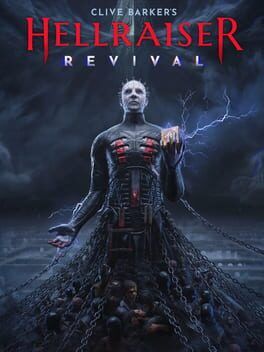
Image: IGDB
Store links: Clive Barker's Hellraiser: Revival on Steam
The hook cuts deep, then the systems start to fight back
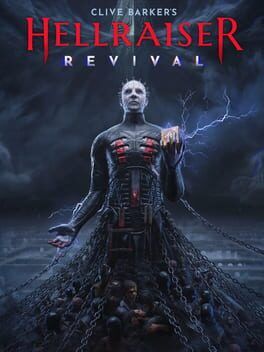
Clive Barker's Hellraiser: Revival arrived on Oct. 8, 2026, and the review picture is already split in a way that tells you almost everything about the game. Metacritic lists it as “Mixed or Average,” with its PlayStation 5 page drawing from 24 critic reviews at the time of the listing provided, while GameSpot lists launch platforms as Nintendo Switch 2, PC, PS5, and Xbox Series X|S. The tension is clear: reviewers broadly credit Revival with understanding the visual and thematic vocabulary of Hellraiser, but many also describe a game whose combat, pacing, and technical rough edges drag against that fidelity. That makes this Hellraiser Revival review less a question of whether the license has been respected, and more a question of whether the horror survives being turned into a modern first-person action survival game. On that front, Revival is strongest when it lets the Labyrinth breathe, when the audio narrows the room around you, and when the Genesis Configuration feels like a dangerous ritual object rather than a weapon wheel gimmick. It is weakest when it behaves like a scrappy double-A shooter trying to pad out its campaign with familiar systems. One practical note before going further: the public credits are inconsistent across the supplied sources. Metacritic lists Saber Interactive as developer. Creative Bloq describes Saber Interactive as publisher and Boss Team Games as developer. Postmode credits Saber Serbia and Saber Bosnia & Herzegovina. I cannot resolve that conflict from the provided material, so this review refers to the game itself and attributes development credits only where the cited source does.
A Barker story built from desire, damage, and bad bargains
The confirmed premise, as described across PCGamesN, Push Square, Eurogamer, Metacritic, Creative Bloq, and Slant, casts the player as Aidan, whose girlfriend Sunny is taken into the Cenobites' Labyrinth after the Genesis Configuration opens the wrong door during an intimate encounter. Aidan is then drawn through the Scarlet Church, a cult devoted to the Cenobites, while trying to reclaim Sunny from a realm where pain and pleasure have become inseparable. PCGamesN describes a bargain with Pinhead, while Eurogamer notes that Doug Bradley briefly returns as the Hell Priest, a detail that matters for long-time fans who still measure the series against Barker's novella The Hellbound Heart and the early films. The writing is at its best when it accepts the discomfort of the source material. PCGamesN warns that the game deals with sadomasochism, BDSM, abuse, substance abuse, and extreme violence, and that warning should be taken seriously. This is an 18-plus horror game built around bodies being opened, worship being corrupted, and intimacy turning predatory. The adaptation earns credit for not sanding that down. Creative Bloq calls the story an original one inspired by Barker's book and places it after the first film, while Eurogamer argues that the game reaches back toward Barker's literary themes rather than the sillier later-film version of Pinhead as horror mascot. The caveat is emotional. Eurogamer found Aidan and Sunny's relationship immediately toxic enough to make the rescue plot difficult to invest in, and Slant similarly points out that the game's frank sexuality can become awkward when staged through stiff in-engine bodies. Revival respects the franchise's appetite for transgression, but respect and dramatic precision are different things. Fans looking for a Clive Barker Hellraiser Revival that understands the texture of the mythos will find plenty to admire. Players looking for a clean, affecting love story may find that the game is too abrasive, too blunt, or too uneven to make Sunny's fate land with full force.
The Labyrinth is the reason to keep walking
Atmosphere is Revival's strongest case for itself as horror beyond the license. Push Square says the game is filled with brutal gore, sadomasochistic imagery, and “pin-perfect” recreations of elements from the films, while also singling out the Labyrinth levels for lighting, visual invention, and trippy puzzles. Creative Bloq praises a visually arresting, Brutalist-inspired Labyrinth and calls it unnerving and gorgeous. Postmode highlights detailed character models, cadaver-laden sets, visual effects, and grisly spectacle as the game's most compelling features. Those comments point to the same strength: Revival knows how to build a room that feels spiritually diseased. It uses flesh as architecture, ritual as decor, and lighting as a blade. The best horror moments described in the source material are intimate rather than loud. PCGamesN opens its review around a small cubic room, footsteps growing louder, silence pressing in, and the player's own anticipation becoming the scare. That is where Revival sounds most potent. It is not relying only on the Cenobites as recognizable icons; it is using space, sound, and waiting to make the player complicit in the dread. For a survival horror audience, that is the difference between licensed set dressing and actual pressure. Still, the imagery has limits. Eurogamer argues that Revival's horror often becomes a grim procession of fused and rended flesh rather than carefully orchestrated scares, and Slant says the constant corpse sculptures and bodily excess can become numbing. That criticism is important because Hellraiser horror depends on sensation becoming revelation, not wallpaper. When every hallway screams, the player eventually stops flinching. Revival's best stretches, especially in the Labyrinth, understand restraint through timing and spatial unease. Its weaker stretches confuse volume for escalation.
Combat applies pressure, but often in clumsy hands
As a Hellraiser game review, Revival is hardest to score in combat because the reported pieces are interesting while the execution sounds inconsistent. Eurogamer describes it as a fairly standard FPS foundation, with an early stealth flirtation giving way to confrontation and an arsenal that grows from pistol to shotgun, revolver, SMG, and beyond. Push Square says combat is not bad in itself and notes that armoured cultists forced a different approach because blades could not harm them. Postmode identifies the Genesis Configuration as the best part of encounters, describing powers that let Aidan carry and throw fireballs, rip sharp objects from walls, and perform health-restoring takedowns once enemies are weakened. On paper, that is exactly the right idea. The puzzle box should feel forbidden, useful, and costly. It should make violence feel ritualized. The problem is that several sources say the surrounding action cannot consistently support it. Postmode calls the guns weightless and the melee awkward, arguing that rooms full of enemies become rote because of lacklustre gunplay and boring stealth. Push Square points to inconsistent weapons, clunky platforming, and baffling level design, including a wave-based sequence compared to Call of Duty Zombies that did not work for the reviewer. Creative Bloq lists stiff controls and dragging boss fights among its negatives. Slant frames the moment-to-moment loop in familiar survival horror terms: scrounging drawers for bullets and crafting materials, using fragile melee weapons, repairing gear, and solving environmental puzzles to open cabinets. Those elements can create survival pressure when scarcity and threat align. In Revival, they appear to create friction as often as dread. The best encounters seem to happen when a single enemy type changes your habits, when the Genesis Configuration interrupts ordinary shooting, or when the environment itself is hostile. The worst moments sound like filler combat arenas wearing Cenobite leather. For players who need horror combat to feel as polished as Resident Evil 4 or as oppressive as The Evil Within, Revival is likely to feel jagged. For players who can forgive blunt gunfeel in exchange for gruesome abilities and enemy spectacle, the pain may be tolerable.
Puzzles work when they serve the nightmare, not the checklist
The puzzle design is where Revival most clearly shows the better game inside the louder one. Push Square praises the Labyrinth's puzzles as fun and disorienting, and calls out a sequence reminiscent of P.T. as one of the ideas that sticks. Postmode compares exploration to contemporary first-person Resident Evil, with an attaché-style inventory, save rooms with storage, object inspection, and compact environments that ask the player to move back and forth with new information. Creative Bloq also sees BioShock and Condemned DNA in the structure, while Eurogamer notes Resident Evil 4 echoes in the presence of an old woman selling upgrades. None of those comparisons suggest a revolutionary design, but they do suggest a functional survival horror grammar. The question is whether Revival uses that grammar to express Hellraiser's specific unease. When puzzles are placed in morphing Labyrinth spaces, when they reflect Aidan's past with Sunny, or when they make the Genesis Configuration feel like something being solved at spiritual cost, they appear to give the game a purpose beyond combat. When they exist to unlock cabinets, stretch routes, or justify another resource loop, they become familiar chores with sharper decoration. PlayStation Universe's Metacritic excerpt says the more focused, linear areas are where the concepts and scares get room to work, while some explorable sections add bloat without substance and include simple enemy AI. That matches the broader pattern. Revival is a better horror game when it narrows the corridor and sharpens the question. It is less convincing when it opens into gamey spaces that expose the machinery. Push Square reports a roughly eight-hour run to credits, which sounds like a healthy length for this kind of campaign. The risk, based on the reviews provided, is not that Revival is too short. The risk is that its strongest ideas have to share that runtime with systems that do not understand the same nightmare.
Performance and platform guidance for horror buyers
For players treating Revival as a PS5 horror game 2026 release, the platform guidance is cautious. Push Square says the game can look stunning on both PS5 and PS5 Pro, but also says it feels lower-budget in play. Creative Bloq's PS5 review lists Unreal Engine 5 and names PS5, Xbox Series X|S, Nintendo Switch 2, and PC as formats. Postmode is the most specific technical warning among the provided sources, reporting texture pop-in, a few crashes, and lost progress on PS5 Pro in Performance Mode. That is not enough evidence to declare the game broken across platforms, but it is enough to advise risk-sensitive buyers to wait for patch notes or broader player reports before purchasing on day one. Metacritic also notes that user reviews were not available until Oct. 9 at 12:00pm PST, so early audience consensus was still forming in the listing supplied. No price, edition breakdown, upgrade path, or PC requirement information was included in the source material, so I will not invent it here. The cleanest advice is audience-based. If your first priority is a faithful, adult, visually committed Hellraiser adaptation, Revival sounds like the rare licensed horror game willing to be ugly, erotic, sacrilegious, and sincere. If your first priority is tight shooting, responsive melee, technical polish, or elegant encounter design, the current review record gives several reasons to wait. Horror fans with a high tolerance for double-A roughness will likely get the most from it. Clive Barker devotees who have waited years for a game to take this world seriously may find the flaws easier to forgive. Everyone else should understand that the hooks go in unevenly.
GameLoop verdict
Hellraiser: Revival delivers meaningful horror when it lets atmosphere, sound, bodily dread, and puzzle-box ritual lead the experience. It understands the appeal of Barker's world better than many licensed games understand their source material, and the Labyrinth appears to be the campaign's strongest argument for enduring its harsher edges. The problem is that those edges are not always intentional. Combat pressure comes and goes. Puzzle design ranges from evocative to routine. Technical reports on PS5 Pro include crashes and lost progress. The result is a fascinating, faithful, uneven horror game whose pleasures and pains are tangled in ways the Cenobites might appreciate, though paying customers may be less philosophical. Score: 7.0 out of 10.
Final Verdict
A solid gaming experience that delivers on its promises and provides hours of entertainment.