
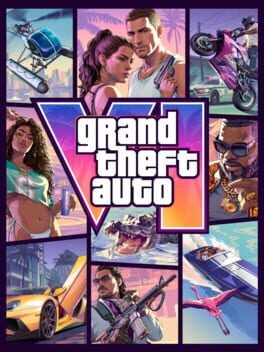
Review
By Story Mode
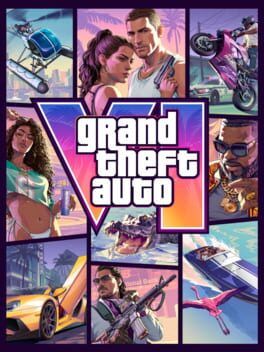
Image: IGDB
A launch too large for ordinary expectations
Grand Theft Auto VI arrives under a level of scrutiny few games could survive. IGN’s public game listing gives the initial release as November 19, 2026, while multiple outlets published reviews on November 18, including PlayStation LifeStyle on PS5, TheXboxHub on Xbox Series X, GameSpot, The Guardian, Console Creatures, MonsterVine, and GamingBible. The shared critical picture is clear: Rockstar’s return to Vice City and the wider state of Leonida is being treated as a technical and design landmark. The tension is whether that landmark is also a better game, mission to mission, hour to hour, than the myth surrounding it.
On the evidence available, this Grand Theft Auto VI review lands on yes, with some grounded reservations. The strongest case for GTA 6 is not scale by itself. It is the way Rockstar ties scale to systems: robberies that can spiral, police pressure that changes the cost of small crimes, vehicles that have become less disposable, and a world dense enough that several reviewers describe being pulled away from the critical path for reasons that sound incidental until they become the point. GameSpot framed Leonida as a place that functions with or without the player. Console Creatures called it overwhelming at first, citing a map said to be three times the size of GTA 5’s Los Santos, plus underwater spaces. That scope could have become bloat. The best reports suggest it becomes texture.
The caveat is that this is still recognizably a Rockstar open world. GameSpot notes that GTA 6 retains the broad structural grammar of the series: drive somewhere, meet someone, collect or deliver something, and end up in a chase or gunfight across land, sea, or air. The achievement is that the old grammar has been staged with more reactive friction, more cinematic control, and a pair of protagonists who give the chaos emotional stakes. That does not make every player immune to fatigue. It does make the launch hype easier to defend.
Jason and Lucia turn the crime spree into a relationship story
The clearest shift from GTA 5 is tonal. PlayStation LifeStyle says GTA 6 leads with optimism rather than its predecessor’s cynicism, and places that shift in Jason and Lucia, the criminal couple at the center of the story. The Guardian describes Jason as ex-military, steady, and spare with words, while Lucia is introduced as a lifelong car thief whose prison release pulls the pair into a fragile attempt at stability. IGN’s summary says an easy score goes wrong, pushing them into a criminal conspiracy across Leonida and forcing them to rely on each other.
That partnership changes the rhythm of the campaign. PlayStation LifeStyle reports that players can switch between Jason and Lucia with a couple of button presses, call the other partner to meet at a target location, and take part in many open-world activities as a duo. The same review mentions a relationship strength indicator, shown as a heart in an unobtrusive UI, built through moments that include dates, shopping, yoga, and downtime together. Those details matter because they make the game’s quieter beats do mechanical work, not merely decorative work.
Several sources describe the story as unusually intimate for Grand Theft Auto. MonsterVine says the reviewer worried about the characters’ safety during major jobs and felt the emotional journey linger after finishing. The Guardian goes further, calling the game a love story inside Rockstar’s depraved world. That is a meaningful distinction for a series often remembered for satire, excess, and carnage. GTA 6 still has all of that, according to every available review excerpt, but its dramatic center is less about three criminals clawing at each other and more about two people trying to survive long enough for loyalty to mean something.
For players coming to this GTA 6 PS5 review or GTA 6 Xbox review looking for narrative stakes, the answer is straightforward: Jason and Lucia are not a cosmetic dual-protagonist gimmick in the source material. They appear to be the emotional engine that lets Rockstar stage its biggest world without losing the line of sight between one job and the next.
Leonida is dense because it appears to live beyond the player
The most persuasive praise across the reviews is not that Leonida is big, but that it feels authored at wildly different scales. GameSpot opens with a small example: a fly heard in Jason’s kitchen during a home-repair sequence, a tiny sound the reviewer may never see again but remembers after more than 60 hours of heists, drug deals, robberies, and car thefts. That anecdote captures a broader pattern. The world is built to make players believe they are missing things, which is different from making them feel punished for missing checklist content.
Console Creatures describes a constant pull away from the current objective: a man filling a truck bed with gas, someone fleeing a traffic stop, rednecks shooting apples off their heads. MonsterVine similarly reports random NPC encounters, including naked strangers trying to steal cars and drunken roadside weirdos, while also noting that some interventions produce material rewards such as a ride or a collectible. The Guardian lists activities that range from bank robberies and weed farm shootouts to gym exercises, shopping, furniture assembly, beach walks, ice cream, and driving at sunset with Bad Bunny on the radio.
The density also has geography. MonsterVine says Leonida is divided into four major regions, highlighting Mariana County’s swamps, Kelly County’s open spaces and off-road culture, and Vice-Dale County with Vice City itself. The Guardian reports reaching Vice City after around 30 hours, which suggests Rockstar has not front-loaded its most famous setting as the entire attraction. Console Creatures’ claim that the map is three times Los Santos, if taken as reviewer-reported scale rather than official measurement in the supplied text, helps explain the potential for sprawl. The important part is that the excerpts do not describe emptiness between icons. They describe interruption, curiosity, and place.
That is where the Rockstar open world still has few direct rivals. GameSpot argues that GTA 6’s Leonida feels detached from and ambivalent to the player’s presence. For an open-world crime game, that is a major design achievement. Older GTA cities have always reacted to the player. The reported difference here is that Leonida seems to carry on, making the player feel like a dangerous disturbance rather than the sun around which every pedestrian orbits.
Mission design keeps the old shape, but the pressure has changed
GTA 6 does not appear to reinvent Rockstar mission design at the skeleton level. GameSpot is explicit that the familiar framework remains: travel, pickups, drop-offs, chases, gunfights, and set-pieces. For some players, that will be the most important caution in this review. If the strict sequencing and cinematic guardrails of Rockstar campaigns have never worked for you, the supplied criticism does not suggest a total philosophical break.
What has changed is the texture inside and around those missions. PlayStation LifeStyle details open-world robberies that can unfold differently depending on store owners, patrons, security guards, cameras, safes, and police response. A simple stickup can become a shootout, a clean getaway, or a compromised escape if cameras identify you. That system gives the crime fantasy a sharper pulse, because risk begins before the scripted set-piece. You are no longer only waiting for the mission to explode. You are managing the chance that a small decision has already lit the fuse.
Car theft has also been modernized in ways that change pacing. MonsterVine reports that some vehicles use key fobs, alarms, or trackers, and that stealing the wrong car can create new escape conditions. GamingBible says vehicle handling and damage are more grounded than GTA 5, with lighter cars crumpling at speed and damaged engines sputtering or slowing. The same outlet found this jarring in the opening hours, especially when early money was scarce and repairs at petrol stations or pay-and-sprays became costly.
As an action game, that friction is both the selling point and the risk. Dante Rossi’s read: GTA 6’s combat rhythm, based on the supplied reports, sounds strongest when the mission is already under pressure before the first shot. Robbing a store with a camera watching, stealing a tracked car, limping away in a dying engine, or switching between Jason and Lucia gives each sequence a sense of cause and consequence. The tradeoff is that players expecting GTA 5’s looser slapstick may initially bounce off the extra weight. GamingBible’s early frustration is important buyer guidance, not a footnote.
Performance looks impressive, but the platform picture is uneven
The supplied reviews support strong claims about presentation, but only limited claims about measured performance. IGN’s review summary calls Grand Theft Auto 6 exquisitely detailed and uncompromisingly engineered, and lists its review platform as PlayStation 5. PlayStation LifeStyle also reviewed the PS5 version. GamingBible says its 70-plus-hour review period was on a base PS5, not a PS5 Pro, and describes the realism as breathtaking while also noting that the added physicality of vehicles can be jarring. TheXboxHub reviewed the Xbox Series X version and placed the game in its 5/5 review category.
Those are meaningful data points for a buyer choosing between PS5 and Xbox Series X, but they are not full technical tests. The provided IGN game page also shows news headlines about GTA 6 never receiving a 60fps update on PS5 Pro and Xbox Series S using FSR 4.1 to upscale from 720p to 1080p. Because the assignment source only includes those headlines and not the full articles, those details should be treated as reported IGN coverage signals rather than independently established performance findings here.
What can be said safely is that GTA 6 is being reviewed as a current-generation console showcase, with published criticism emphasizing density, animation, physical simulation, environmental detail, and systemic reactivity. What remains less settled from the supplied material is the practical frame-rate expectation across every console model, especially Series S and PS5 Pro. If you are highly sensitive to 60fps support, wait for Digital Foundry-style testing or full platform analyses. If your priority is world fidelity, authored density, and cinematic staging, the PS5 and Xbox Series X review excerpts point to a game that meets the visual burden of its reputation.
There is also no supported PC or Steam availability in the supplied source text. The provided IGN listing and reviews point to PlayStation 5, Xbox Series X, and Xbox Series S coverage. Players searching for a PC buying path should wait for Rockstar or a storefront listing rather than assume one from franchise history.
Long-term appeal depends on whether you enjoy being pulled off course
The long-tail case for GTA 6 is unusually strong. GameSpot reports more than 60 hours of play. GamingBible says it spent 70-plus hours with the game. The Guardian says it took 70 hours to finish and that Vice City itself came roughly 30 hours in. Those numbers are not completionist guarantees, but they show a campaign and world structure built for extended residence rather than a sprint through marquee missions.
The question is whether that residence will feel rewarding or exhausting. Console Creatures says the opening hours can be overwhelming, comparing the slow-burn onboarding to Red Dead Redemption 2. GamingBible also reports a learning curve, especially around vehicle realism. Those criticisms matter because they identify the audience split. GTA 6 appears less like a frictionless chaos machine and more like a crime epic where the world pushes back. It gives you room to improvise, but it also asks you to learn its systems.
For players who want a cinematic crime story with blockbuster set-pieces, Jason and Lucia seem to deliver the emotional spine Rockstar needed. For players who mainly want a dense sandbox, Leonida sounds built to generate detours for years, particularly if Rockstar supports the world after launch in the manner players expect from the series, though the supplied sources do not give confirmed long-term online plans. For players who disliked Red Dead Redemption 2’s weight, animation priority, and slow accumulation of systems, the early hours may test patience.
Our score reflects that balance. Grand Theft Auto VI appears to justify its launch hype because its ambition is expressed through mission pressure, world behavior, relationship stakes, and systemic density rather than map size alone. The caveats are real: familiar mission architecture, possible onboarding overload, and incomplete public clarity on every platform’s performance profile. Even with those reservations, the source record points to Rockstar’s strongest open-world design to date.
Final Verdict
A solid gaming experience that delivers on its promises and provides hours of entertainment.