
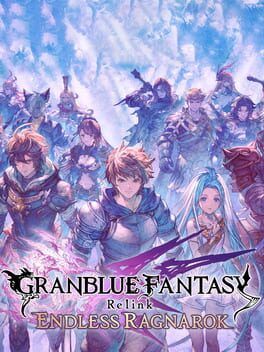
Review
By The Completionist
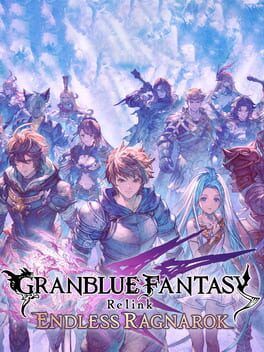
Image: IGDB
A comeback expansion aimed squarely at finished saves
Granblue Fantasy: Relink, Endless Ragnarok arrives as a full expansion on July 9, 2026, with Wccftech listing Cygames as both publisher and developer and naming PC via Steam, PlayStation 5, Xbox Series X and S, and Nintendo Switch 2 as platforms. That is the cleanest practical fact around this DLC, but it also sets up the central tension of this Granblue Fantasy Relink Endless Ragnarok review: Cygames has built a substantial return ticket for players who exhausted Relink’s postgame, while newer or casual players may find the door opens directly into a skill check.
RPG Site reports that Endless Ragnarok was not part of a long-tail plan from the beginning. According to that review, the expansion’s concept came together a few months after Relink launched, after the player response to the base game made clear that many wanted more after the three smaller post-launch updates that added endgame quests and Seofon, Tweyen, and Sandalphon. That history matters because Endless Ragnarok feels like an answer to the most committed part of the audience rather than a broad relaunch. It extends the endgame, adds systems on top of existing systems, and assumes you understand why Sigils, Mastery Trees, weapon levels, party roles, and quest ranks already matter.
The entry requirement reinforces that intent. RPG Site says players must complete “The Tale of Bahamut’s Rage” to begin Endless Ragnarok. Hardcore Gamer describes the new Chaos quests as aimed at players who have reached level 100 and pushed allies beyond that point through Relink’s progression systems. SmashPad’s account of the opening challenge is even more direct: its reviewer entered with level 100 characters and level 150 weapons and still spent more than 20 minutes on the first test against Seofon and Tweyen. Endless Ragnarok gives Relink players a reason to return, but it is not gentle about who it considers ready.
The story frames the grind, then lets systems take over
The story is functional, lore-aware, and appropriately ominous, though several outlets agree it is not the main reason to buy the Granblue Fantasy Relink DLC. Wccftech places the expansion after the Captain and crew have defeated Astral Lilith and saved the Zegagrande Skydom, with gateways of pure chaos opening across the skies and releasing Ragnalia, creatures tied to the arrival of Ragnarok. Console Creatures frames the start around the aftermath of the Proto Bahamut battle and the Grandcypher crew investigating trouble around Mount Neigelith. Those summaries emphasize different late-game milestones, but they agree on the important point: Endless Ragnarok is a post-campaign continuation, not a side story for early-game crews.
The new threat brings the Eternals into the center of the plot. Wccftech says Seofon and Tweyen arrive in Folca to test the Captain’s crew and grant the Fatebreaker rank before the hunt against the Ragnalia escalates. SmashPad also identifies Seofon and Tweyen as the Eternals who enlist the crew against mutated monsters, while 8Bit/Digi describes the Alliance and governments working with the Grandcypher to handle the new threat before it creates wider panic. The broad setup fits Granblue’s mode of fantasy heroism: a colorful crew, a cosmic disaster, and political bodies trying to keep the Sky Realm from tipping into fear.
As a review consideration, the story does enough to give each expedition a sense of place, but it cannot compete with the expansion’s mechanical weight. Wccftech calls the story entertaining at best and says it is hardly the reason to get the expansion. That matches how Endless Ragnarok is structured. The campaign gives the Ragnalia a name, gives the Conflux a narrative function, and gives returning players another reason to hear the crew bounce off each other. Once the fights begin, the writing steps aside. For Relink, that is usually the right choice.
Boss design pressures builds instead of simply raising numbers
The strongest argument for returning is the boss design. Endless Ragnarok understands that Relink’s best fights are tests of movement, burst timing, cooldown discipline, and build honesty. The expansion’s bosses appear to be tuned around players who already learned the base game’s endgame language: when to commit to a Skybound Art, when to hold a defensive option, when to reposition, and when to accept that your damage build is impressive on paper but brittle in an actual hunt.
SmashPad’s experience with the opening Seofon and Tweyen fight is the clearest warning. The reviewer describes the pair as far more aggressive than their playable versions and says the battle took more than 20 minutes even with level 100 characters and level 150 weapons. That is exactly the kind of first impression that will divide the audience. For a casual player who finished the story and left, it can feel like a wall. For a player who farmed Terminus weapons, tuned Sigils, and kept multiple characters ready, it is a message that Endless Ragnarok plans to audit your whole account.
Hardcore Gamer’s description of Chaos quests supports that read. The outlet says the new difficulty is very high and recommended for players with level 100 characters and heavily boosted allies. SmashPad adds that the monsters are described in the story as stronger than Bahamut Versa, and its review says the expansion dramatically raises the difficulty and demands on the player. COGconnected, meanwhile, highlights the new intense battles and says combat remains the core attraction, with fast-paced, repeatable fights and new characters whose unique mechanics are rewarding to master.
Good endgame boss design needs more than inflated health bars. It needs attacks that force different reactions from different party compositions. Based on the reported structure, Endless Ragnarok succeeds because it uses aggression, timers, multi-phase pressure, and the new summon layer to make returning players rethink old comfort builds. The danger is that the expansion can feel punitive if your enjoyment of Relink came mainly from its story campaign. This DLC is far less interested in onboarding than in escalation.
The Conflux gives the grind a better shape
The Conflux is the expansion’s smartest structural addition. Console Creatures calls it an all-new solo mode with new challenges and powers in its depths, while Hardcore Gamer describes it as a roguelite-style area made of multiple stages where players choose portals, clear rooms, earn rewards, and collect temporary auras. That matters because Relink’s endgame has always lived or died by repetition. Endless Ragnarok does not remove the grind. It gives that repetition more texture.
Hardcore Gamer’s account makes the appeal clear. Conflux runs can involve enemy hordes, major bosses, and unusual objectives, such as identifying the correct person in a triplet group. After each cleared space, the player chooses a portal, with naming that hints at the trial ahead. Temporary auras add another layer of run-by-run choice, letting players steer toward survival, damage, or utility depending on what their build lacks. This is a good fit for Relink because the base game already breaks play into compact quests. A mode built around consecutive rooms and branching choices gives those compact fights a stronger arc.
The solo focus is also notable. Relink’s co-op questing is a major part of its identity, and Console Creatures notes that Endless Ragnarok adds new co-op quests and bosses. The Conflux, however, gives players a controlled environment to test characters and builds without relying on matchmaking or party availability. That is especially valuable in a late expansion where the active community may be concentrated among veterans. A strong solo endgame mode protects the DLC from becoming too dependent on peak player counts.
As grind value, the Conflux looks like the piece most likely to keep players logging in after the story ends. It creates short-term decisions within a long-term farm. It also gives the new power systems room to breathe, since a good roguelite-inspired mode makes experimentation feel productive instead of wasteful. For a completionist, that is the difference between clearing a checklist and wanting one more run because the next route might make a different character click.
Rewards are substantial, but they deepen the min-maxing commitment
Endless Ragnarok’s reward structure is broad. Console Creatures reports six new playable characters: Beatrix, Eustace, Fediel, Fraux, Malielle, and Gallanza. RPG Site adds that returning endgame saves begin with a small Folca cutscene involving Gallanza and Maglielle that grants their specific Crewmate Cards, then sends players toward Seedhollow to introduce the Conflux. Console Creatures also mentions master traits, new summons, and changes to core mechanics. These are not cosmetic incentives. They feed directly into party building.
The new summon system appears to be the biggest combat-facing reward. Console Creatures says Lyria can now help with summons, using a meter that fills during combat and lets players control summons in battle. The outlet compares the implementation to Final Fantasy-style summons and notes that each summon has its own skills. It also says Chain Arts receive a buff and that players can unleash Primal Bursts, including Proto Bahamut or Excavallion, after all four characters activate Skybound Arts. In practice, that means Endless Ragnarok adds a new burst economy on top of Relink’s existing rhythm of skills, links, SBA chains, and cooldown windows.
RPG Site highlights another important piece: the expansion launches alongside a substantial base-game patch that improves grind pain points and adds quality-of-life features, including instant unlocking of all Mastery Tree nodes and searching Sigils by the specific Traits they possess. For endgame players, that is not a minor convenience. Relink’s inventory and progression friction can become exhausting once you are managing multiple characters, traits, weapon goals, and optimization paths. Better Sigil searching and faster Mastery Tree management make the grind less about menu fatigue and more about actual build decisions.
This is where Endless Ragnarok earns its RPG expansion status. It gives players new characters to learn, new summons to integrate, new traits to chase, and a better toolset for sorting the old build clutter. SmashPad’s warning that the DLC is for JRPG min-maxing diehards is fair, but that is also the point. If you enjoy tuning damage caps, survivability, stun windows, elemental advantages, and party synergy, the reward loop has real weight. If you mainly wanted another relaxed story arc, the same systems may feel like homework.
Balance favors veterans, and that choice has consequences
Endgame balance is the most divisive part of Endless Ragnarok. Hardcore Gamer says the expansion accomplishes its goal of giving advanced players reasons to return, while also noting casual players will not appreciate it as much because of the high difficulty. SmashPad is blunter, calling it a post-game experience with dramatically higher demands. Those impressions point to a DLC that knows its audience, but also narrows it.
That narrowing is defensible. Relink’s base campaign was approachable, relatively brisk by JRPG standards, and generous with spectacle. Its postgame, however, became the place where the combat system revealed its depth. Endless Ragnarok builds from that second identity. Bosses punish loose play, the Conflux rewards route planning, and the new systems invite players to revisit characters they may have left underdeveloped. The balance feels less like an attempt to welcome every owner back and more like a contract with the players who kept farming after credits.
There are practical caveats. The supplied reviews do not provide detailed frame-rate analysis, so performance judgment has to stay limited. COGconnected argues that Relink’s closed-off stages, short quests, hub structure, discretionary upgrades, and multiplayer focus make it well suited to portable play, specifically in the context of the Nintendo Switch 2 version. That speaks to format fit rather than measured technical performance. Players choosing between platforms should wait for platform-specific technical coverage if frame rate, handheld battery life, or cross-platform population are deciding factors.
Price is another area where the provided material does not give a number. Wccftech’s headline judges the expansion well worth its price, but without a listed price in the source text, value has to be assessed by content volume rather than cost-per-hour math. Console Creatures cites a new story arc around 20 hours long, six new characters, the Conflux, Chaos difficulty, summons, master traits, and co-op quests. If those features match what you wanted from Granblue Fantasy Relink endgame support, the package is substantial. If you are underbuilt or only mildly attached to the combat loop, waiting until you have cleared more of the base postgame is the smarter move.
Verdict
Endless Ragnarok is a strong return for the right Relink player. It succeeds because it treats the base game’s endgame as the foundation rather than a problem to flatten. The best additions, especially the Conflux, new summons, Chaos difficulty, and quality-of-life improvements around Mastery Trees and Sigils, make the grind more legible and more rewarding. The boss design gives optimized crews a real examination, and the new character roster widens the build space in ways that should keep dedicated players busy.
Its weaknesses are tied to that same focus. The story is useful rather than essential, the difficulty curve can be hostile, and casual players who left after the campaign will need preparation before the DLC feels fair. The expansion also comes with unanswered practical questions in the provided sources, especially around detailed platform performance and exact pricing. Still, as a Granblue Fantasy Relink review focused on the endgame, the answer is clear: Endless Ragnarok gives veterans a meaningful reason to return, provided they want tougher fights and deeper progression rather than a soft reentry.
Score: 8.5 out of 10. This is one of those expansions that respects time invested by giving that investment something demanding to do. For completionists and build-minded action RPG players, it is an easy recommendation. For story-first players, finish the base postgame before boarding the Grandcypher again.
Final Verdict
A solid gaming experience that delivers on its promises and provides hours of entertainment.