
Review

By The Completionist
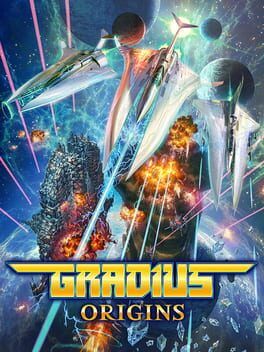
Konami has spent the last few years drip‑feeding its back catalog through patchy retro compilations and bare‑bones Arcade Archives drops. Gradius Origins is different. Handed to M2, the outfit behind the best modern shoot ’em up ports, this collection finally treats Vic Viper and company with the archival care they deserve, while also slipping in enough new and prototype material to feel surprisingly fresh.
What’s Actually In The Box
Gradius Origins is built around seven arcade titles with a generous spread of regional and revision variants, for a total of 18 selectable versions. The core lineup covers the historical spine of Konami’s horizontal shooters: the original Gradius, its direct sequel Gradius II, the Salamander and Life Force branches, Salamander 2, and the once‑obscure Gradius III AM Show Version. On top of that sits Salamander 3, a brand new M2‑developed sequel that feels like a lost late‑90s board rediscovered in some smoky Japanese arcade.
If you have followed Konami’s previous retro efforts, the first shock here is simple completeness. Earlier collections tended to cherry‑pick a few fan favorites and ignore interesting alternates. Origins does the opposite. You get both Japanese and overseas sets where they diverge, the life‑bar Life Force revision alongside the more brutal checkpoint Salamander, and historically important prototypes that finally have a proper home.
Emulation Quality And Latency
The heart of any retro package is its emulation, and M2’s work here is as good as anything in their ShotTriggers line. Input latency is extremely low on all platforms; even on console with a typical TV, tight micro‑dodges and last‑frame option positioning feel trustworthy. On a low‑lag display or PC with v‑sync tuned, you are effectively playing at arcade responsiveness.
Slowdown behavior is reproduced with uncanny precision. Gradius III’s AM Show Version, notorious among hardcore fans for its specific performance quirks, behaves exactly as veterans expect, down to the way certain boss attacks crumble under heavy option abuse. That may sound esoteric, but for score players and routing obsessives, it is the difference between a novelty port and a real practice tool.
Audio fares just as well. Konami’s iconic FM and PCM soundtracks come through with clean mixes and no ugly pops or timing issues. The music that sells these games’ sense of grand, doomed space battles still hits, from the opening fanfare of Gradius II to Salamander 2’s crunchy guitar‑like leads.
On the visual side, Origins gives you sharp pixel output with integer scaling options, gentle CRT masks, and a handful of tasteful bezels. Purists can go for raw, unfiltered pixels; nostalgists can dial in a subtle mask and curvature without turning the screen into a smear of bloom and overdone scanlines.
Prototypes, Oddities, And Salamander 3
Where Gradius Origins really distinguishes itself as preservation is in how it surfaces strange and unfinished corners of the series. The inclusion of Gradius III AM Show Version alone would have made this package noteworthy. Long locked to event hardware and obsessively discussed on message boards, it is now selectable from the same menu as the mainstream releases, complete with its own score tables and option presets.
Several intermediate revisions and regional sets also appear, often with small but meaningful differences to rank behavior, extend thresholds, or power‑up tables. For most players these will be curiosities; for shmup historians they are catnip.
Then there is Salamander 3. M2 has built a full new arcade‑style entry that consciously slots in after Salamander 2 without feeling like a modern indie homage. Visually it targets a late‑90s Konami look, clean and colorful rather than drowning in post‑processing. Mechanically it plays like a refinement of the Salamander branch: faster shot cadence, flexible option formations, and stage routes that reward riskier point‑blanking.
It is not as utterly transformative as something like Gradius V was in its day, but as a new capstone for the classic style it works. Importantly, it is fully integrated into the same practice tools and leaderboards as the older titles, so it benefits directly from the collection’s infrastructure instead of sitting off to one side like a throwaway bonus.
Customization, Training, And Accessibility
M2’s menus have always been dense but they are dense for a reason. Gradius Origins gives you a degree of control that puts most retro packages to shame.
Every game lets you remap controls freely, set multiple rapid‑fire rates, adjust difficulty and lives within the bounds of the original boards, and flip service‑menu toggles without needing to know arcade DIP switch tables. You can tailor the feel of Gradius II’s power‑up cadence or Salamander’s extend rate to your taste while still understanding what you are changing.
The real magic lies in the training tools. Each game offers stage select, checkpoint breakdowns, and boss practice, often down to individual waves. Combined with instant save states and a configurable rewind, this allows newcomers to tackle these famously punishing titles as structured learning problems rather than brick walls. A failed run no longer means restarting from the title screen and hoping to get slightly farther; you can drop right back into the checkpoint that killed you and experiment.
For veterans, the ability to toggle HUD overlays that show rank values, hitboxes, and internal timers is a dream. You can see exactly how dying in a particular spot affects enemy aggression, or how aggressively milking certain popcorn waves changes bullet density. It is laboratory‑grade instrumentation dressed up in a friendly UI.
For Shmup Veterans
If you already live in the world of one‑credit clears and routing spreadsheets, Gradius Origins feels like a long overdue love letter. Emulation is tournament‑worthy. Multiple regional and prototype sets give you real choice in what to learn. Online leaderboards and detailed run data support healthy score competition instead of the usual screenshot bragging.
Compared to something like the older Konami Arcade Classics Anniversary Collection, which shoved ROMs into a thin wrapper and called it a day, Origins is almost absurdly overbuilt. It is closer in spirit to M2’s own Battle Garegga or Ketsui releases, where the assumption is that players will pour dozens or hundreds of hours into squeezing out marginal gains.
Salamander 3 in particular is a gift for long‑time fans. It is not just a new caravan mode or a remix stage pack, but a fully fledged arcade game with routes to crack and patterns to dissect. If you grew up on Salamander 2 and always wished Konami had pushed that line further, this is the sequel you never thought you would get.
For Newcomers To Shmups
The other side of the coin is whether Gradius Origins works as a gateway. These are still fiercely old‑school games, built around memorization, brutal checkpoints, and the expectation that you will die a lot. No amount of slick menus can completely modernize that DNA.
Yet M2 comes as close as anyone has to making this style approachable. Rewind and save states turn opaque difficulty spikes into learnable segments. Training modes gently nudge you toward practicing specific problem areas. Optional information overlays teach underlying systems, so your progress feels earned rather than random.
If you have only dabbled in modern shooters with generous health bars and frequent checkpoints, your first few sessions with Gradius or Salamander will be a shock. But Origins lets you treat that shock as part of a learning curve instead of a hard stop. When you finally route stage 3 of Gradius II without a death, it feels genuinely triumphant precisely because the game did not bend over backward for you.
How It Stacks Up To Other Konami Retro Collections
Konami’s recent output of retro packages has been wildly inconsistent. The Castlevania Anniversary and Contra Anniversary collections were decent, but light on real archival depth. The Arcade Classics compilation was even more bare‑bones, with little more than ROM selection and basic filters.
Gradius Origins makes those efforts look timid. It offers more versions per title, more meaningful prototypes, far stronger training tools, and a higher baseline standard of emulation. Most crucially, it understands that preservation is not just about making old games boot; it is about giving players the context and tools to actually engage with them as they were meant to be played.
Even against other modern shmup revivals, it holds its own. M2’s earlier ShotTriggers releases still set the bar for single‑game deep dives, but as a multi‑title package Origins feels like the closest thing Konami has to a flagship historical release. Where many compilations settle for being digital museums you visit once, this one is unapologetically built to be played hard.
If there is a knock against it, it is that Konami still leaves some console‑specific oddities and spin‑offs on the cutting room floor. You will not find Gradius Gaiden or Gradius V here, and a truly exhaustive series anthology remains a dream. But within its arcade remit, Origins feels thoughtfully scoped rather than cheapened by omission.
Verdict
As both preservation and reinvention, Gradius Origins is the sharpest Konami retro collection in years. It rescues rare versions, documents design quirks, and lets you poke at the series’ guts with tools precise enough for expert play. At the same time, it wraps that depth in enough assists and training features that curious newcomers are not immediately vaporized.
If you care about classic shooters at all, this is not just another nostalgia bundle. It is a benchmark for how legacy collections should be built, and a quietly thrilling reminder of just how much life there still is in a well‑made 2D spaceship and a screen full of hostile bullets.
Final Verdict
A solid gaming experience that delivers on its promises and provides hours of entertainment.