
Review

By Story Mode
Gothic 1 Remake Review
Remaking Gothic was never going to be easy. The 2001 original is beloved not because it was polished, but because it was uncompromising. Its brutal progression, reactive world, and sense of immersion helped establish a template that countless RPGs would borrow from. The challenge facing Alkimia Interactive was deciding how much of that roughness should survive into 2026.
For the most part, Gothic 1 Remake succeeds by respecting the original's identity. This is not a dramatic reinterpretation. It is a modernization of a classic that still wants players to earn every victory, every faction promotion, and every scrap of power. That faithfulness is both the remake's greatest strength and its biggest limitation.
A World That Still Feels Alive
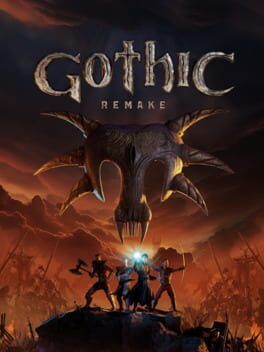
The Valley of Mines remains the star of the show. Visually, the remake is a massive upgrade over the original, transforming the colony into a detailed and atmospheric environment filled with dense forests, dangerous wilderness, and distinct faction settlements. Lighting, environmental detail, and character models all benefit from modern technology while preserving the gritty tone that defined Gothic.
More importantly, the world design itself remains exceptional. Unlike many modern open-world RPGs that overwhelm players with markers and checklists, Gothic encourages observation and exploration. Progress feels organic. You learn where dangerous creatures roam, which roads are relatively safe, and which NPCs can be trusted through experience rather than interface prompts.
The colony still feels like a functioning society rather than a theme park. Characters have routines, factions have believable rivalries, and the world reacts to your growing reputation. Even twenty-five years later, this approach to immersion remains remarkably effective.
Combat Finally Feels Modern, But Not Entirely
Combat is where the remake makes some of its most noticeable changes. The original game's infamous control scheme has been replaced with a more accessible system featuring modern camera controls, controller support, improved movement, and more readable combat encounters.
The result is unquestionably better than the 2001 version. Melee encounters are more responsive, animations are smoother, and basic actions no longer feel like a battle against the interface. Accessibility improvements make the game far easier for newcomers to approach.
However, modernization only goes so far. Combat remains heavily timing-based and intentionally unforgiving. Enemy attacks often demand precise reactions, and early encounters can be punishing. Some players will appreciate how closely this preserves the original's danger and tension. Others may find it dated compared to contemporary action RPGs.
There is also a lingering sense that the remake stops short of fully reinventing combat. While improved, battles can still feel stiff, repetitive, and occasionally frustrating. The foundation is stronger than before, but it does not consistently reach the standards set by the genre's best modern combat systems.
The Classic Progression Loop Still Works
One area where Gothic remains surprisingly fresh is character progression. The game refuses to make players feel powerful from the outset. Early on, nearly everything in the wilderness is capable of killing you. Advancement comes slowly through training, exploration, and faction involvement.
That sense of growth remains incredibly satisfying. Returning to areas that once felt impossible and overcoming threats that previously forced retreat creates a tangible feeling of progress that many modern RPGs struggle to replicate.
The faction system also remains compelling. Choosing allegiances has meaningful consequences, and joining a camp feels like becoming part of the world rather than selecting a skill tree. This remains one of Gothic's strongest design achievements.
Accessibility Improvements Matter
One of the remake's most important accomplishments is making Gothic playable for audiences who never experienced the original. Improved controls, controller support, clearer interfaces, modern visuals, and quality-of-life enhancements remove many of the barriers that made the 2001 release difficult to recommend.
That does not mean the game has abandoned its old-school sensibilities. Quest tracking remains restrained, navigation often requires paying attention to dialogue, and the game expects players to solve problems independently. The difference is that these challenges now feel intentional rather than the result of outdated technology.
Technical Problems Hold It Back
Unfortunately, Gothic 1 Remake is not free from technical issues. Performance inconsistencies, bugs, animation hiccups, and occasional rough edges undermine an otherwise impressive reconstruction of the original game.
The visual overhaul is impressive, but the technical execution does not always keep pace with the ambition. Several reviews have noted performance concerns, and some players may encounter issues that interrupt immersion. None of these problems completely derail the experience, but they are difficult to ignore in a modern release.
Does Gothic's Design Still Work in 2026?
The answer depends largely on what players expect from RPGs.
Those who prefer streamlined progression, constant rewards, and extensive guidance may find Gothic's design abrasive. The game can be harsh, demanding, and occasionally inconvenient by modern standards.
Yet those same qualities are exactly why Gothic remains special. The world respects player intelligence. Success feels earned. Exploration carries genuine risk. Choices have weight. Many of the systems that seemed unusual in 2001 now feel refreshingly different from contemporary open-world design.
The remake demonstrates that Gothic's core philosophy remains relevant. What has aged poorly are specific mechanical and technical elements, not the underlying ideas.
Verdict
Gothic 1 Remake walks a difficult line between preservation and modernization. It dramatically improves presentation, controls, and accessibility while keeping the original's uncompromising RPG structure intact. The world remains captivating, progression remains rewarding, and the faction-driven role-playing still stands out.
At the same time, technical issues and combat that only partially escapes its dated roots prevent the remake from reaching the very top tier of modern RPGs.
For longtime fans, this is a respectful and often impressive return to a classic. For newcomers, it serves as both a celebration of Gothic's enduring strengths and a reminder that some old-school design philosophies remain divisive. Even with its flaws, the remake proves why Gothic continues to command such loyalty decades after its original release.
Final Verdict
A solid gaming experience that delivers on its promises and provides hours of entertainment.