
Review

By Parry Queen
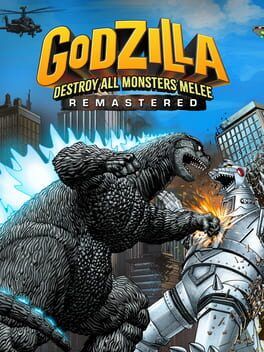
Image: IGDB
Store links: Godzilla: Destroy All Monsters Melee Remastered on Steam
A 2002 kaiju fighter returns with modern platforms, old priorities
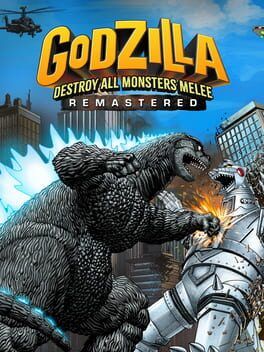
Godzilla: Destroy All Monsters Melee Remastered launches November 3, 2026, with Pipeworks Studios returning to its 2002 arena brawler and Atari publishing the new release, according to Nintendo Everything’s Switch 2 review listing. PlayStation Blog separately lists the PlayStation 5 release for the same date, while Wikizilla’s public entry lists PlayStation 5 and Nintendo Switch 2 as the main platforms, with Xbox Series X/S and PC via Steam described as digital-only.
That platform spread creates the core question for this Godzilla Destroy All Monsters Melee Remastered review: does a 24-year-old licensed brawler still have enough game under the nostalgia to justify a modern purchase on Switch 2 or PlayStation? The answer is yes, if you want an accessible couch fighter built around reads, spacing, throws, stage chaos, and kaiju spectacle. The answer is softer if you want a deep competitive ladder game, a rich solo campaign, or a remaster that fully rethinks the old design.
This is still a simple 3D arena fighter. Nintendo Life describes it as a game with 12 kaiju, city arenas, Unreal Engine 5 visuals, online multiplayer, and quality-of-life bonuses. Siliconera likewise reports 12 total characters, with Godzilla, Gigan, Megalon, and Anguirus available immediately and others locked behind progression tied to research or discoveries. The remaster’s biggest strength is that it understands the original appeal: giant monsters should feel heavy, unfair, readable, and funny when a building becomes a projectile.
The fighting is shallow by tournament standards, but cleaner than it looks
Destroy All Monsters Melee Remastered is not a lab monster. Nintendo Everything reports that every kaiju uses a broadly shared control scheme: kicks, punches, strong attacks, and blocks on face buttons, with shoulder buttons handling grabs, jumps or hovering for some monsters, and ranged beam attacks that spend an energy gauge. That uniform layout is smart preservation. You can hand a controller to someone, explain block, grab, beam, and throw, then start playing.
From a fighting game perspective, the core is old-school arena RPS. Block stops basic pressure. Grabs beat block. Projectiles check movement and force approaches, but they cost meter or leave openings depending on the monster. Positioning around buildings, tanks, UFO drops, and destructible cover matters as much as traditional combo routing. Nintendo Life notes that basic punch and kick strings are paired with stronger variants, power moves send opponents flying at the cost of speed, and projectiles help manage distance.
The clunk is part of the identity, but it is still clunk. Siliconera says the game can feel a bit clumsy before a player finds a rhythm with a character. That matches the design on paper: big bodies, wide attacks, slow recovery, and loose environmental interference mean you are rarely playing a clean strike-throw game in the modern sense. If your idea of a Godzilla fighting game is frame traps, tight whiff punishes, and hit-confirm discipline, this will feel primitive. If you judge it as a party-friendly arena fighter where matchup knowledge gives you a real edge, it holds together better.
The practical improvement path is simple. Pick one kaiju, learn which attacks recover safely at midrange, learn your throw range, and stop spending beam meter just because it is available. PlayStation Blog’s fighter guide says Heisei Godzilla is the default all-rounder with strong health, useful melee combos, and a tail wake-up option, but warns that his high-energy pulse has a slow charge and can be countered. That is the whole game in miniature: the move that looks strongest is often the move that gets you punished.
The roster has personality, even if the ceiling is limited
The reported 12-character roster is enough for party rotation, but it is not enormous by modern fighting game standards. Siliconera names Godzilla, Gigan, Megalon, and Anguirus as immediately available, with other monsters unlocked through play. PlayStation Blog frames the cast through playstyles, which is the right way to approach it. Heisei Godzilla is the balanced starter. Godzilla 2000 is described as faster but less strong than Heisei. King Ghidorah is positioned as a battlefield-control character with projectiles and limited flight. Anguirus is presented as a defensive monster whose spikes can punish attackers.
Those differences matter because the shared control scheme could have flattened the cast. Instead, the abilities give each kaiju a job. Godzilla wants stable, honest pressure with tail and beam threats. Ghidorah wants to occupy space and make opponents cross bad terrain. Anguirus changes how opponents time melee because hitting into defense can hurt them. Siliconera adds that winged monsters such as King Ghidorah and Rodan can fly, while Anguirus lacks projectiles but uses spiked blocking as a defensive answer.
The remaster works best when players treat the roster like archetypes rather than move lists. Gigan’s teleport, called out by Nintendo Life as a tool that can confuse opponents, is a classic party-game equalizer, but it also teaches matchup awareness. Flying monsters can dodge ground scrambles, but energy drain and vulnerability keep them from becoming autopilot picks. This is not balanced like a serious one-on-one fighter, and the sources do not provide enough data to claim competitive balance. Still, the cast variety is strong enough for local sets where players start developing grudges, counterpicks, and house rules.
Solo play is useful training, but the campaign is thin
The solo package is broader than a bare arcade mode. Nintendo Everything identifies Adventure Mode as the main single-player offering, sending a chosen monster through stages around the world in a B-tier sci-fi setup about aliens mind-controlling Earth’s kaiju before a final fight on their mothership. Nintendo Life names those aliens as the Vortaak and describes the story as a small wrapper delivered through a few cinematics.
Siliconera reports additional single-player options: Destruction mode, Survival, Practice, and a Gauntlet mode tied to leveling a monster. Characters can earn XP and Research Points across modes such as Adventure and Destruction. That structure gives the remaster some stickiness, especially for players who enjoy unlocking characters and learning matchups offline before bringing the game to friends.
The limitation is that the story and mission design are not the selling point. Adventure Mode sounds best used as onboarding. It teaches ranges, environmental pickups, power-up awareness, and how your chosen kaiju handles different body types. Destruction mode may be the better casual warm-up because Siliconera describes it as a Rampage-style city-smashing mode that helps less experienced players learn movement and attacks while still feeling productive.
For Switch 2 handheld players, that matters. A thin but quick solo loop is easier to recommend on a portable system than a remaster that only works with four people in the room. For PlayStation players, the value leans harder on online and local multiplayer, since the solo offering sounds functional rather than transformative.
Local multiplayer remains the strongest reason to buy
The best-supported praise across the provided reviews is local play. Siliconera says the local option still works well, while GamingBoulevard’s review text frames the original as a GameCube couch experience built around picking cool monsters, throwing buildings, and arguing through the chaos. That is where this remaster earns its keep.
Destroy All Monsters Melee Remastered is at its best when nobody is pretending it is a clean esport. Four people in a room will forgive the camera scuffles, surprise power-ups, and uneven swing moments because those events create the memory. Buildings, vehicles, and environmental objects can be grabbed and thrown, according to Siliconera. Nintendo Life also notes power-ups scattered through arenas, Vortaak UFO drops, health and special meter items, and Mothra-style aerial support. Those systems would be noise in a tight dueling game. Here, they are the match texture.
Online multiplayer is confirmed by Nintendo Life and Wikizilla, and PlayStation Blog directly points readers to the PlayStation Store concept page ahead of the PS5 release. The source material does not provide netcode details, ranked structure, cross-play support, lobby features, or performance metrics for online matches. That absence matters. If online is your main buying reason, wait for platform-specific impressions after launch unless you are already sold on the franchise. If local multiplayer is your reason, the available reports are much more reassuring.
The remaster looks modern enough, but the value depends on expectations
Nintendo Life and Wikizilla both identify Unreal Engine 5 as part of the remaster package, with overhauled graphics and online multiplayer among the major changes. Nintendo Life’s Switch 2 review text says the game arrives with UE5 visuals and quality-of-life bonuses. The provided material does not include detailed frame-rate numbers, resolution targets, load times, or side-by-side performance comparisons between Switch 2 and PS5, so any platform recommendation has to stay conservative.
For Switch 2, the appeal is portability plus local multiplayer flexibility. Nintendo Everything reviewed the Switch 2 version and lists the system, developer, publisher, and release date, but the excerpt does not provide enough technical detail to make a firm performance claim. For PlayStation 5, PlayStation Blog’s official fighter guide confirms platform availability and gives Sony players a useful roster primer, but it also does not answer netcode or performance questions.
The remaster’s value comes from preservation with sensible upgrades, not reinvention. It keeps the simple inputs, readable monster archetypes, destructible arenas, and goofy power swings that made the original work as a licensed couch fighter. It adds modern platform access, online play, and upgraded presentation. It does not appear, based on the provided sources, to add the kind of mechanical depth, cinematic campaign, or robust competitive infrastructure that would convert skeptics who dislike arena brawlers.
That makes the recommendation clean. Godzilla fans, local multiplayer households, and players who miss party-friendly 3D fighters should put this high on the November list. Serious fighting game players should treat it as a side game, not a main grind. PlayStation players focused on online should wait for netcode reports. Switch 2 players looking for portable kaiju chaos have the strongest case to jump in, especially if they can regularly play locally.
Score and verdict
Godzilla: Destroy All Monsters Melee Remastered preserves the original’s chaotic couch-fighter appeal better than it modernizes its underlying design. The combat is blunt, occasionally clumsy, and deliberately broad, but it has enough matchup identity to reward smarter play. The solo modes give you reasons to learn the cast, though the story is thin and the progression sounds more practical than exciting. The remaster’s biggest win is access: Switch 2 and PS5 players get a revived Godzilla fighting game with online multiplayer and upgraded visuals after years without many large-scale console options for the franchise.
Verdict: Buy it if you want accessible kaiju brawling with friends. Wait for post-launch online reports if matchmaking quality is your deciding factor.
Final Verdict
A solid gaming experience that delivers on its promises and provides hours of entertainment.