
Review
By Headshot
A Side Story That Refuses To Be A Side Thought
Arriving as a surprise companion to the Greek trilogy remake, God of War: Sons of Sparta could easily have been a shameless brand exercise. A quick 2D tie-in, a bit of pixel art, some recycled motifs, and out the door. That is clearly not what Mega Cat Studios and Santa Monica shipped.
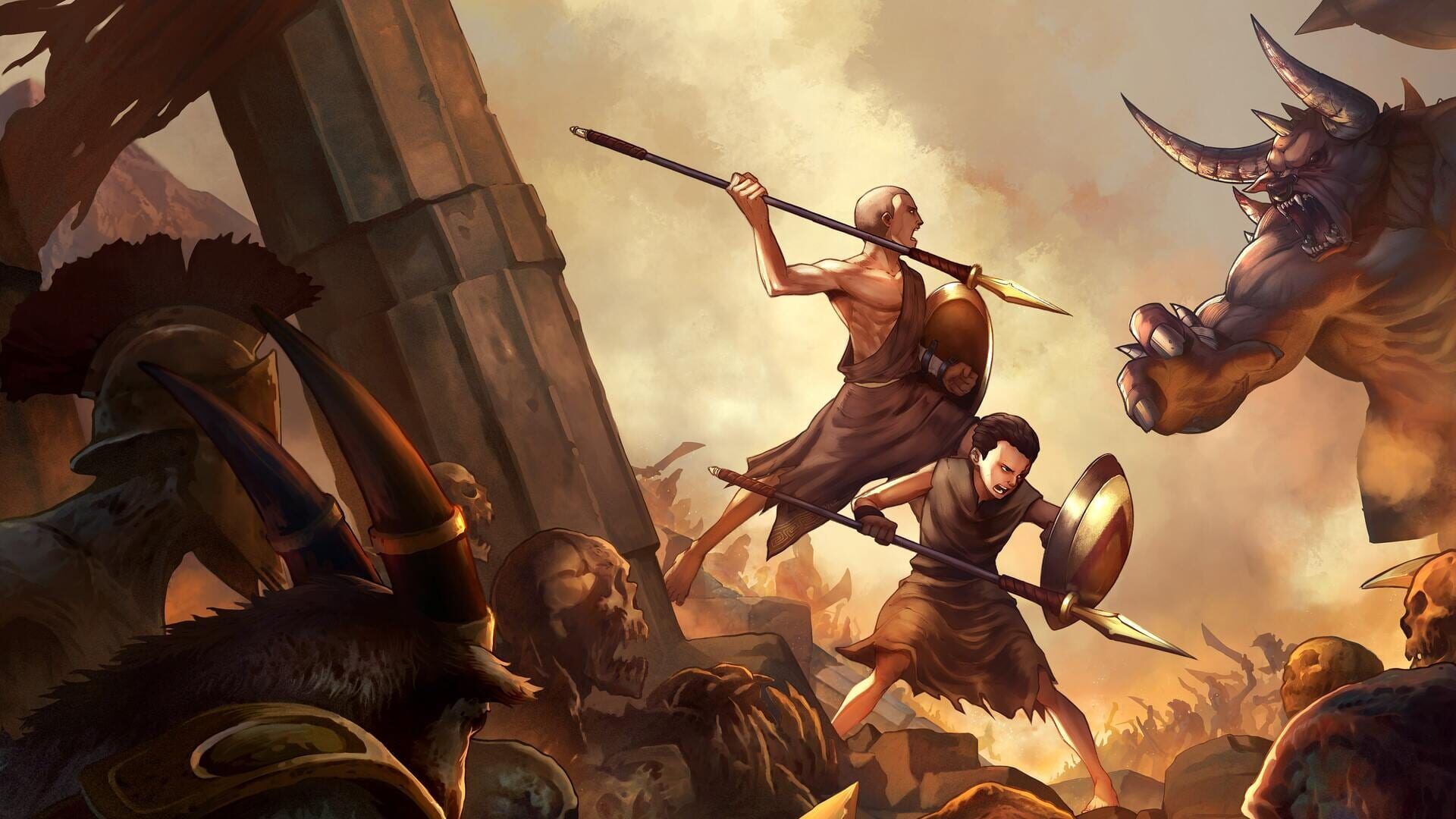
Sons of Sparta is a self-contained 2D Metroidvania starring a teenage Kratos and his brother Deimos, framed by TC Carson narrating from the future. It is canon, but it also works if you have never touched a God of War game. When you strip away the baggage and the anger around its existence, what you are left with is a sharp, combat-forward action platformer that understands the genre well, but struggles to make its world and story as memorable as its mechanics.
Combat: A Brutal, Clever Dance With A Limited Playlist
The entire design is built around one core fantasy: a younger, less burdened Kratos learning to fight with spear and shield. Mega Cat has taken the color-coded combat language from the Norse games and reinterpreted it into a crisp 2D ruleset.
Light and heavy spear attacks chain into satisfying strings, with a dedicated launcher giving you short air juggles. The shield is not just a panic button. Parries open long punish windows, and perfect blocks feed a stun meter that unlocks quick finishers, echoing the series’ glory kills without the cinematic bloat.
On top of that sits the Gifts of Olympus, cooldown-based special abilities mapped to simple inputs. Early on, a lightning dash and an AOE shockwave give you new offensive angles and mobility. Later gifts layer elemental status effects on top of that, so you are not just repeating the same spear combo from start to finish.
Where the combat really clicks is in how enemy color tells you what you can and cannot do. Red telegraphs mean roll only. Yellow can be blocked, but must be timed. Blue wants you to break stance with a shield bash. On paper this sounds rigid, yet in practice it creates a readable rhythm that lets you improvise within clear boundaries. Encounters, especially in the second half, become little combat puzzles about target priority and positioning rather than mindless crowd control.
The catch is that Sons of Sparta is not endlessly deep. By around the eight to ten hour mark you will have seen most of what the move list can do, and the modest skill tree rarely surprises. It is functional more than expressive, mostly delivering percentage buffs, additional hit follow-ups, and a handful of new air options instead of radically changing how you play. Within its lane, combat feels good, crunchy, and responsive, but it never reaches the creativity of the best Metroidvanias or the feral brutality some fans clearly expected.
Level Design: Tight Rooms, Safe Choices
On the exploration side, Sons of Sparta bills itself as a Metroidvania, but it plays closer to a tightly gated action platformer with light backtracking. Zones are distinct in look and enemy mix, yet the macro layout is fairly conservative. You follow a main artery forward, detouring into small side pockets for upgrades or optional combat rooms, before looping back through a newly opened shortcut.
Individually, rooms are well constructed. Platforming challenges escalate cleanly, using moving hazards, shield bashes that bounce projectiles into switches, and Gifts of Olympus that double as traversal tools. A dash that pierces enemies becomes your main way to cross electrified gaps. A chain grab used to yank shields from foes also pulls Kratos onto distant ledges. There is a sensible logic to how each new mechanic earns its place in navigation.
The problem is not the micro design, but the overall sense of place. Outside of a few late-game gauntlets that weave combat and platforming together, areas blur into one another. You will remember the tight arenas and some standout boss rooms, not the routes you took to get there. This is not Symphony of the Night or Hollow Knight where the map itself feels like a character. Here, the level design is workmanlike rather than inspired, doing just enough to support cool fights without carving a lasting identity.
Backtracking, too, is cautiously handled. The game marks locked doors and blocked paths on your map, and upgrades tend to be within a couple of quick screens of a fast travel obelisk. That keeps pacing brisk, but it also means you rarely get that delightful feeling of recontextualizing an entire region with a new power. You tick boxes more than you make discoveries.
Storytelling: A Strong Premise That Pulls Its Punches
Narratively, Sons of Sparta has one excellent hook. Young Kratos and Deimos at the Spartan agoge, their bond tested by a missing fellow cadet and a conspiracy that brushes against Olympus. You get a rare look at Kratos before he is a father or a god killer, just a frighteningly driven teenager whose rage has not yet found a god to blame.
In practice, the story unfolds in short bursts between levels, with light in-engine scenes and talking-head dialogue boxes. TC Carson’s narration does a lot of heavy lifting, adding gravitas that the sprite work cannot always convey. The brothers’ banter is believable, and there are small moments of levity as they jab at each other’s failures during training.
The problem is that the plot plays it incredibly safe. If you know anything about Kratos’ past, you can see most of the beats coming a mile away. Authority figures are harsh. The agoge is cruel. Mythic forces intrude. There are a few late-game revelations about the missing cadet that add some moral shading, but nothing that truly reframes Kratos or Deimos in a new light.
Side notes and environmental storytelling try to broaden the world. You read about other cadets, Spartan tactics, and minor mythological curiosities. These are interesting as flavor, yet they rarely tie directly into the main conflicts in a meaningful way. The writing is competent, almost restrained, when the setting begs for something rawer.
What you do get is a narrower, more personal slice of Kratos than usual. Watching him fail, not quite in control of his power, meshes well with the tighter move set. There is thematic coherence in how the combat makes you feel like an in-training warrior rather than an unstoppable god. It just never builds to a story crescendo that matches the series’ reputation.
Bosses And Setpieces: Where It Almost Becomes Great
If there is one area where Sons of Sparta brushes against greatness, it is in its boss fights. These encounters bring together the color-coded attack system, platforming, and Gifts of Olympus in smart, escalating patterns.
One early highlight pits you against a towering automaton in a cramped foundry. Its stomp patterns force you to read red and yellow telegraphs while using a gift that reflects molten projectiles back at exposed joints. Midway through, the arena shifts into a vertical chase, suddenly testing your air mobility and parry timing in tight corridors.
Later bosses lean more into pattern recognition, with multi-phase duels that feel almost like side-on reinterpretations of the 2018 and Ragnarok style one-on-ones. The best of them are excellent, demanding just enough precision to feel worthy of the Spartan setting, but never tipping into cruelty.
Between bosses, the game sprinkles in smaller setpieces, such as arena trials that remix regular enemy waves with environmental hazards. These are where the limited enemy variety starts to show. You are often fighting reskinned variants with new elemental toppings rather than fundamentally new behaviors. The design tries to compensate by combining them cleverly, but you will eventually learn a handful of reliable solutions and lean on them.
The Controversy: Expectations Versus The Game That Exists
Sons of Sparta has been dragged through the mud since the moment it appeared during State of Play. Being shadow dropped alongside a Greek trilogy remake means it is, by design, standing in the shadow of some of the loudest, bloodiest action games ever made. A 2D pixel art spin-off from a smaller partner studio was always going to look slight next to that.
Add to that the public thrashing from God of War’s original creator, who blasted the project as a terrible decision and called it embarrassing, and you get a discourse that has very little to do with the actual game in players’ hands. Some of the complaints are not about how it feels to play, but about what it represents as a business or branding move.
Look strictly at mechanics and design, and that narrative just does not hold. Sons of Sparta is not some slapdash afterthought. It controls crisply. It communicates clearly. Its difficulty curve is well studied. It respects your time with a 15 to 20 hour runtime that feels tuned for completionists without pointless padding. Its biggest sins are caution and repetition, not incompetence.
This is also not the disaster some feared or the masterpiece some defenders wish it was. Within the Metroidvania space, it sits comfortably in the solid middle. Better than a lot of licensed tie-ins that treat 2D as a dumping ground, but rarely brushing up against the genre’s elite.
Verdict: A Worthy Training Ground, Not A New Pantheon
Taken on its own terms, God of War: Sons of Sparta is a well made, occasionally exciting 2D action game built on strong combat fundamentals. The spear and shield moveset is satisfying, the color-coded enemy logic makes fights readable and tactical, and boss encounters provide several memorable spikes of challenge.
Its weaknesses are clear. The level design is structurally safe and does not capitalize on the full potential of a Metroidvania map. The story has a strong premise that rarely takes risks. Enemy repetition and a conservative skill tree keep it from evolving into something truly special over its runtime.
None of that justifies the outrage that has surrounded it. If you come to Sons of Sparta expecting a side-scrolling Ragnarok with endless spectacle, you will be disappointed. If you meet it as a mid-budget, combat-first Metroidvania that uses the God of War license as a backdrop for tight 2D fights, there is a lot to like.
Sons of Sparta is not the new high point of the franchise. It is a focused, frequently fun training montage for a younger Kratos, delivered through a systemically sound action game that deserves to be judged for how it plays, not for the impossible ghosts of trilogies past.
Final Verdict
A solid gaming experience that delivers on its promises and provides hours of entertainment.