
Review

By MVP
A spiritual successor with a lot to prove
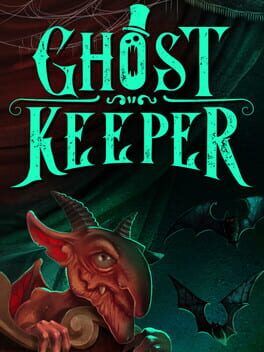
Ghost Keeper arrives in Early Access very openly chasing the spirit of cult classic Ghost Master. You are not the trembling investigator creeping into haunted houses, but the one running the whole haunting operation, commanding a roster of grotesque spirits across a gloomy slice of 19th‑century England. Your job is simple on paper: terrify every mortal off the premises before the Brotherhood’s pseudo‑Victorian ghostbusters shut your little business down.
The pitch is great, and crucially, the core of it already works. Ghost Keeper is a reverse‑horror strategy and puzzle hybrid where you drop spirits into key rooms, chain their abilities into elaborate scare sequences, and carefully manage an economy of fear and cooldowns. When it clicks, it really does feel like orchestrating a haunted house attraction that just happens to be lethally serious for the people on the receiving end.
It is also very plainly Early Access. The structure is there, the toolbox is surprisingly broad, and the tone is confident, but you can feel rough edges in pacing, interface, and AI logic that keep it from being an instant recommendation for everyone.
Strategy built on ghost‑herding and scare economies
At its heart Ghost Keeper is a small‑scale tactics game about where to place your monsters and when to fire off their tricks. Each mission drops you into a multi‑room map, often a lavishly gloomy town house or public building, populated with a specific mix of civilians and professional hunters. You begin with a limited pool of spectral minions and a cap on how much energy you can invest in manifestations at once.
Each spirit type functions as a flexible tool rather than a combat unit. One might specialize in environmental scares, rattling furniture, slamming doors, or spewing ectoplasm across carpets. Another focuses on psychological pressure, following a target around, whispering in their ear, steadily ratcheting up their fear meter. Others excel at area denial, blocking routes with walls of shadow or triggering chain reactions when mortals pass specific objects.
The strategy layer lies in understanding how these pieces interact with the AI routines of your victims. Civilians panic easily but tend to follow predictable escape routes. Brotherhood agents have tools to quell fear, scan for spiritual presence, and even temporarily banish your minions if you overcommit in one place. Winning missions becomes less about raw power and more about shaping traffic through the map, herding victims into kill‑zones of terror or peeling stubborn exorcists away from the pack so you can isolate them.
This is where Ghost Keeper feels closest to fulfilling its fantasy. Catch a line of debt‑dodging aristocrats sprinting down a hall into a carefully staged triple‑scare and they scatter in every direction, sanity meters detonating in a chain of failures. Manipulate patrol paths so a lone Brotherhood tough walks into a room where every object is primed to explode into activity and you can watch their bravado disintegrate in seconds. It is clever, readable, and consistently satisfying when your plan comes together.
Puzzle‑box missions that reward experimentation
While the marketing leans on strategy, Ghost Keeper quietly operates as a puzzle game too. Most campaign scenarios are built around specific constraints: limited minions, strict time pressure, or special objectives like protecting an artefact or ensuring a particular VIP flees last. Environments are dense with hauntable objects that form implicit lines of play.
Your first run through a map usually goes poorly. You waste energy scaring the wrong targets, let a Brotherhood priest set up in a central room, or accidentally drive everyone straight through the front door long before you are ready. But failure is part of the design. By watching how the mortals respond, where they naturally congregate, and which rooms the hunters favor, you start sketching out the real solution.
That puzzle‑like rhythm is helped by the fact that most objectives can be achieved in multiple ways. Sniping high‑value targets with precise, high‑impact scares is usually an option, but so is creating a slow burn of omnipresent dread that keeps everyone hovering near their breaking point until you collapse them in a final wave. It rarely feels like there is one correct answer, which is crucial for a game inviting repeated experimentation.
The downside at this stage is feedback. Tooltips and UI callouts are functional but thin. Some abilities have opaque interactions, and it can be hard to tell when someone resisted a scare because of a specific trait, an off‑screen buff from another hunter, or just a behind‑the‑scenes dice roll. When you are trying to solve a tight scenario, those unclear moments feel more like engine noise than interesting mystery.
Campaign structure and current content
For Early Access, Ghost Keeper offers a self‑contained chunk of a single‑player campaign. The developers are upfront: you get six large maps stitched into a loose narrative arc, seven controllable minions to unlock, and a sandbox mode that opens once you have finished the story content.
Campaign missions escalate along predictable but enjoyable lines. Early stages are closer to tutorials, introducing basic scare types and enemy archetypes. Later missions pile on combinations, like defending multiple entrances against split groups of intruders or juggling secondary objectives with strict time limits as Brotherhood teams tighten the noose.
There is a light story threaded through all of this, mostly carried by your demonic handler’s commentary and brief text interludes between missions. The writing skews toward dark comedy, prodding at Victorian hypocrisy and the absurdity of professional ghost hunters who are clearly in way over their heads. It is not deep, but it gives the campaign a welcome sense of personality and avoids the po‑faced gravitas that sinks a lot of horror‑themed strategy games.
Once the credits roll on the current arc, sandbox mode becomes the main attraction. Here you can revisit maps with custom parameters, mixing minion loadouts and enemy compositions to push the systems harder than the campaign sometimes allows. It is a smart inclusion this early, because it lets tinkerers keep playing even after they have seen the scripted content, and it also doubles as a proving ground for balance tweaks the developers will likely make during Early Access.
Still, if you mainline the campaign, you can chew through what is here in a handful of evenings. There is replay value in alternative solutions and optional challenges, but players expecting a sprawling, 20‑plus‑hour tactics epic will not find it yet.
How well the haunting fantasy currently plays
Moment to moment, Ghost Keeper already nails something many spiritual successors miss: a feeling of being a cunning, unseen director of someone else’s horror story. The Victorian aesthetic is rich without being overbearing. Lighting and color do a lot of heavy lifting, giving each location a distinct atmosphere that makes experiments with line of sight and room‑to‑room flow feel tactile rather than abstract.
Audio work is equally sharp. The blend of whispered threats, clattering objects, and rising orchestral stabs makes even simple scares feel theatrical. Little touches, like the brittle confidence in a hunter’s voice cracking after one too many close calls, go a long way toward selling the power fantasy of being the one in control.
Where the fantasy starts to fray is in the game’s rough edges. The camera can be fiddly in vertical spaces, occasionally making it hard to select the exact object you want to haunt in a crowded room. Pathfinding for mortals is usually reliable but sometimes produces baffling detours that ruin carefully arranged scare funnels. There are already patches addressing some AI quirks, yet you can still see the seams when a civilian ricochets between two doors because of rapidly changing fear states.
Performance on a mid‑range PC is generally solid. Load times are acceptable, and the game is not particularly demanding. I did see some minor hitching when a lot of simultaneous scare effects triggered, and a couple of UI bugs during long sessions, but nothing catastrophic. Still, if you are allergic to occasional jank, it is worth keeping in mind that this is not a completely polished haunt yet.
The biggest open question is long‑term depth. Seven minions offer a decent spread of playstyles, but you can already feel archetype gaps that future updates will likely fill, such as more purely support‑focused ghosts or advanced control specialists. Likewise, six maps serve as good playgrounds, yet you start seeing familiar patterns in sightlines and choke points by the time you are experimenting in sandbox mode.
Early Access state: what works and what does not
For an initial Early Access drop Ghost Keeper is in better shape than many peers. What is here is feature‑complete in terms of its fundamental loop: recruit minions, plot scares, adapt to human resistance, and repeat across diverse locations. There are no placeholder assets or obviously half‑implemented systems cluttering the experience.
Balance is less settled. Certain minions feel disproportionately strong in specific scenarios, turning some puzzle levels into trivial exercises once you discover the right combo. Conversely, a few objectives feel overly strict, less like interesting tactical constraints and more like the designers simply tightened numbers until brute‑forcing them stopped working. It can make the difficulty curve feel lumpy, veering from breezy to brittle without much warning.
The developers’ public roadmap promises more areas, creatures, and narrative depth, and this is one case where the game seems well‑positioned to absorb that content gracefully. The scaffolding is here; it just needs more variety bolted on and some of the friction points sanded down.
Buy now or wait for full release?
So, should you jump into Ghost Keeper during Early Access?
If you are specifically craving a modern, systems‑driven haunting simulator in the vein of Ghost Master, Ghost Keeper is already worth your time. The ghost‑command strategy works, the puzzle‑box missions are engaging, and the tone consistently walks that tricky line between eerie and absurd. You will likely finish the current campaign, spend some hours tinkering in sandbox mode, and come away satisfied but hungry for more.
If you are more cautious with unfinished games, or you primarily value long‑term replayability and polish over novelty, you are better off waiting. Content quantity is modest, UI and AI still need tuning, and the overall package feels like a sturdy foundation rather than a fully fleshed‑out mansion.
In other words, Ghost Keeper’s haunting fantasy already plays well enough to recommend to genre fans who are happy to watch it grow. For everyone else, keep it wishlisted, keep an eye on updates, and let the Brotherhood test the ectoplasm for bugs before you move in.
Final Verdict
A solid gaming experience that delivers on its promises and provides hours of entertainment.