
Review
By Big Brain
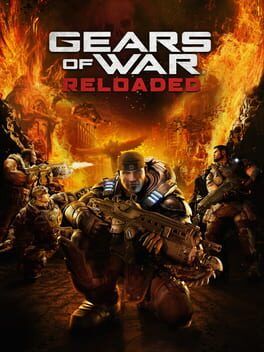
Gears of War: Reloaded walks into an awkward firefight. The original Xbox 360 release was already revitalized once in 2015’s Gears of War: Ultimate Edition, which rebuilt assets, touched up controls, and modernized multiplayer for Xbox One. Reloaded arrives a decade later as a second remaster for the same game, promising native PS5 support, a fully modern rendering pipeline, higher frame rates, and more robust online features.
That premise alone raises the obvious question: how many times can you sell the same Emergence Day before fans’ goodwill runs dry?
Visual upgrades versus Ultimate Edition
Compared with the 360 original, Reloaded is a clear generational leap. Compared with Ultimate Edition, it is more of a refined evolution than a dramatic reinvention.
Ultimate Edition already replaced most of the original’s geometry and textures, bringing sharper models, new cinematics, and improved lighting. Reloaded builds on that work with higher resolution textures, more detailed materials, and a modern HDR lighting model. The most obvious difference shows up in the way Sera’s gloom now reacts to light: searchlights carve volumetric cones through dust, muzzle flashes illuminate wet stone and armor, and firelight bounces with convincing warmth off COG plates.
Character models benefit from better subsurface scattering and higher fidelity face rigs, but the jump from Ultimate Edition is subtle unless you are directly comparing them. Marcus and Dom look closer to Gears 5’s models in terms of shading and material response, but their underlying meshes clearly trace back to the last remaster. It feels more like a next-gen pass on an existing remaster than a true ground-up rebuild.
Environments, however, come off better. Texture density on rubble, masonry, and foliage is noticeably improved, and the increased draw distance helps cityscapes and battlefields feel less like stage sets. Atmospheric effects such as smoke, fog, and particulate debris are thicker and more reactive, which fits the series’ chunky, industrial aesthetic. On a good HDR display, the contrast between inky shadows and scorching daylight finally matches the Gears of War you remember in your head.
The catch is that the wow factor is smaller if you already played Ultimate Edition on a 4K display via backward compatibility. Many of Reloaded’s visual boosts are in the realm of cleaner image quality, better anti-aliasing, and richer lighting, not the kind of night-and-day transformation that justified Ultimate Edition back in 2015.
Performance, frame rates, and responsiveness
Where Reloaded clearly outclasses Ultimate Edition is performance. The 2015 remaster targeted 30 fps for campaign and 60 fps for multiplayer, and even on Series X via compatibility there were occasional dips. Reloaded locks the campaign at 60 fps on consoles at up to 4K, while multiplayer can climb to 120 fps on supported displays.
On high-end PCs, you can push well beyond that, and the engine scales better with modern CPUs and GPUs than Ultimate Edition’s older tech. VRR support smooths out minor fluctuations, which is invaluable during the more chaotic firefights with smoke, particles, and collapsing geometry.
This extra headroom does more than pad a spec sheet. Gears was always about weighty movement and snap cover transitions. At 60 fps, Reloaded feels significantly more responsive than the original 360 version and just a bit tighter than Ultimate Edition. Animations interpolate more cleanly and the delay between input and on-screen reaction shrinks enough that roadie runs, snap-aiming, and pop-and-shot patterns feel closer to Gears 4 and 5 than a mid-2000s shooter.
Input feel and control refinements
Reloaded quietly overhauls how the game feels in your hands. The Coalition has pulled in a decade of learnings from Gears 4 and Gears 5 without completely rewriting the original’s identity.
Aim acceleration, dead zones, and look smoothing are far more configurable than they were in Ultimate Edition, which itself was already better than the 360 release. You get independent tuning options for hip-fire and aiming, along with modern aim assist profiles that are much less sticky and intrusive than before. On controllers with adaptive triggers, the Lancer and shotgun have distinct resistance curves that make weapons feel more tactile without hurting timing on active reloads.
Movement speed and roadie run angles are largely faithful, but mantle detection is less finicky, and snapping to cover is less prone to sticky misreads. Some long-time veterans may notice that wall-bounce patterns feel a shade more predictable, mostly because the netcode and input pipeline are less temperamental. It still feels like original Gears, but the clunk has been sanded down.
Mouse and keyboard on PC is where Reloaded distances itself from Ultimate Edition. Input latency is much lower, raw input is properly supported, and the camera logic no longer feels like a console-first afterthought. If you bounced off Ultimate Edition on PC because it felt compromised, Reloaded finally gives the original Gears a control scheme worthy of the platform.
Online features and multiplayer longevity
Where Ultimate Edition struggled most was in sustaining a healthy player base and offering modern conveniences. Reloaded addresses many of those shortcomings, though not all.
Cross-play between Xbox, PC, and for the first time PlayStation brings a much larger pool of players together. Cross-progression means that your unlocks, stats, and cosmetics carry between platforms, which makes it less painful to bounce between console and PC. Dedicated servers are promised at launch for all major regions, and early testing shows lower, more stable ping than the Ultimate Edition days of peer-hosted lobbies and inconsistent connections.
Matchmaking is quicker, party management is integrated with modern platform-level social features, and there are clearer playlists that separate newcomers from ranked sweats. Horde and co-op campaign are easier to jump into with friends than they ever were in 2006 or 2015, and drop-in co-op during campaign is nearly seamless.
What Reloaded does not do is dramatically reinvent multiplayer content. This is still the map and mode lineup you know from Gears of War and its Ultimate Edition variant, with only modest quality-of-life tweaks. There are upgraded audio effects, a cleaner HUD, and a refreshed progression system with cosmetic unlocks, but if you were hoping for a wave of new maps, weapons, or entirely new modes, you will be disappointed.
That conservative approach cuts both ways. On one hand, it preserves a snapshot of Gears multiplayer history with better infrastructure and fewer technical roadblocks. On the other hand, it makes Reloaded feel like an extremely polished museum piece rather than a living, forward-looking shooter.
Double-dip for veterans or gateway for newcomers?
Whether Reloaded is worth paying for again depends entirely on which group you fall into.
If you are a long-time fan who already bought Ultimate Edition and maybe replayed the game through backward compatibility, Reloaded’s value proposition is thin. The visual enhancements will impress your eyes without shocking them, the performance uplift is welcome but not transformative if you were already playing a patched Ultimate Edition on modern hardware, and the online improvements mostly represent the level of baseline competence you would expect from a 2025 shooter.
There is no new campaign content, no lost chapters, no alternate takes on classic encounters, and no real attempt to contextualize the original with commentary, behind-the-scenes features, or substantial side modes. For a second remaster, the package feels conservative. It polishes, stabilizes, and modernizes, but rarely surprises.
For newcomers, though, Reloaded is unquestionably the way to experience Gears of War. The campaign holds up beautifully, its cover-based firefights still feel tight and readable, and the remaster finally presents it at a level of image quality and responsiveness that does not come with asterisks. The original is nearly twenty years old now, and Reloaded makes that age vanish in motion in a way Ultimate Edition only partly managed.
On PS5 and modern PCs especially, Reloaded doubles as a cultural artifact and a legitimately enjoyable current shooter, with none of the creaky performance and matchmaking pain that can make older titles hard to recommend. If you are new to the series or have only played the later Gears entries, Reloaded is an easy sell.
Verdict
Gears of War: Reloaded is a lovingly constructed, technically sound remaster that finally brings the first Gears into full parity with modern expectations for visuals, performance, controls, and online infrastructure. As a gateway for new players, it is excellent. As a second remaster for veterans, it sits in a more awkward space.
The upgrades over Ultimate Edition are real, but they are also incremental, and the lack of meaningful new content or bolder reinterpretations makes it a hard mandatory purchase if you already own the previous remaster. Reloaded is the definitive way to chainsaw your way through Sera in 2025, but whether that is worth buying the same war for a third time is a question only your nostalgia and wallet can answer.
Final Verdict
A solid gaming experience that delivers on its promises and provides hours of entertainment.