
Review
By Big Brain
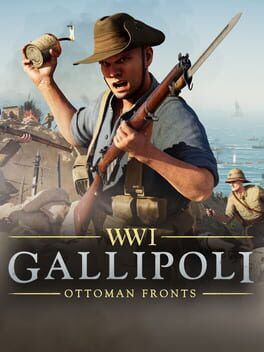
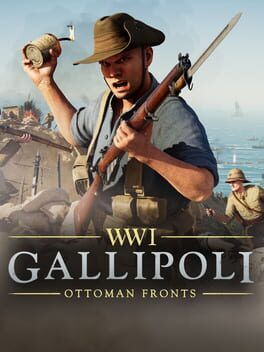
Image: IGDB
Store links: Gallipoli on Steam, Beach Invasion 1915: Gallipoli on Steam, Gallipoli Trenches: The Forgotten Front WW1 on Steam
A narrow war game with a real tactical argument
Gallipoli arrives with a clear tension: BlackMill Games has built what multiple critics describe as its best-looking World War I game yet, but the package is also tightly constrained around online warfare, one core mode, and a setting whose power could easily have become surface-level atmosphere. The question for this Gallipoli review is whether the historical frame turns into meaningful tactical play.
The answer is mostly yes. Based on the reported design details across CGMagazine, IGN, TheSixthAxis, TheXboxHub, and Metacritic's review aggregation, Gallipoli is strongest when its historical brutality and its multiplayer rule set push in the same direction. The landing boats, exposed dunes, slow rifles, construction objectives, suppression, and support positions all feed a game where careless momentum is punished and coordinated pressure matters.
There are limits. CGMagazine describes Gallipoli as a five-map, one-mode indie game, while TheSixthAxis identifies Expeditions as its core mode. Metacritic lists the critical response as Generally Favorable, based on a small pool of reviews, but also shows a Mixed or Average user score. That split is important. Gallipoli appears built for players who accept friction, slow weapon handling, and population-dependent online matches. It is much less convincing as a broad, content-rich shooter for people who want variety, solo structure, or immediate readability.
Release details and the platform picture are slightly messy
The confirmed commercial picture comes with small but useful caveats. CGMagazine lists BlackMill Games as both developer and publisher, gives the PC MSRP as $29.99, and dates its release entry as 08/19/2026. Metacritic lists Gallipoli as released on Aug. 20, 2026, with critic pages for PC and PlayStation 5. TheXboxHub reviewed it under its Xbox Series X Reviews category on Aug. 30, 2026. Steam's public listing is available at app 3065940 and, in the provided store capture, is titled “Save 25% on Gallipoli on Steam.”
That means buyers should treat platform and price checks as practical pre-purchase work rather than assumptions. PC availability through Steam is directly supported by the store listing and CGMagazine's PC review details. PlayStation 5 support is indicated by Metacritic's platform page. Xbox Series X coverage is indicated by TheXboxHub's review category, though the provided excerpt does not give a dedicated store listing or SKU information.
The date discrepancy between CGMagazine and Metacritic is not a major red flag, but it is worth preserving rather than smoothing over. It likely reflects review metadata, regional timing, or store unlock differences, but the supplied sources do not explain it. What is clear is that Gallipoli is a late-August 2026 release from BlackMill Games, positioned as the fourth entry in the studio's WW1 Game Series after Verdun, Tannenberg, and Isonzo.
The setting matters because it changes the battlefield rules
Gallipoli shifts BlackMill's WW1 series to the Middle Eastern and Ottoman fronts, a campaign Metacritic's summary frames around the Triple Entente searching for new routes to victory after the Western Front deadlock. IGN highlights the central matchup as Ottoman Empire forces against the British Empire, while TheSixthAxis notes the inclusion of British Empire, ANZAC, and Indian troops fighting the Ottomans.
This is important for design, not only tone. IGN's account of Anzac Cove describes attackers beginning in exposed wooden rowboats before scrambling onto shore under machine-gun fire. TheSixthAxis contrasts Gallipoli with faster modern shooters by emphasizing slower movement, stripped-back class loadouts, and mostly single-shot lethality from period weapons that are difficult to aim. Those constraints create the shape of play: the player is rarely empowered to solve a situation alone through speed, gadgets, or reflex chains.
The game does not appear to present itself as a documentary. TheSixthAxis says there is little exposition beyond short historical snippets while maps load. IGN similarly praises those snippets for prompting curiosity, while noting they are brief. That gives Gallipoli a focused identity. Its history is communicated mainly through maps, equipment, asymmetry, vulnerability, and objectives rather than through campaign narration.
Expeditions gives the atmosphere mechanical teeth
The strongest evidence that Gallipoli is a meaningful historical tactics game comes from TheSixthAxis's breakdown of Expeditions. The mode uses an asymmetrical attack-and-defend structure similar in broad shape to Battlefield's Breakthrough and Rush modes. One team defends an HQ while the attackers try to break through before their reserves are exhausted. If the attackers succeed, the frontline falls back to another HQ until the final position is captured or held.
The useful twist is that capture pressure is not reduced to bodies standing inside a zone. TheSixthAxis reports that the first two phases include secondary support objectives beside the HQ. Defenders can use those positions to pick off attackers, but attackers who seize them can build and fire artillery to help lock down the HQ. The same source says attackers must then build fortifications or plant and guard an explosive once they have enough men inside the HQ, exposing them to enemy fire in the process.
That is the tactical core. Gallipoli forces a team to think in layers: reserves, approach routes, support objectives, artillery timing, fortification work, and the final commitment required to convert presence into capture progress. It also creates meaningful class pressure. TheSixthAxis points to multiple playable classes and a construction mechanic, while IGN's Metacritic excerpt praises moments where players lay down covering fire, heal teammates, and dig in. This is where the historical atmosphere stops being scenery. The game asks players to behave like a coordinated force because the rule set makes individual heroics unreliable.
Gunplay is the dividing line between tactics and frustration
Gallipoli's weapon model is where the game earns much of its character and much of its resistance. TheSixthAxis calls the gunplay the most divisive aspect of Gallipoli and the wider WW1 Game Series. Rifles and even pistols often kill in one shot, but the handling is deliberately awkward. Missing consecutive shots on an exposed target can be frustrating because rearming and reloading take time. The same source says the system rewards patience and positioning rather than running and gunning, with aiming down sights and a focus mechanic improving precision while suppression and panic push back against stable aim.
For a strategy-minded player, that is a strong tradeoff. Lethality makes sightlines matter. Slow handling makes spacing matter. Suppression and panic make supporting fire matter even when it does not immediately produce a kill. In a faster shooter, a flank can be a personal highlight reel. In Gallipoli, a flank is valuable because it cracks a position, opens a construction opportunity, or forces defenders to turn away from the main push.
The risk is that this can feel opaque to new players. Metacritic quotes Merlin'in Kazanı as praising the slower, harsher, more tactical experience while also calling out a steep learning curve, occasional rough edges, and dependence on a healthy player population. That assessment fits the broader picture. Gallipoli's tactical identity is real, but it is not frictionless. If the match quality drops, if squads do not play the objectives, or if the player base thins, the same systems that create tension can start to feel punishing without payoff.
Presentation supports the tactics instead of replacing them
Gallipoli's visual praise is consistent across the supplied criticism. IGN calls it BlackMill's best-looking and strongest WW1 project to date and says it conveys historical accuracy while remaining fun to play. CGMagazine describes improved visuals, reworked gunplay, and newly balanced mechanics as a noticeable jump forward for the series, saying the lighting and atmospheric effects make the Ottoman shores and dunes feel more menacing. Metacritic's IGN excerpt praises the hard, dry landscapes of the Middle Eastern front and the attention to detail in their recreation.
The key is that these effects appear tied to play. CGMagazine describes smoke, lighting, dunes, and advancing silhouettes producing horror because they change what can be seen and when a defensive line realizes attackers are close. IGN's Anzac Cove description similarly turns the landing into a functional multiplayer pressure cooker: slow boats, exposed troops, and machine-gun fire create vulnerability before the objective fight even begins.
That is why Gallipoli avoids feeling like a history-themed skin over familiar multiplayer rules. Its strongest scenes come from the interaction between readability, fear, and objective pressure. Smoke is not merely visual dressing if it conceals an advance. A beach is not merely a landmark if it controls timing and exposure. A bolt-action rifle is not merely authentic if its handling shapes the whole economy of risk.
Verdict: buy for coordinated WWI warfare, wait if you need breadth
Gallipoli is best understood as a specialized multiplayer war game. It is a World War I strategy game in the practical sense, even though it is played from first person, because its best decisions revolve around timing, positioning, support tools, and team coordination rather than loadout optimization or mechanical excess. As a historical tactics game, it succeeds more often than it coasts on atmosphere.
The caveat is scope. CGMagazine's description of five maps and one mode matters. A player who wants a large menu of playlists, solo progression, cinematic campaign chapters, or constant weapon variety should be cautious. TheXboxHub's excerpt calls it a solid multiplayer experience with intense and challenging battles, but its 3.5/5 score also signals that not every critic saw the package as elite. Metacritic's Generally Favorable critic label alongside a Mixed or Average user score suggests a game admired by reviewers for craft and identity, while some players may be less forgiving of its constraints.
For buyers, the recommendation is straightforward. If you enjoyed BlackMill's earlier WW1 games, if you want a slower online shooter, or if the Gallipoli and Ottoman Front setting is a draw, this is a strong purchase candidate, especially at the $29.99 MSRP listed by CGMagazine or during the 25% Steam discount shown in the provided store capture. If you depend on matchmaking health, dislike punishing weapon handling, or want a broad casual shooter, wait to check active player numbers and post-launch support before committing.
Score rationale: Gallipoli earns its score through tactical objective design, historical restraint, strong atmosphere, and improved presentation. It loses ground for narrow mode variety, a learning curve that can punish solo players, and its reliance on a committed online population.
Final Verdict
A solid gaming experience that delivers on its promises and provides hours of entertainment.