
Review

By Big Brain
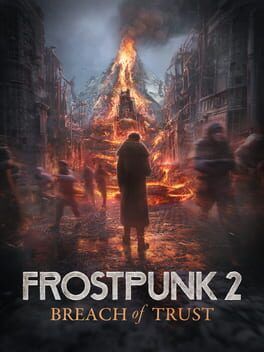
Image: IGDB
Store links: Frostpunk 2: Breach of Trust on Steam
New Edinburgh changes the pressure, but not the audience
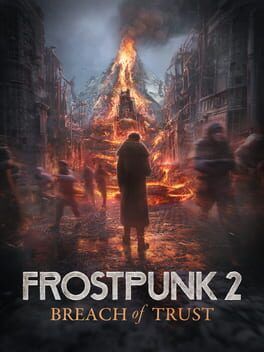
Frostpunk 2: Breach of Trust is confirmed across multiple review outlets as the second major DLC for Frostpunk 2, and its strongest concrete shift is immediate: it moves the survival problem from freezing to governance under volcanic risk. Game8 describes the expansion as a new scenario set in New Edinburgh, where the previous captain’s suicide leaves players as First Citizen while the breakaway outpost Aurora cuts off the city’s food supply. Jump Dash Roll, Impulse Gamer, COGconnected, and Try Hard Guides all identify the same core setup: New Edinburgh sits on or near a volcano, enjoys unusual access to heat or geothermal energy, but faces tremors, food shortages, civil unrest, and the choice between diplomacy and force.
That premise gives Breach of Trust a sharper hook than a simple city-builder challenge pack. Frostpunk 2 already made politics central to survival, and this DLC asks whether political pressure becomes strategically richer when heat is no longer the dominant resource anxiety. The answer is qualified. Breach of Trust does add meaningful pressure through Aurora negotiations, resistance, conscription, and disaster planning. Yet the sources consistently frame it as a short, scenario-bound expansion whose new systems have limited reach beyond its campaign. For players who already want another severe Frostpunk 2 story, that may be enough. For anyone hoping the Breach of Trust DLC reshapes the broader Frostpunk 2 meta, the evidence points to a narrower payoff.
The best idea is a city that has heat and still cannot survive
The smartest design move in Breach of Trust is that New Edinburgh begins from a different failure state than a typical Frostpunk run. Jump Dash Roll notes that the DLC saves players from building a colony from scratch and gives control of a comparatively developed city. Try Hard Guides similarly reports that heat is not the main problem because New Edinburgh thrives through geothermal vents built over a dormant volcano. The scarcity moves elsewhere: food, prefabs, workforce, industrial goods, and political legitimacy.
That rebalancing matters because Frostpunk 2’s usual economy often teaches players to think of heat as the gravitational center of every decision. Here, the city’s advantage is also its liability. Impulse Gamer reports that New Edinburgh draws thermal energy to power its generator, destabilizing the volcano and creating tremors. COGconnected describes a city where over-exploitation of geothermal resources has put the population on course for catastrophe. In strategic terms, Breach of Trust turns abundance into a risk budget. You are not simply solving shortage. You are managing the consequences of the solution that made your city viable.
That is where the Frostpunk 2 expansion is most convincing. The scenario creates a clean macroeconomic triangle: New Edinburgh has energy, Aurora has food, and the volcano punishes overconfidence. It is a strong framework for hard choices because every path carries a bill. Trade preserves lives but costs resources and concedes leverage. War may solve access to supplies but creates military burdens and resistance. Disaster preparation demands stockpiles that a starving city cannot easily spare. When the DLC works, it is because those pressures collide at the same time rather than taking turns.
Diplomacy and war add bite, but the mechanics stay thin
Breach of Trust’s headline systems are diplomacy and war with Aurora. Game8 reports that the DLC introduces an outpost trade and negotiation system tied directly to Aurora, asking players to use the power and fervor difference between the two settlements to secure food and other resources. It also reports conscription and war mechanics, including citizens or mercenaries being used to attack Aurora and reduce its defenses. COGconnected adds that players can build barracks to train soldiers and factories to produce heavy weapons, though battles are not played out in real time.
As strategic pressure, this succeeds better in theme than in mechanical depth. Try Hard Guides says the warfare path can force players into a mixed approach of trade and violence while food reserves decline, which gives the conflict a believable economic drag. That is the part Breach of Trust gets right. War is not presented as a clean alternate tech tree. It consumes labor, resources, stability, and time, which are exactly the things New Edinburgh lacks.
The limitation is that several outlets describe the war layer as constrained. Try Hard Guides calls the warfare mechanics relatively simple, comparing them to expeditions with a tug-of-war presentation and a random-number outcome. Impulse Gamer says the war mechanic is used once for a single colony, while negotiations, resistance, and volcano-related features feel scenario-specific. COGconnected also reports that many of the mechanics, structures, and units do not carry over into the base game or skirmishes, unlike the broader faction additions attributed to Fractured Utopias.
For a Frostpunk 2 DLC, that is the central tradeoff. Breach of Trust gives you stronger political fiction than a generic resource crisis, but it does not appear to convert that fiction into a durable strategic layer. It pressures the player inside its scenario. It does not, according to the available reviews, meaningfully rewrite how Frostpunk 2 is played across its wider modes.
Disasters create tension, sometimes at the cost of agency
The volcano and related disasters are where Breach of Trust most directly separates itself from the base game’s winter logic. Jump Dash Roll reports that the expansion shifts attention toward earthquakes and environmental hazards, with natural disasters capable of ruining a run. The outlet’s criticism is important for buyers: it says a single disaster can end a campaign and that if an earthquake hits warehouses, the player can be left with little recourse. That turns preparation into the central strategic habit, but it can also make outcomes feel arbitrary.
Impulse Gamer reaches a related complaint from another angle. Its review says the scenario provides challenge, especially after taking control of both New Edinburgh and Aurora through war, but describes the predicament as less enjoyable because the scenario follows a set path. It also says that whether the player chooses war or diplomacy, they still face similar objectives and ramifications. That criticism cuts to the heart of Frostpunk’s design identity. The series is at its best when consequences feel authored by player compromises. It is weaker when hardship arrives as a scripted slap or a dice roll that overwhelms planning.
Still, unpredictability is not automatically bad in a strategy game. Frostpunk 2 lives on forcing plans to break. Breach of Trust seems most successful when tremors, hunger, diplomacy, and faction pressure create overlapping incentives. It seems least successful when the disaster layer invalidates planning rather than punishing poor prioritization. Based on the review sources, expect a harsher scenario than the base game’s everyday management loop, with difficulty spikes that some players will read as thematic brutality and others will read as blunt design.
A strong political premise runs through a short, linear campaign
Narratively, the consensus is more positive than the mechanical critique suggests. Impulse Gamer says the story of New Edinburgh and Aurora is the part that shines, even while criticizing the DLC as too short and too constrained. Jump Dash Roll calls it another bleak, well-written story from 11 bit studios, while noting that the expansion’s story itself is not exceptional on its own. COGconnected calls it an interesting standalone campaign with a strong narrative foundation. Try Hard Guides is warmer, describing the new campaign as a fantastic Frostpunk story centered on New Edinburgh’s leadership crisis.
The issue is not premise. The issue is how much room the player has to express strategy inside that premise. Impulse Gamer argues that the narrative’s strength is undermined by limited player choice in shaping the story or handling its challenges. COGconnected similarly says Breach of Trust is so linear and narrative-driven that story beats can feel more important than player decisions. Those criticisms matter because Frostpunk 2’s political layer works when factions, laws, promises, and scarcity create a sense that the city is becoming the monster you fed. If Breach of Trust routes different political choices toward similar endpoints, the pressure still exists, but the strategic consequence becomes less satisfying.
That makes the DLC best understood as a focused scenario rather than a systemic expansion. It adds a new moral and political crisis to Frostpunk 2, with enough new mechanics to change the texture of a campaign. It does not appear, from the reported play impressions, to give Frostpunk 2 a new long-term political vocabulary. Existing fans who value Frostpunk’s bleak storytelling will likely find the New Edinburgh and Aurora conflict worthwhile. Players who mainly want reusable systems, broader Utopia mode changes, or a major meta shake-up should temper expectations.
Performance, presentation, and value for Frostpunk 2 players
The available sources do not provide a full technical breakdown, but they do give useful signals. Impulse Gamer reviewed the DLC on PC and says the scenario did not present the unintentional issues the outlet associated with the earlier Fractured Utopias experience. TheXboxHub reviewed it on Xbox Series X and placed it in its 4/5 review category, while Jump Dash Roll lists Xbox Series as an also-covered platform. COGconnected says the DLC remains aesthetically aligned with the base game, preserving Frostpunk 2’s detailed and evocative environments, with volcanic, geothermal, and military themes giving the scenario its own visual identity.
Value depends heavily on what you want from Frostpunk 2 DLC. Jump Dash Roll reports a roughly five-hour story, while Impulse Gamer says the new scenario ends quickly and feels lacking compared with Fractured Utopias. COGconnected also distinguishes it from Fractured Utopias by noting that most of its new mechanics and structures do not carry over into base-game skirmishes. That makes Breach of Trust a weaker purchase for players who measure DLC by replayable system density.
As a buyer’s guide, the recommendation is clear. Buy Breach of Trust if you are already invested in Frostpunk 2’s political storytelling and want a compact, punishing scenario built around food dependency, rebellion, geothermal overreach, and the ugly economics of coercion. Wait for a sale if your priority is sandbox longevity, mechanical transfer into Utopia mode, or a war system with real strategic depth. Skip it for now if you bounced off Frostpunk 2’s linear narrative pressure or dislike failure states that can feel driven by disaster timing rather than transparent planning.
Verdict
Frostpunk 2: Breach of Trust adds real political heat, but it does so inside a narrow container. Its best contribution is New Edinburgh itself: a city with enough warmth to survive the cold and enough bad governance to collapse anyway. The Aurora conflict creates convincing pressure around dependency, diplomacy, and force, and the volcano gives the economy a dangerous long-term cost.
The drawback is that the DLC’s most interesting systems appear limited, short-lived, and more thematic than transformative. War and negotiation change the scenario’s rhythm, but reported impressions from Try Hard Guides, COGconnected, and Impulse Gamer point to shallow combat resolution, limited carryover, and linear outcomes. Jump Dash Roll’s criticism of harsh disaster swings also suggests that Breach of Trust can blur the line between punishing strategy and frustrating variance.
For existing fans, this is worthwhile Frostpunk 2 DLC: bleak, tense, and built around a smart inversion of the usual heat economy. As a Frostpunk 2 expansion, though, it is closer to a sharp side campaign than a lasting strategic overhaul. Meaningful political pressure is here. The long-term consequences mostly stay trapped in New Edinburgh.
Final Verdict
A solid gaming experience that delivers on its promises and provides hours of entertainment.