
Review

By Pixel Perfect
Froggy Hates Snow Review
Froggy Hates Snow feels like the kind of indie project designed around a very specific emotional texture before anything else. Every frozen platform, snow-covered cavern, and lonely patch of ice exists to sell a mood first and a gameplay loop second. That approach gives the game a memorable identity almost immediately, especially for players who gravitate toward smaller atmospheric platformers. The question is whether that atmosphere can carry the entire experience once the novelty of its icy world begins to settle.
For long stretches, the answer is yes.
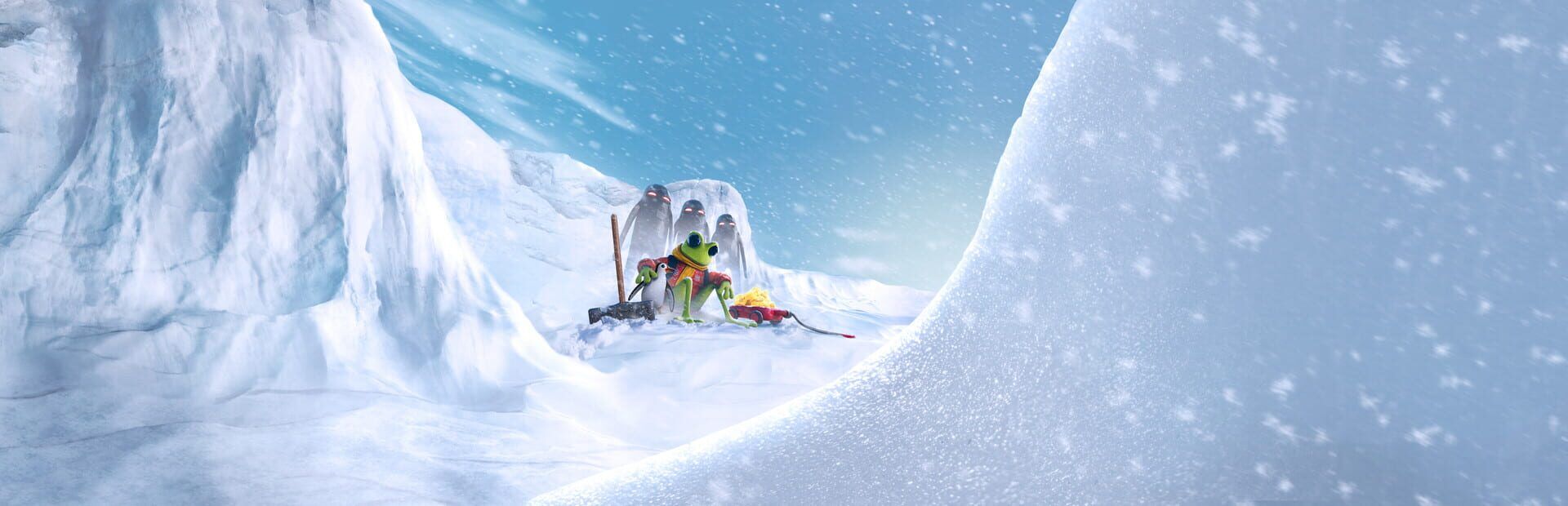
The game’s presentation is easily its strongest feature. Frosted pixel-art environments glow with soft blues and pale whites, while dim lighting and sparse environmental details create a sense of isolation that fits the title perfectly. Froggy Hates Snow constantly communicates discomfort with the cold through its visuals and movement. The world feels hostile without becoming outright oppressive, balancing cozy winter aesthetics with a quiet sense of danger.
Its soundtrack does a huge amount of heavy lifting as well. Gentle ambient tracks drift in the background while crunchy footsteps and slippery movement effects reinforce the frozen terrain beneath you. There are moments where the game becomes almost hypnotic, especially during longer traversal sections where you are simply moving through icy corridors with little interruption. Indie platformer fans who value mood and atmosphere over mechanical complexity will likely find themselves absorbed by the game’s steady rhythm.
Traversal is where the experience comes alive mechanically. Movement across frozen surfaces has a deliberate slickness that initially feels awkward but gradually becomes intuitive. Sliding through narrow pathways, timing momentum across collapsing surfaces, and carefully navigating hazards creates a satisfying physicality. The game understands that ice mechanics can quickly become frustrating if overused, so it mixes traversal gimmicks carefully enough to avoid complete exhaustion.
There is a tangible sense of vulnerability in movement. Froggy often feels small against the environment, and that relationship between character and landscape is what gives the game its strongest identity. Some sections almost resemble environmental puzzles more than traditional platforming challenges, asking players to read terrain and commit to movement rather than simply react.
Unfortunately, the combat never reaches the same level of quality.
Enemy encounters feel underdeveloped compared to traversal. Attacks lack impact, hit detection can feel unreliable, and several enemies behave more like movement interruptions than meaningful threats. Instead of complementing the slippery traversal systems, combat often disrupts the game’s pacing in awkward ways.
Boss encounters fare slightly better visually than mechanically. They look interesting and reinforce the game’s frozen atmosphere, but fighting them rarely feels exciting. Most encounters boil down to repetitive attack patterns and limited player expression. In a game so focused on environmental immersion, combat comes across as an obligation rather than a core pillar.
That mismatch becomes more noticeable as the game progresses. The strongest moments in Froggy Hates Snow happen when the game trusts its atmosphere and traversal enough to stand on their own. Quiet exploration sections consistently outperform combat-heavy sequences because they align with the game’s natural strengths.
The pacing also suffers from some repetition. While the environments remain visually appealing throughout, later areas reuse ideas without evolving them enough mechanically. The game introduces concepts at a measured pace but rarely pushes them toward surprising conclusions. Players looking for deep platforming complexity or escalating mechanical challenge may eventually feel like the experience plateaus too early.
Still, there is something admirable about how committed Froggy Hates Snow is to its tone. It never abandons its central identity in pursuit of bigger spectacle. The game remains intimate, chilly, and strangely calming from beginning to end. That consistency gives it a charm many larger indie platformers struggle to maintain.
For fans of atmosphere-first indie games, that may be enough.
Froggy Hates Snow succeeds most when approached less as a demanding action-platformer and more as a mood-driven winter journey with light mechanical challenges attached. Its traversal systems provide just enough engagement to support the presentation, even if combat drags the experience down whenever it takes center stage.
The result is a flawed but memorable indie platformer that understands how to create a strong emotional space, even if it cannot always fill that space with equally compelling gameplay.
Final Verdict
A solid gaming experience that delivers on its promises and provides hours of entertainment.