
Review

By Pixel Perfect
A tactical shooter that won’t stop flipping the table
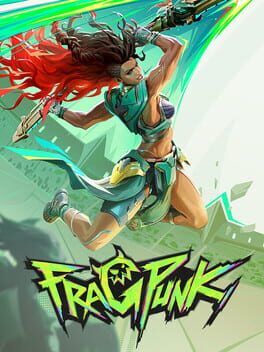
FragPunk sells itself as a 5v5 tactical FPS where you still clear angles, manage an economy, and play the bomb, but every round is twisted by wild, vote-on modifiers called Shard Cards. On paper it sounds like “what if Counter-Strike, but every round someone shuffles a deck of mutators.” In practice, it lands somewhere between a clever, casual alternative to Counter-Strike and a barely controlled party game that keeps tripping over its own gimmick.
What makes FragPunk interesting is that beneath the neon chaos there actually is a real tactical shooter trying to breathe. The big question is whether the cards elevate that foundation or just keep smothering it.
Gunplay: solid fundamentals fighting the circus
Strip the cards away and FragPunk’s gunplay is closer to Valorant than Overwatch. Time-to-kill is low, peeks are deadly, and owning the first bullet usually wins the fight. Recoil patterns are readable rather than random spray, and rifles reward proper counter-strafing and recoil control. The game feels tuned so that flicks and crosshair placement matter more than ability spam.
Hit feedback is excellent. Enemies react decisively when you tag them, sound cues are crisp, and the guns all have a clear identity. Rifles snap, SMGs buzz, shotguns obliterate in close quarters. The sniper rifles hit that Counter-Strike AWP fantasy without quite the same punishment in terms of economy or pace, which will either feel liberating or cheap depending on which side of the scope you’re on.
Characters do have abilities, but they are mostly about tempo and information rather than hard crowd control. Vision tools, movement boosts, and small defensive gadgets support the gunplay rather than replacing it. Compared with Valorant, you get far fewer rounds that are decided by one hero ability dumped on a choke.
Where it falls apart is whenever the card layer leans too hard into nonsense. A carefully played rifle round can be erased because a voted card triples movement speed or turns melee weapons into homing death machines. The core gunplay is good enough that you can feel exactly when the game stops trusting it.
Card modifiers: brilliant hook, constant balance headache
Shard Cards are the big differentiator. Before each round, the game offers a random selection of modifiers and both teams vote. These can be soft nudges, like vampiric bullets or extra credits, or absolute chaos, like balloon heads, second lives, sudden death melee focus, or team-wide invisibility on reload.
At their best, these cards create unforgettable rounds. A set of modifiers that make everyone glass-cannon fragile, or that reward movement and flanking, forces both teams to instantly re-evaluate how they’re holding sites. You get rounds where a cheesy card combo unlocks a new strategy that feels genuinely emergent rather than scripted.
The problem is consistency. Some cards are basically win buttons stapled onto already strong weapons or heroes. Economy-positive cards in particular can snowball a lead brutally. Others are just degenerately unfun to play against, especially melee-leaning modifiers on tighter maps, where the guns that are the supposed star of the show barely matter.
Because the decks are shared and voting is public, you also end up in lobbies where the social meta becomes “always pick the craziest card,” even when everyone knows it will blow up competitive integrity. FragPunk keeps insisting it is a tactical shooter, but its best toys are the ones that turn matches into a glorified custom-game server.
Matchmaking suffers because of this volatility. Rounds are short, so a couple of ridiculous cards can swing a match beyond recovery before teams really show their skill. You can slowly climb once the system gets a read on you, but there are too many games where one-card RNG and dubious balance matter more than team cohesion.
Map design: clean lanes, tight sites, and limited variety
If you ignore the modifiers, FragPunk’s maps are surprisingly disciplined. Most layouts lean on classic three-lane structure, with clear A and B bomb sites, a contested mid, and a mixture of long sightlines and close choke points. Verticality is present but not overbearing, giving flank routes and off-angles without turning every engagement into a parkour puzzle.
Sightlines are tuned for its snappy TTK. Long corridors give rifles and snipers room to breathe, while secondary routes and connector alleys keep SMGs and shotguns viable. Hard cover is placed intelligently to support default plant holds and retakes. You can tell the designers were thinking in terms of traditional tactical map theory rather than hero-shooter chaos.
The issue is scale and theme repetition. The map pool at launch is thin, and visual themes blur together into a generic punky sci-fi mashup. The art direction is slick, but after a dozen hours, you feel like you are running slightly recolored variants of the same industrial complex over and over. When card effects start dramatically warping gravity or movement, some of the tighter interior spaces also become cluttered and unreadable.
FragPunk’s round structure further accentuates map fatigue. Because matches are short and rounds are fast, you cycle through a lot of rounds on the same location before the playlist rotates. With more maps in rotation, the card variety would feel fresher. As it stands, you often end up seeing the same modifiers on the same plant sites, and the novelty wears off quickly.
Matchmaking and population: solid tech, shaky reality
From a technical perspective, matchmaking is pretty standard. There are casual queues and ranked, with skill-based pairing that tries to keep lobbies tight. Queue times in the first weeks were acceptable on PC during peak hours, but community chatter already points to slower waits outside those windows, especially if you queue ranked or in lower-pop regions.
The biggest sin is inconsistency. Outcome variance is so high that your personal performance feels loosely correlated with your rank gains or losses. A coordinated stack that actually plays off utility and angles can be blown out by a less skilled team that simply rolls better cards and gets a couple of lucky eco swings. That is funny on night one, but it is miserable for anyone wanting the long-term grind that makes Counter-Strike or Valorant so sticky.
The game clearly wants to occupy a more casual middle ground, but it doesn’t quite commit. Ranked is present, complete with the anxiety and expectations that word carries, yet every system sitting on top of it behaves like a party mode. The result is a ranked experience you cannot take seriously, and a casual queue that still inherits the balance issues of the overall design.
Progression: fast drip, shallow pool
FragPunk’s progression systems are serviceable but thin. You level an account, unlock cosmetics, and climb a battle pass. Heroes and key cards are mostly accessible without a massive grind, which is a relief in an era of heavy-handed hero monetization.
The pacing of rewards feels good in the first ten or so hours. You are constantly getting something, whether that is a card unlock, a skin, or some currency. The trouble is that what you unlock is rarely interesting enough to drive long-term engagement. Gun skins are fine, character cosmetics are in line with the loud art style, but there are few moments where a reward actually changes how you play.
Worse, because the card system is such a huge part of the game’s identity, balance issues there bleed directly into progression. When certain meta-defining modifiers are gated even a little behind leveling, new players walking into lobbies with fully kitted veterans feel like they are playing a different game. That is death for any shooter that wants to be a casual-friendly alternative to the genre giants.
Monetization, at least, is not the worst offender in the space. It leans on cosmetic sales and a seasonal pass, and while prices are predictably high, nothing critical is hard-locked behind a paywall. The frustration is less “pay-to-win” and more “why am I grinding for cosmetics in a game that can’t decide what it wants to be.”
Can FragPunk sit between Counter-Strike, Valorant, and hero shooters?
There is a clear ambition here. FragPunk wants to carve out a niche between the unforgiving discipline of Counter-Strike, the ability-driven chess match of Valorant, and the bombast of modern hero shooters. It wants to be the tactical shooter you can boot up after work without needing a premade, memorized lineups, and an IGL barking set plays.
In flashes, it absolutely nails that. The best matches feel like a casual Counter-Strike variant with fewer hard edges and more room for improvisation. You still clear angles and trade properly, but you laugh when a round goes sideways because some card added a goofy twist. The low friction and fast rounds make it easy to say “one more game.”
The problem is that FragPunk keeps sabotaging itself by pushing the party elements too far. Counter-Strike and Valorant work because the ruleset is stable and legible. You win or lose on skill, information, and adaptation inside a tightly controlled sandbox. FragPunk keeps kicking sand out of that box every other round, then asks you to respect its ranked ladder like a serious sport.
As a casual, short-session shooter to play with friends, FragPunk is genuinely enjoyable. The art style pops, the movement and guns feel good, and the best card combos create highlight-reel moments you will want to clip and share. As a long-term main game, especially for anyone who values competitive consistency, it feels too chaotic, too thin on content, and too wobbly in its balance to compete with Counter-Strike or Valorant.
Verdict
FragPunk is a stylish, clever attempt at a card-augmented tactical FPS with real mechanical teeth. The underlying gunplay and map design are far better than its loudest gimmicks suggest. But its reliance on swingy modifiers, limited map variety, and wobbly matchmaking keep it from fully claiming the space it desperately wants between Counter-Strike, Valorant, and the rest of the hero shooter crowd.
If you are looking for a disciplined ranked grind, stick with the genre staples. If you want a lightweight tactical shooter that occasionally explodes into nonsense and you are comfortable riding that chaos, FragPunk is worth downloading, playing for a season, and revisiting only if future updates can tame its deck enough to let the shooting shine.
Final Verdict
A solid gaming experience that delivers on its promises and provides hours of entertainment.