
Review
By Story Mode
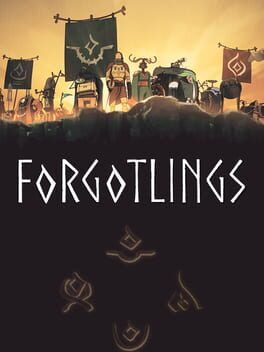
Image: IGDB
Store links: Forgotlings on Steam
A beautiful adventure with a practical barrier up front
Forgotlings is already drawing a clear critical pattern: reviewers are responding strongly to its world, art direction, and character work, while the game asks for patience from anyone coming in for momentum. TheXboxHub published its Forgotlings Review on August 23, 2026, filed under Xbox Series X reviews, and scored it 4/5. GamerPoint reviewed the PS5 version and opened with a sharper consumer warning for its audience, stating that Forgotlings does not include Brazilian Portuguese localization.
That localization note is not a footnote for a story driven adventure game. GamerPoint stresses that dialogue, decisions, and objectives depend heavily on text comprehension. In a game built around meeting strange societies, understanding local conflicts, and reading the personality of objects brought to life, language support directly affects access to the best part of the experience.
For players who can comfortably follow the available text, though, the core question becomes simpler: does the hand-drawn world justify a slower pace? My answer is yes, with conditions. Forgotlings works best when treated as an exploratory animated fable rather than a brisk action game. It rewards attention, curiosity, and emotional investment far more reliably than it rewards impatience.
The Forgotten Lands give ordinary objects unusual dramatic weight
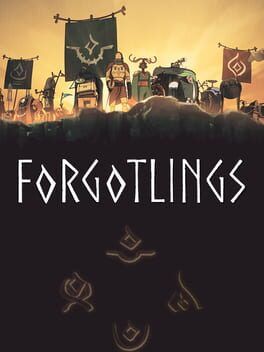
The premise remains the game’s strongest hook. GamerPoint describes Forgotlings as a society made up of objects abandoned by humans, with Throughline Games turning everyday items into creatures capable of conversation, communities, and conflict. The same review identifies Fig as the central character and says she takes command of the sentient ship Volare before travelling across the Forgotten Lands to make contact with five tribes, each facing its own problems.
That structure gives the exploration a clear narrative job. You are not moving through zones only to fill out a map or collect another upgrade. You are crossing communities shaped by their origin as discarded things, and the game’s best writing comes from the way it lets small objects carry large emotional histories. GamerPoint singles out conscious vessels, lamps, and other anthropomorphic objects as examples of characters that communicate personality without relying only on long dialogue scenes.
NAG’s republished feature, originally printed in its 2024 annual edition and placed online in August 2026 with a note that some details may have changed, frames the world on a larger scale. It describes warring tribes, a looming catastrophe, alliances to forge, and a realm where sentient forgotten objects search for meaning and purpose. That context gives Forgotlings its stakes. The game’s gentleness in presentation does not erase the pressure underneath; it makes the conflicts feel sadder, because these are beings already defined by having been left behind.
The hand-drawn art carries much of the pacing burden
Forgotlings’ slower rhythm would be harder to defend if the world were merely decorative. It is not. GamerPoint calls the visual direction impressive, pointing to hand-drawn aesthetics, traditional animation influences, expressive characters, strong use of color, environmental detail, and regions distinct enough to make the reviewer stop and look around during the campaign.
NAG’s interview material adds useful production context. Alfred Nguyen of Throughline Games describes the project as a whimsical exploration of forgotten dreams that come alive, and says the studio wanted to create a 2D world that feels like a feature film come alive. NAG also reports that the game is built from thousands of hand-drawn frames and that the team aimed for something like a living painting.
That ambition matters because Forgotlings often asks you to absorb mood before action. The animation gives the world softness, but also texture. Characters feel deliberately crafted rather than generated by a template. Backgrounds invite inspection. The result is a game where walking, talking, and pausing become part of the storytelling language. If you need every scene to hurry toward a mechanical payoff, the pace will drag. If you enjoy adventure games where atmosphere carries narrative information, the visual craft earns that time.
Exploration is the main form of storytelling
NAG described Forgotlings, at the time of its original feature, as an expansive open-world, Metroidvania-style adventure. GamerPoint’s PS5 review supports the idea that exploration is central, saying each new region introduces different creatures, cultures, and situations that help explain how the world functions. That is the version of the game I find most convincing: exploration as context, not checklist design.
The key is that the Forgotten Lands are built around communities. Reaching a tribe means learning its problems and its place in the wider society of forgotten objects. Moving forward is therefore tied to understanding, not only navigation. For an adventure fan, that is a meaningful trade. You give up some speed, but you gain a stronger sense that the route itself is character development.
The Metroidvania comparison should be handled carefully, because the supplied sources do not provide a full breakdown of ability gating, backtracking structure, or upgrade cadence. What is clear is the spirit of the design: a connected world that wants you to look closely and treat discovery as narrative progression. In Forgotlings gameplay, the reward for curiosity is usually another cultural detail, another odd character, or another reminder that this world’s fantasy works because it is built from familiar human leftovers.
Combat and momentum take a supporting role
This is where expectations need careful calibration. GamerPoint notes that its review covers combat, exploration, and problems encountered during the journey, but the source material provided places its concrete praise on world-building, visual design, narrative focus, and curiosity-driven discovery. TheXboxHub’s 4/5 score signals a positive reception on Xbox Series X, but the available excerpt does not detail combat systems or technical findings.
As a buyer’s guide judgment, I would not recommend Forgotlings primarily to players seeking tight combat loops, constant set-pieces, or rapid mechanical escalation. Its action-adventure identity sits closer to animated narrative adventure than to a combat-first platformer. Combat functions best as punctuation between discoveries, while the real rhythm comes from arriving somewhere new, meeting strange inhabitants, and letting their stories reshape your understanding of the land.
That does create friction. The pacing can feel soft when the game lingers on mood, and players who measure progression by challenge density may find themselves waiting for a sharper mechanical turn. But for adventure fans who value place, tone, and character stakes, the quieter cadence is not a flaw by itself. It is the cost of the game’s best illusion: that every abandoned thing might have a life you should slow down long enough to notice.
Platform notes, language access, and who should buy it
The confirmed platform picture from the supplied review material includes PS5 through GamerPoint’s review and Xbox Series X through TheXboxHub’s review category. The sources provided do not include a current official store listing for Forgotlings, a price, PC requirements, upgrade path, or release timing details. Two Steam pages included in the source packet are for Enderal: Forgotten Stories and The Forgotten City, which are separate games and should not be treated as Forgotlings store evidence.
The biggest practical caveat is language. GamerPoint explicitly says Forgotlings lacks Brazilian Portuguese localization, and because the game leans heavily on dialogue, objectives, and decisions, Portuguese-speaking players who are not comfortable with the available languages should wait for localization news rather than assume the art alone will carry the experience.
For everyone else, this is a strong fit if your favorite adventure games are the ones that let world-building do heavy lifting. Fans of Forgotten Anne have an obvious reason to pay attention, since NAG identifies Forgotlings as a sequel from Throughline Games and connects it to the studio’s longstanding interest in seamless 2D storytelling. Newcomers do not need that history to understand the appeal, but they do need tolerance for a deliberate tempo.
Score rationale
Forgotlings earns its recommendation through craft rather than velocity. The story framework of Fig, Volare, five troubled tribes, and a land of forgotten objects gives the journey shape. The hand-drawn presentation gives it identity. The exploration-driven structure makes the world feel discoverable instead of merely displayed.
Its weaknesses are tied to the same choices. The slower pace will not suit action-first players, and the supplied review material does not point to combat as the game’s defining strength. The lack of Brazilian Portuguese localization, reported by GamerPoint, is also a serious accessibility and market limitation for text-dependent play.
Still, as a Forgotlings review for adventure fans, the verdict is positive. This is a patient, expressive, story driven adventure game whose best scenes come when it trusts you to wander, listen, and care about things the world has thrown away.
Final Verdict
A solid gaming experience that delivers on its promises and provides hours of entertainment.