
Review

By Headshot
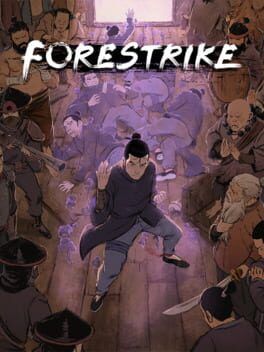
Forestrike is one of those rare action games that teaches you how to be good at it without ever rubbing your nose in a tutorial. It does it through a single, brilliant idea: before any real fight, you get to scrub through a ghost simulation of the encounter, test approaches, rewind, and iterate until you have a plan you are happy with. Only then do you commit, and suddenly every move matters because you can only take three hits on a run.
Famitsu’s 9/8/8/8 split makes sense once you see that the whole game orbits this tension between perfect information and razor-thin margins for error. It is as much a planning game as it is a brawler, and that is where it cleanly separates itself from other recent action hits.
Combat: Fighting As A Solvable Problem
At the heart of Forestrike is the Foresight mechanic. When you enter an encounter, time is malleable. You sprint in, throw combos, test parries, try a risky wall-jump, maybe even blunder straight into a spear. None of it counts. You hold a button, rewind to the start, and watch your ghost repeat the path you just took while you adjust.
The clever bit is how the game fuses this with sharp, readable martial arts combat. Strikes come in fast, but they are honest. Enemy wind-ups are crisp, hurtboxes are fair, and your toolset is limited enough early on that you quickly internalize timings. Reads and reactions that would normally take dozens of failed runs in a roguelite are compressed into a few quick simulations.
Once you lock in and start the “real” fight, Forestrike becomes brutally unforgiving. Those three hits are all you get for the entire run, not just a single stage. It is a design that rewards composure and patience more than button mashing. Your combos are never flashy for their own sake; every string, cancel, and repositioning step is in service of a safe solution you already proved in rehearsal.
What keeps this from feeling like rote repetition is that each room is closer to a micro-puzzle than a dance routine. Attack arcs, line-of-sight, and enemy aggro are all tuned so that small changes in your path produce different outcomes. Shift your opening dash by half a screen and a crossbowman might decide to climb instead of shoot, or a heavy might step into a throw range he previously avoided. You slowly learn the game’s "visual language" of how enemies respond, and fights become about manipulating that behavior.
Compared to contemporaries that lean on raw reflex and sprawling move lists, Forestrike’s brilliance is in limitation. You are not chasing a 50-move combo or juggling crowds with cinematic finishers. You are stringing two or three high-value hits together, picking when to commit to a parry instead of a dodge, and using the environment to line enemies up so they get in each other’s way. It feels closer to playing a good 2D fighter’s training mode with save states than a typical roguelite brawler.
Masters, Techniques, And The Flow Of A Run
Forestrike’s progression is built around martial arts masters who define your fighting style for a run. Each master is essentially a school of play: one might emphasize tight, defensive play with parry windows and counter-throws, another thrives on aggressive forward momentum and positional control, while a third leans into aerials and evasive movement.
Across a run, you accumulate techniques tied to that master, earned from altars, vendors, and branching route rewards. Techniques are powerful but focused. They modify fundamentals rather than adding clutter, so learning a new one often means rewiring how you think about neutral. A dash that turns into a short-range strike encourages constant micro-engagements. A parry that flips an enemy behind you suddenly makes back-to-wall situations desirable.
What Famitsu clearly latched on to is how this system feeds directly back into the core combat hook. Foresight lets you experiment freely with a new technique until you find a safe way to incorporate it, so you almost never resent gaining something fresh mid-run. You have room to make it part of your toolkit before your health total is on the line.
The macro structure borrows from Star Fox 64 more than from Hades. You advance across a map of regions with branching routes, and each fork forces explicit tradeoffs: more money now or a guaranteed technique later, an easier fight at the cost of missing an elite that drops a big reward, or a harsh challenge that could set up your endgame if you clear it cleanly. The game gently pushes you to think like a strategist rather than a tourist.
That said, not every layer of progression is equally satisfying. The between-run meta upgrades are restrained to a fault. Persistent unlocks exist in the form of new masters, additional techniques entering the pool, and small quality-of-life bumps, but there is very little in the way of raw stat inflation. Philosophically that is admirable; practically it means early failures can sometimes feel like you wasted 20 minutes for negligible forward motion. For a certain mindset the purity of "get better, not bigger" is the whole appeal. For others it will read as stingy.
How Forestrike Stands Apart From Other Action Roguelites
The roguelite space is crowded with flashy combat systems and meta-progression treadmills, yet Forestrike carves its own lane through discipline and clarity. Where something like Hades or Dead Cells is about flow, build roulette, and visceral spectacle, Forestrike is about control.
The immediate comparison point is Sifu, another modern martial arts game obsessed with spacing and timing. The difference is in how Forestrike externalizes its obsession. Sifu teaches you through failure in real time; you lose, you age, you restart a stage. Forestrike takes that same demand for mastery and relocates most of the learning into its simulation layer. It becomes a game about practice itself, about deliberate rehearsal, rather than brute-forcing repetition.
Importantly, Forestrike resists the temptation to bog itself down with gear scores, element types, or sprawling skill trees. Recent action games often widen horizontally to keep you playing, burying their sharp combat in systems noise. Forestrike narrows in. You will not spend ten minutes parsing loot filters or min-maxing an affix. You will spend those ten minutes shaving frames off a route through three archers and a spear brute, until you can clear the room without a scratch.
Visually and sonically it reinforces that focused identity. The pixel art is clean, foregrounding silhouettes and telegraphs over background detail. Animations sell impact without sacrificing readability, with just enough exaggeration to make a perfectly timed counter feel like a statement. The soundscape is sparse and sharp: snap-heavy impacts, brief musical stings that spike when you pull off a flawless plan, and quiet in the downtime so you can think.
Long-Term Depth And Replayability
Whether Forestrike can hold you for dozens of hours comes down to how much you enjoy solving the same kinds of problems under slightly different conditions.
On one hand, the mechanical depth is real. Enemy types stack in interesting ways, and higher tiers remix familiar foes with nasty new properties. Masters substantially alter how you approach situations, and advanced techniques can force radical shifts in routing. Learning to clear early stages flawlessly with multiple styles is engrossing, and chasing that perfect, hitless run across the full route can be intoxicating.
On the other hand, Forestrike is not infinitely variable. Level layouts are semi-fixed, and while encounter compositions shuffle, there is nowhere near the procedural chaos you would find in a more traditional roguelite. Once you have "solved" a room, coming back to it with the same master can feel like executing a known script with minor improvisation rather than discovering something new. Some critics have rightly called out that the randomization is conservative, and if you are chasing novelty over mastery, the structure will work against you.
The mastery curve also has a bit of a cliff. Early on, failure feels instructive because every rewind shows you something you could have done better. Later, deaths can feel more like you violated your own mental checklist than like the game taught you something surprising. There is pleasure in that self-policing loop, but it is a narrower form of fun.
That balance aligns neatly with Famitsu’s mixed-yet-positive scoring. One reviewer clearly fell hard for the concept and execution, bumping it to a 9, while the others handed out solid 8s that acknowledge how refined the package is without pretending it is endlessly accommodating. It is the kind of game that can become a personal classic for players wired for its rhythms, but it will leave others cold once the initial novelty of Foresight wears off.
Verdict
Forestrike earns its high marks by knowing exactly what it wants to be and pursuing that vision with discipline. Its combat reframes martial arts action as a series of solvable micro-puzzles, its progression systems are tuned to feed that loop rather than distract from it, and its Foresight mechanic is one of the smartest twists on roguelite structure in years.
It does not have the lavish spectacle or bottomless build variety of some of its peers, and its restrained meta-progression plus modest randomization mean it will not hook everyone for the long haul. But if you crave an action game that respects your time by demanding your focus, and you like the idea of rehearsing victory before you commit to it, Forestrike is more than worthy of the praise it received from Famitsu.
On Switch in particular, where quick runs slot neatly into handheld sessions, it feels like a natural fit: a disciplined, repeatable test of skill you can keep coming back to whenever you want to prove to yourself that you still know exactly how to dismantle a room full of unsuspecting thugs.
Final Verdict
A solid gaming experience that delivers on its promises and provides hours of entertainment.