

Review
By The Completionist
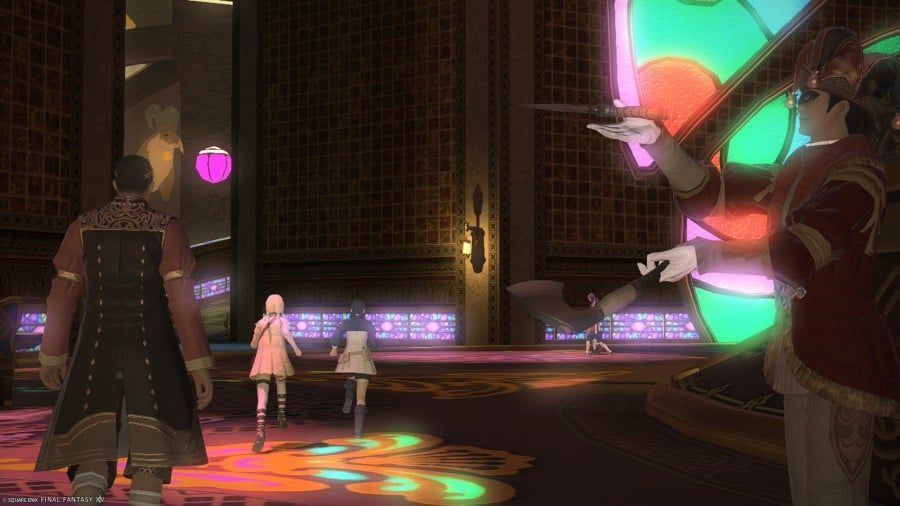
Image: nintendolife.com
The Switch 2 version lands strongest in handheld, and that shapes the whole purchase
Final Fantasy XIV is now available on Nintendo Switch 2, according to RPG Site’s launch coverage, marking the first Nintendo platform release for Square Enix’s long-running MMO. The important tension is clear from the early technical reporting: this is a convincing portable version, but it is not the best living-room version if you already own a PlayStation 5, Xbox Series console, or capable PC.
That matters for a Final Fantasy XIV Switch 2 review because this port is being judged against two different fantasies. One is the idea of a full Eorzea subscription life on Nintendo hardware, complete with roulettes, MSQ catch-up, crafting, gathering, and social play from the couch or commute. The other is the expectation that Switch 2 docked mode should compete cleanly with current consoles. Based on the available review coverage, Square Enix succeeds far more clearly at the first.
Console Creatures reported that the Switch 2 release was compelling enough to pull its reviewer back into the MMO loop for weeks, specifically praising the ability to complete daily tasks from the couch. Nintendo Life likewise described the Switch 2 version as the full Final Fantasy XIV experience on a Nintendo handheld, with access to the massive RPG structure that has accumulated since A Realm Reborn. RPG Site, by contrast, called handheld play solid while arguing that docked mode should have been better, especially beside PS5, Xbox Series, and PC handheld comparisons.
GameLoop’s read is that the Switch 2 version is best understood as a convenience-first port. If you want the sharpest image on a 4K display, this is the wrong primary platform. If you want a portable MMO machine that makes daily progression easier to fit into ordinary time, the value proposition becomes much stronger.
FF14 Switch 2 performance is stable enough handheld, less flattering docked
The clearest technical split is between handheld and docked play. Console Creatures reported that Final Fantasy XIV is locked to 30 frames per second in handheld mode, and MMORPG.com’s preview material also noted a 30fps handheld lock. That cap is a compromise, but the available coverage frames it as an acceptable one for routine MMO play rather than a dealbreaker. Final Fantasy XIV’s global cooldown combat, questing rhythm, crafting windows, and menu-heavy progression do not demand twitch-shooter responsiveness, although high-end players will still feel every layer of latency and visual compromise more sharply.
Docked mode is more complicated. Console Creatures reported that the game can run at 60 frames docked, with drops in dense cities and hubs such as Limsa Lominsa. The outlet said those slowdowns were visible but did not become a nuisance during routine hub activities like grabbing dailies, turning in quests, making gear, or meeting friends. RPG Site’s testing was harsher on docked presentation. It reported that the Switch 2 version appears capped at 1080p when docked, lacks the 1440p and 4K UI options available on PS5 and Xbox Series versions, and sits below current consoles in resolution, graphics, and performance.
RPG Site also singled out shimmering across foliage and shadows as the major docked visual problem, even more than the expected cutbacks to foliage, geometry, and shadows. That detail matters because shimmering is the kind of flaw that becomes more visible on a large TV than on the handheld screen. A game can feel clean and readable in portable form while looking restless or under-resolved on a 1440p or 4K display.
For FF14 Switch 2 performance, then, the recommendation depends on where you plan to play. Handheld mode appears tuned around consistency and battery-friendly expectations. Docked mode is playable, but the sources agree less enthusiastically there, and RPG Site’s comparison makes it difficult to recommend Switch 2 as a replacement for current consoles if your main display is a large modern TV.
Controller comfort works because Final Fantasy XIV already solved console MMO play
Final Fantasy XIV has had years to refine controller play across PlayStation and Xbox, and the Switch 2 port benefits from that history. Console Creatures reported that the Switch 2 controller can handle much of the nuance found in the PC and console versions, with character skills tied to shoulder buttons and combat working well after an adjustment period. The same review noted that the Switch 2’s mouse mode works in a pinch for players who want pointer-style control.
That does not make the interface simple. Final Fantasy XIV is a dense MMO with hotbars, crossbars, quest logs, duty finders, inventory screens, materia management, glamour systems, retainers, market board browsing, crafting rotations, gathering nodes, job quests, and a decade-plus of accumulated UI assumptions. A controller can make it playable, but it cannot make it frictionless for every activity. The strength of the Switch 2 version is that most of the routine loop survives: leveling jobs, completing MSQ steps, queueing for normal duties, doing roulettes, crafting, gathering, and checking in with friends.
Console Creatures also reported frequent use of the Switch 2 touch screen, saying players can navigate menus by tapping rather than relying entirely on Joy-Con 2 inputs, and can effectively replace a mouse with fingers in some interface situations. That is an important handheld advantage. Final Fantasy XIV asks players to live in menus as much as battle arenas, and touch input reduces some of the small abrasions that build up over long sessions.
For players used to keyboard and mouse, this version will still require relearning. For longtime console players, it should feel familiar. The controller story is less about Switch 2 inventing a new MMO interface and more about Nintendo finally having hardware that can inherit Square Enix’s existing console design without collapsing under the load.
Handheld readability is good enough for questing, but the MMO density never disappears
The most pleasant surprise across the source material is that FFXIV Switch 2 handheld play is viable for a game this text-heavy and systems-heavy. Nintendo Life’s review included handheld capture and described the release as the full experience on Nintendo’s platform. Console Creatures said the reviewer had initially doubted dungeons or raids would feel practical on a small screen, then spent weeks playing that way.
Readability still depends on what you are doing. Main Scenario Quest progression, job leveling, gathering routes, crafting turn-ins, daily roulettes, and casual social play are a natural fit for handheld sessions. These are activities where Final Fantasy XIV’s measured pacing works with the device. You can read quest text, manage a handful of objectives, and chip away at long-term goals without needing a full desktop setup.
The pressure rises in busier content. Alliance raids, large FATE trains, crowded city hubs, and mechanically dense trials place more strain on a portable screen, especially when enemy telegraphs, party frames, buffs, debuffs, cast bars, and hotbars all compete for space. None of the provided sources claim that Switch 2 is the ideal platform for Savage progression. In fact, a Reddit user comparing Switch 2 with Steam Deck, PS Portal, PC, PS4, and PS5 said they would not recommend Switch 2 if the main focus is Savage raiding or high-end progression, while praising it for daily roulettes, casual PvP, crafting, gathering, MSQ, leveling jobs, and casual grinding.
That community post should be treated as an anecdote rather than a universal benchmark, but it matches the broader technical picture. The Switch 2 version is strongest when Final Fantasy XIV is a portable RPG routine. It is weaker when the game becomes an execution-heavy MMO laboratory where every frame, pixel, and input matters.
New players get a huge RPG, returning players face the double-dip question
For newcomers, the Switch 2 release is almost absurdly large. Console Creatures reported that a fresh account has access to the base game plus Heavensward, Stormblood, and Shadowbringers. The outlet also emphasized that this represents hundreds of hours of content, while noting that A Realm Reborn takes time to ramp up. Nintendo Life similarly framed the Hydaelyn-Zodiark Saga as a four-part fantasy epic that can take no less than roughly 200 hours if players beeline the finale and skip most side content, with another expansion then beginning the next long arc.
That size is the appeal and the warning. Final Fantasy XIV is one of the richest RPG progression structures on any platform, but its early pacing remains uneven. Nintendo Life called the base game’s roughly 60-hour story an extended exposition-heavy setup, with many unvoiced conversations establishing nations, factions, and conflicts before the story reaches its biggest payoffs. As an RPG buyer’s guide, that means Switch 2 newcomers should not expect a brisk Final Fantasy campaign. Expect a long onboarding arc into a huge MMO ecosystem.
Returning players have a different calculation. Console Creatures noted that players using an existing account need to pay the monthly subscription fee to use their existing character. RPG Site also mentioned frustration around needing an additional subscription just for Switch 2, while clarifying that this is less of an issue for players who only intend to play on Nintendo’s platform. The exact account and subscription path will matter more to veterans than to first-timers, because a returning Warrior of Light is weighing convenience against another platform buy-in.
A Reddit user reported that the $40 Complete Edition included 30 days of game time and that the time was added automatically after linking a Nintendo account, but that is a community report from one buyer, not a publisher statement in the provided material. Treat it as a useful data point to verify against the Nintendo eShop and Square Enix account flow before purchasing.
Should returning players double dip? If you mainly raid, play on a high-resolution TV, or already have a smooth PC or PS5 routine, Switch 2 is a secondary device, not an upgrade. If your FFXIV life is roulettes, beast tribe or society chores, MSQ catch-up, crafting, gathering, alt jobs, and checking retainers from wherever you are, the Switch 2 version has a real purpose.
Storage, load times, and the practical cost of carrying Eorzea
The least glamorous requirement may be the most immediate: storage. Console Creatures reported that Final Fantasy XIV on Switch 2 needs around 117GB of space and advised buying a microSD Express card. For a platform where many players juggle digital libraries, that is not a footnote. It is the first test of whether this port fits your hardware life.
The Reddit comparison post added an anecdotal wrinkle, with the user saying the game ran noticeably better when installed on the Switch 2’s internal storage rather than an SD card, prompting them to move other games to the card instead. Because that is a single community report, it should not be treated as definitive technical guidance. Still, it is consistent with the general principle that large online games can be sensitive to storage speed and streaming behavior. If you are buying Final Fantasy XIV Nintendo Switch 2 primarily as a daily driver, plan your storage before purchase rather than after the download begins.
Load times are more encouraging in the available player report. The same Reddit user described loading as surprisingly quick and comparable to PS5 in most areas. RPG Site said it waited for a load time fix to go live before revisiting the Switch 2 version for its feature, which suggests launch conditions shifted quickly enough that impressions before and after that fix may differ. That is an important caveat for readers comparing early comments online.
The practical guidance is simple: leave headroom, verify the current client size, and check whether later patches have changed load behavior. Final Fantasy XIV is an actively maintained MMO, so the Switch 2 version that exists at launch is not frozen. Performance fixes, UI tweaks, or image-quality updates could change the docked-versus-handheld balance over time, but none of the provided sources confirms specific upcoming improvements.
Verdict: the best use case is portable progression, not premium docked play
Final Fantasy XIV on Switch 2 is a strong port when judged by the thing Nintendo hardware can uniquely add to Square Enix’s MMO: easy access to Eorzea away from a desk or TV. The reported handheld 30fps cap is sensible, controller play is workable thanks to the MMO’s established console interface, touch input helps with menu friction, and routine progression fits the portable format unusually well. For MSQ catch-up, daily roulettes, crafting, gathering, leveling side jobs, and relaxed social play, this is a persuasive way to keep the subscription loop close at hand.
The docked experience keeps this from a higher score. RPG Site’s findings on 1080p docked output, missing higher-resolution UI options, visual cutbacks, and shimmering make the Switch 2 version harder to recommend as a primary big-screen version beside PS5, Xbox Series, or PC. Console Creatures’ report that docked mode can run at 60fps but drops in hubs reinforces the same point: playable, often enjoyable, but not the premium visual target.
As an RPG, Final Fantasy XIV remains enormous, generous in scope, and uneven in its earliest hours. As a Switch 2 release, it translates better than many skeptics expected, especially in handheld. The best audience is clear: newcomers who want a portable MMO home and returning players who will actually use the convenience enough to justify another purchase. High-end raiders and players chasing the cleanest image should stay on stronger hardware.
Score rationale: gameplay earns high marks because the full MMO loop survives on controller and handheld. Story remains strong but slow to start, with Nintendo Life’s pacing criticism still relevant. Graphics are effective on the small screen but compromised docked. Audio is not a focus of the provided technical coverage, so it receives a conservative score rather than an inflated one. Performance is solid for portable play, with docked limitations holding it back.
Final Verdict
A solid gaming experience that delivers on its promises and provides hours of entertainment.