
Review
By Apex
A New Door Into Midgar
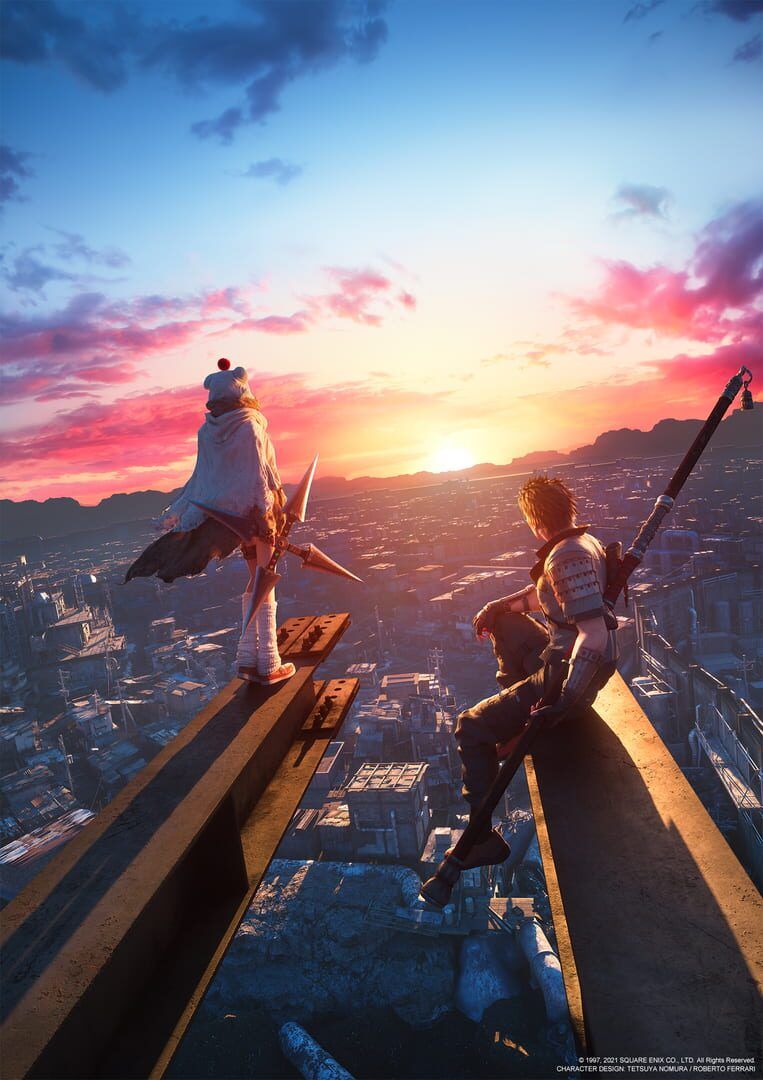
With Final Fantasy VII Remake Intergrade finally stepping onto Switch 2 and Xbox Series consoles, Square Enix has a lot to prove. These platforms missed the initial Remake wave, and the trilogy is now a known quantity rather than a novelty. The free demo that just dropped is more than a marketing teaser. It is a technical stress test for two very different hardware families and, just as importantly, a first impression for anyone who has somehow dodged both the original PS1 classic and its modern reimagining.
The good news is that this opening chapter still sings. The better news is that, on both Switch 2 and Xbox, it looks like a genuinely strong way to start the trilogy, supported by welcome new onboarding options that widen the audience without gutting the combat.
Performance: How Close To "Native" Heaven?
Switch 2
On Switch 2, the surprise is not that Final Fantasy VII Remake Intergrade runs, but how confidently it does so. The Mako Reactor 1 bombing run is dense with volumetric fog, particle effects, and complex character models, yet the demo holds a solid 60 frames per second in its performance‑leaning mode in most combat scenarios, with only brief dips during the most over‑the‑top ATB abilities. Resolution sits below full 4K, but on a 4K display it upscales cleanly enough that most players will be thinking about Cloud's hair physics rather than pixel edges.
In docked play, image quality lands somewhere between PS5's performance mode and a high‑end PC with a few settings dialed back. Shadow resolution and screen‑space reflections are the most obvious cuts if you pause and scrutinize, but in motion the art direction covers for those compromises. Texture streaming across the demo's small footprint is stable, avoiding the glaringly low‑res doors that famously haunted early PS4 builds.
Handheld mode is arguably the real showpiece. The internal resolution drops, but on the smaller panel the game looks sharp and saturated, with consistent frame pacing. The opening train ride into Midgar and the first skyline shot pop in HDR, and load times are quick enough that deaths or retries simply are not a frustration point.
Xbox Series X and S
On Series X, the demo is essentially at parity with PS5's Intergrade build. Quality mode pushes higher resolution and slightly richer effects, while performance mode prioritizes a near‑locked 60 frames per second, which feels fantastic in the hybrid action/ATB combat. Texture quality, view distance, and lighting all match what you would reasonably expect from a native current‑gen port in 2026.
Series S gets the expected compromises. Resolution is lower, and some fine detail on environmental geometry softens, particularly in the distance. That said, the core artwork survives the downgrade intact, and performance remains comfortable. The only consistent hitching I noticed came when rapidly triggering multiple scripted explosions, and even then the frame drops were momentary rather than sustained.
Crucially, both Xbox versions avoid the streaming artifacts and latency woes that plagued the old cloud experiment on original Switch. These are proper native ports, and in the demo slice they feel like stable, authoritative versions of the game rather than second‑tier afterthoughts.
Controls: Seamless Onboarding To A Complex Combat System
Final Fantasy VII Remake's battle system can look intimidating. It is a hybrid of real‑time dodging and blocking with menu‑driven command selection, built around the Active Time Battle (ATB) gauge that old fans know by heart. The demo's first chapter remains one of the smartest combat tutorials Square Enix has ever shipped, and the new ports preserve that flow while layering in smart controller tweaks.
On Switch 2, the standard Joy‑Con or Pro Controller layouts map abilities, character switching, and shortcuts in a way that feels natural even if you have never touched a modern action RPG. The opening Shinra troopers introduce basic attacks and blocks, the first Shock Trooper teaches target prioritization, and the Scorpion Sentinel boss forces you to learn stagger management, elemental exploitation, and positioning.
Input latency is low across all the new platforms, both docked and handheld on Switch 2 and on Series X|S. The subtle aim assist for ranged materia like Fire and the generous dodge windows on early enemies give new players room to experiment without getting instantly punished. The game is still fundamentally timing‑sensitive, but the demo calibrates that learning curve carefully.
Xbox controllers remain the most comfortable way to play if you prefer a heftier gamepad. The longer triggers make holding Guard while feathering the camera feel more precise, and the haptics are punchy without being obnoxious. There is no bespoke feature here on the level of PS5's adaptive triggers, but nothing feels missing, either. The control tuning is clean, readable, and forgiving.
Streamlined Progression And Ultra‑Easy Options: Accessibility And Trade‑offs
The biggest addition for these new platforms is the Streamlined Progression suite, a collection of ultra‑easy and assist options designed to turn Remake into a mostly frictionless story experience if you want it. Even within the demo, you get a clear taste of how aggressive these assists can be.
Streamlined Progression is more than a simple Easy mode. You can toggle unlimited MP, drastically boosted ATB gain, and damage buffs that let Cloud and Barret shred through early mobs in seconds. There are also options that effectively erase the need to grind or optimize equipment in the full game by auto‑upgrading weapons and easing stat progression. In this opening chapter, that translates to spells being always available, abilities charging extremely quickly, and the Scorpion Sentinel feeling less like a boss and more like a slightly longer standard encounter.
For pure newcomers who are here for the story and the characters, these systems are a blessing. The demo lets you flip them on and simply enjoy the spectacle. The camera lingers on cutscenes, combat transitions are quick, and you can button your way through the opening hour without ever cracking open the materia menu if that level of customization sounds overwhelming.
The cost is that you lose some of what makes Remake's combat special. On standard difficulty, the Scorpion Sentinel is a careful dance of guarding, punishing during its vulnerability windows, rotating between Cloud's modes, and swapping to Barret when the boss jumps to the walls. With Streamlined options cranked up, those nuances fade. Cloud can tank far more damage, healing spells are bottomless, and the stagger system feels more like an inevitability than a reward for smart play.
The demo deserves credit for surfacing these choices clearly when you start. It explains what each assist does and strongly implies that you can treat this as a taste test. That is exactly how they should be framed for new players. If you are intimidated, start ultra‑easy and get your footing. If you like what you see, step up to Normal or Classic in the full game and meet the combat system on its own terms.
First Chapter As An Onboarding Tool
The Mako Reactor 1 mission has always been an excellent opener, but in 2026 it has an extra job. It must welcome in Xbox and Nintendo players who may have heard about FFVII for decades without ever playing it.
From a narrative standpoint, it works. The demo introduces Cloud as a mercenary outsider, Barrett as a loud but sincere eco‑terrorist leader, and Avalanche as a messy but well‑meaning cell fighting a comically brutal corporation. You get a coherent picture of the world without needing any nostalgia for the 1997 original. Key terms are either explained in dialogue or left as intriguing mysteries rather than gatekeeping jargon.
Mechanically, the demo carefully ramps complexity. You start by mashing Square. Then you learn to hold R1 to guard. Soon after, the game pauses to explain the ATB gauge, command menus, and the stagger system. By the time you reach the reactor core, flipping between characters and weaving abilities into your combos feels natural. Even players who usually check out at the sight of nested submenus will likely understand the basics by the end of the chapter.
The autosave system in this demo slice is generous, checkpointing before major fights and story beats. That goes a long way toward defusing the frustration that can turn a curious newcomer into someone who bounces off the game entirely. You never lose more than a few minutes of progress if things go sideways.
Are These Ports The Best Way To Play Outside PlayStation?
Within the constraints of this first chapter, the answer looks like a confident yes.
On Switch 2, Intergrade is finally a portable, native experience instead of a compromised cloud stream. Performance is strong enough and visually close enough to the PS5 release that most players will not feel shortchanged. If you have been waiting specifically to play the FFVII Remake trilogy on a Nintendo handheld, this demo suggests that wait was not in vain.
On Xbox Series X|S, the value is simpler but still important. The platform has been starving for big, story‑driven JRPGs of this scale, and Intergrade arrives not as a late, poorly optimized port but as a first‑class citizen. Achievements, system‑level capture, Quick Resume, and cloud saves mean the ecosystem‑level benefits of Xbox are finally paired with one of Square Enix's flagship titles.
The real test will come later in the trilogy as environments widen and performance demands spike, but as a proof of concept these demos hit exactly what they need to. Frame rates are solid, image quality is respectable, loading is snappy, and the onboarding tools are flexible enough that anyone curious about the saga can at least dip their toes in without fear.
If you already own a PS5 and Intergrade, there is nothing here that demands a double dip, outside of the Switch 2's very compelling handheld factor. For everyone else, this demo is strong evidence that playing the FFVII Remake trilogy on Switch 2 or Xbox will not feel like settling. It will feel like finally joining the party.
Final Verdict
A solid gaming experience that delivers on its promises and provides hours of entertainment.