
Review

By Night Owl
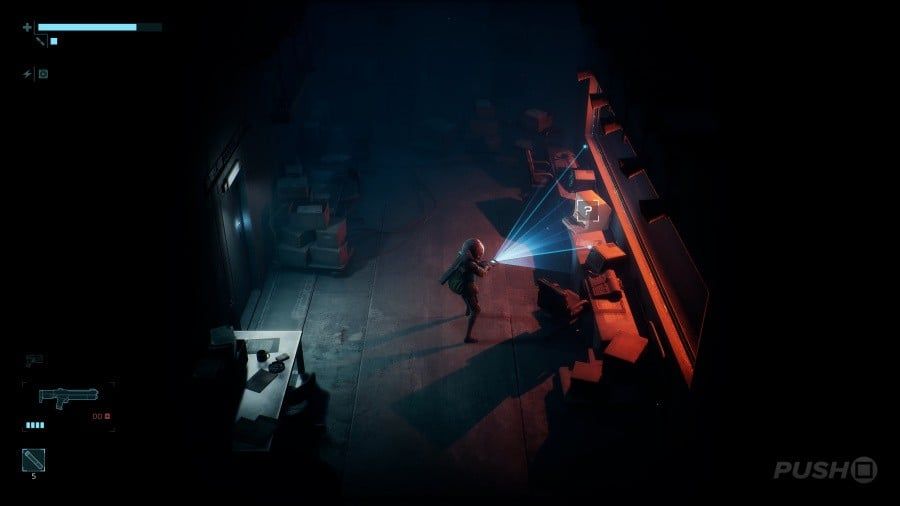
Image: pushsquare.com
A $29.99 descent built around pressure, not comfort
End of Abyss arrives October 1, 2026 for PlayStation 5, Xbox Series X|S and PC, according to The Outerhaven’s review listing, with Epic Games Publishing attached as publisher and Section 9 Interactive as developer. HappyGamer, citing an Xbox Wire post from Section 9, reports the Xbox Series X|S version is priced at $29.99, with pre-orders open ahead of launch. That price and scope frame the main tension of this End of Abyss review: this is a compact sci fi horror game trying to make a top-down metroidvania feel oppressive rather than empowering.
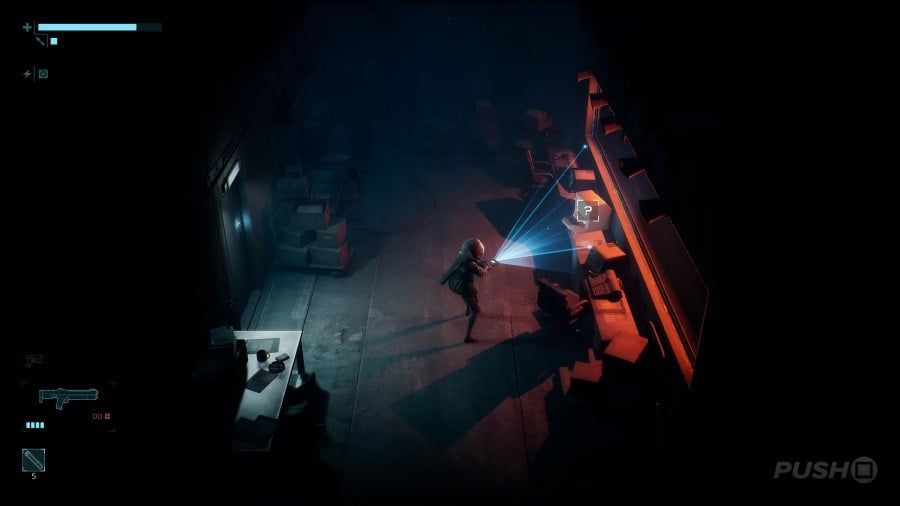
The confirmed setup is spare. Players control Cel, described by multiple outlets as a young combat technician who descends into a derelict underground facility with a crew. Push Square’s PS5 review places the early tone in rusted ruins, blue-hued darkness, heavy silence and old doors groaning open. IGN identifies the facility’s automated systems as Security Control Units and says a mysterious voice speaks to Cel through them while zombified workers, called Husks, occupy the complex.
That is enough premise for the kind of game End of Abyss wants to be. It does not sell itself through elaborate cutscenes or a large cast. The Outerhaven notes there is no grand story, no leveling system and no elaborate cinematic structure. Instead, End of Abyss gameplay is built from the essentials: Cel, a gun, a scanner, locked routes, hazardous rooms, enemies in tight spaces and the slow reopening of a place that does not want to be understood.
The facility is the star, and it knows how to unsettle you
The strongest part of End of Abyss is its atmosphere, and the consistency of that praise across the available reviews is hard to ignore. Push Square calls out the scale of the setting across a roughly 13-hour run to credits, with more than half a dozen areas folding back into each other across multiple levels. IGN describes the opening Habitation Sector as filled with grotesque domestic remains, flickering lights and bodies placed in ways that keep the player’s thumb tense on the aiming stick. The Outerhaven similarly says the early areas deliver tension through locked doors and spaces that take thought to navigate.
Section 9’s background helps explain the texture, though it should not be overstated. Push Square and The Outerhaven both note that the Swedish studio includes former Tarsier Studios developers associated with Little Nightmares. End of Abyss is mechanically far removed from that series, but several outlets point to a familiar sense of miniature dread, grimy spaces and a carefully staged unease. IGN specifically mentions a clay-doll aesthetic and an isometric perspective that make the world feel strange before the first fight has even started.
HappyGamer, reporting on Section 9’s Xbox Wire comments, says the game began as an action-based top-down shooter prototype in Unreal before the studio became more interested in exploration, visual identity and tension. The same report says Section 9 drew from films, games, comics and anime from the 1980s and 1990s, with the team aiming for a world that felt worn down, slightly awkward and uneasy. That comes through in the best moments: old industrial rooms, parasitic growths, abandoned living spaces and machinery that seems to have outlasted the people it was built to serve.
The limitation is duration. IGN’s review argues that the dread loses force as patterns become readable, with corpses near important items and open arenas training the player to expect ambushes. That criticism matters because horror depends on uncertainty. End of Abyss has a terrific eye for staging, but once the player starts recognizing its grammar, its bleakness becomes less dangerous and more procedural.
Combat is tense because space is scarce
End of Abyss uses twin-stick combat from a top-down or isometric view, rather than a traditional side-scrolling metroidvania format. Paul Semel’s review describes the Pulse Gun as Cel’s primary weapon, with unlimited ammo, right-stick aiming and left-stick movement. The same review notes that Cel can run and dive out of danger, tools that become important because many rooms and corridors are cramped.
That detail is crucial. The game’s pressure does not appear to come from counting every bullet like classic survival horror. It comes from being forced to act cleanly in bad spaces. Enemies close distance, routes are narrow and retreat can be awkward. Paul Semel describes humanoid infected enemies as well as smaller creatures that latch onto Cel and have to be shaken loose before they can be shot. IGN refers to parasitic flea-infested tunnels and zombified workers. The Outerhaven says players fight or slip past enemies, solve puzzles and encounter boss fights that block progress into new areas.
The combat loop is supported by safe rooms and upgrade systems. Paul Semel reports that Restoration Pods save the game, heal Cel and refill a health boost. Crafting devices use fragments to improve guns and create items after blueprints are found, including flares that can temporarily distract enemies. That gives End of Abyss a practical survival rhythm even with unlimited primary ammo: take damage, decide whether to press deeper, fall back to a pod, spend fragments, return with slightly better odds.
As a horror action game, that works best when the room design makes a familiar enemy feel dangerous. The concern, again, is repetition. IGN’s criticism that scares become predictable also applies to combat pacing. If the player can read when an encounter is coming, the fear shifts into preparation. That is not fatal for an action metroidvania, but it does mean End of Abyss gradually leans more on execution than surprise.
Exploration friction is both the hook and the hazard
The metroidvania structure is where End of Abyss becomes most divisive. Push Square’s PS5 review describes the expected foundation: locked doors, unreachable platforms, shortcuts, new traversal options and a map that widens as Cel finds tools and routes. The praise is specific. Push Square says the facility’s scale is one of Section 9’s strongest achievements, with areas twisting through multiple levels and pushing the player to study schematics closely.
The friction is just as specific. Push Square reports spending hours in a radiated area called Containment while radiation chipped away at health, only to later find the protective mod in an easily missed room in a different zone. The same review notes that waypoints can point to floors where the player has not yet downloaded map schematics, and that key-card warnings can persist after long searches. End of Abyss expects players to scan doorways and interactable objects manually to mark them on the map, which is a strong fit for a technician protagonist but a potential source of fatigue.
The most practical complaint is map readability. Push Square says locked-door icons remained on the map even after the doors had been opened, causing repeated wasted trips when the reviewer was trying to work out where to go next. That is the kind of flaw that changes a metroidvania from mysterious to muddy. Backtracking should ask whether you understand the space. It should not make you audit old information that the interface failed to clean up.
Still, there is a reason the design can be compelling. The same Push Square review says that for every moment of frustration, there were moments where a route, key or solution clicked into place. End of Abyss wants discovery to feel earned, and sometimes it does. The buyer question is whether you enjoy being made to scrutinize a hostile map, or whether you need your metroidvania signposting to be sharper.
The story keeps secrets, sometimes at its own expense
End of Abyss uses ambiguity as part of its horror language. Cel enters a derelict facility, finds evidence of decay and infection, and gradually pieces together what happened there. But several reviews suggest the restraint goes too far. IGN says Cel has little personality and functions largely as a silent observer, interacting with the world through the scope of a gun. It also argues that the mystery relies heavily on withholding information, with characters trading in vague uncertainty and scattered documents doing too little to form a compelling picture.
But Why Tho makes a similar point from a different angle, describing a facility where corroded machines give way to parasitic growths, flesh spreads across walls and the dead return to life, while also noting that the game avoids answering questions directly through dialogue and cinematics. The Outerhaven’s description is even plainer: the game has no grand story and no elaborate cutscenes.
For horror, that minimalism can be valuable. Explanation often kills the monster. The problem is that metroidvania structure asks players to spend a lot of time in the same world, revisiting corridors and scrutinizing rooms. When the environmental storytelling is strong, that repeated contact deepens the place. When the narrative withholds too much, the player’s curiosity can flatten into task management.
End of Abyss lands somewhere in the middle. Its world is visually and sonically persuasive enough to invite questions, but the reported story delivery does not appear to reward every hour of attention with equal force. If you are coming for lore density, character drama or clear answers about the facility, this is likely to feel thin.
PS5, Xbox and PC buying guidance
The platform picture is straightforward in the available source material. The Outerhaven lists End of Abyss for PC, PlayStation 5 and Xbox Series X|S, with a release date of October 1, 2026 and a $29.99 USD price. Paul Semel links to PlayStation 5, Xbox Series X|S and PC store pages. Push Square’s review is specifically for End of Abyss PS5, while HappyGamer focuses on End of Abyss Xbox and reports the same $29.99 price for Xbox Series X|S.
What the provided reviews do not settle is a detailed performance comparison. None of the supplied excerpts give frame-rate targets, resolution data, mode options or a clear PS5-versus-Xbox technical advantage. For a game that relies on darkness, input response and close-quarters dodging, those details would matter, but the safe reading from the current material is that the recommendation rests more on design tolerance than platform choice.
At $29.99, the value case depends on how much you want this specific blend: top-down shooting, metroidvania route solving, sci fi horror atmosphere and a compact runtime. Push Square’s roughly 13-hour completion estimate suggests a focused game rather than a sprawling one. That is a strength if you want a dense seasonal horror run. It is a weakness if you expect broad build variety, deep RPG systems or a story that expands for dozens of hours.
Players who love hostile maps, manual scanning and the satisfaction of finally opening the right route should consider it early. Players who bounce off opaque progression, stale map icons or repeated ambush patterns should wait for post-launch impressions, especially if they are deciding between the PS5 and Xbox Series X|S versions.
Verdict
End of Abyss is at its best when it makes you feel small in a facility that is too large, too quiet and too infected to be safe. Section 9 Interactive has built a strong first impression around mood, sound, scale and visual decay, and the top-down twin-stick format gives its horror a different texture from the usual over-the-shoulder sci fi shooter.
The full playthrough test is harsher. Reported exploration issues, especially unclear map states and easily missed progression-critical tools, risk turning dread into administrative backtracking. Combat has pressure because space is tight and enemies force quick reactions, but repeated staging can make the horror easier to predict. The story’s minimalism preserves mystery, yet it also leaves Cel and the facility feeling underdeveloped by the time the structure asks for sustained investment.
As a compact sci fi horror game, End of Abyss is worth considering for players who prize atmosphere and do not mind friction. It is less convincing as a clean metroidvania or a consistently frightening survival experience. The darkness holds, but by the end, you can see too many of the wires behind it.
Final Verdict
A solid gaming experience that delivers on its promises and provides hours of entertainment.