
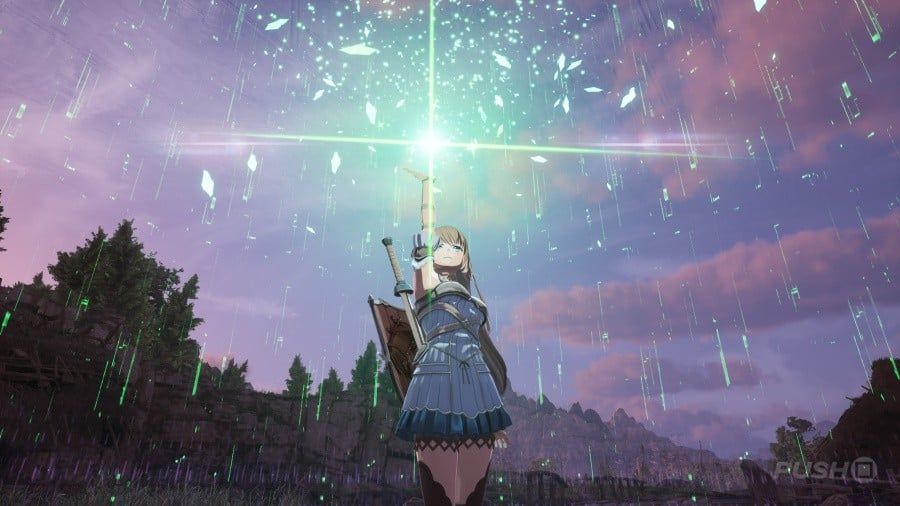
Review
By The Completionist
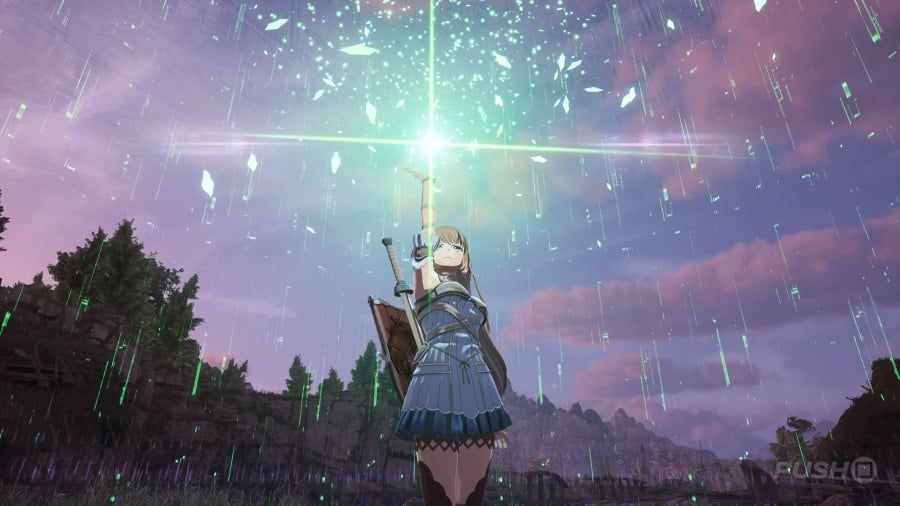
Image: pushsquare.com
A bold Aincrad reset trips over its own quest log
Bandai Namco’s new Sword Art Online RPG makes the smartest structural choice this series could have made: it returns to the Aincrad death game and shifts the perspective away from Kirito and Asuna toward a custom-created player. That is the concrete hook behind Echoes of Aincrad, and it creates the central tension of this review. The setup gives the game room to treat Sword Art Online as a survival RPG about ordinary players trapped in an MMO, but the reported review experience across Siliconera, Push Square, IGN, MonsterVine, Console Creatures, and GamingBoulevard points to the same recurring problem: the game understands the dread of Aincrad better than it understands momentum.
GamingBoulevard identifies Echoes of Aincrad as an RPG by Game Studio Inc. and published by Bandai Namco Entertainment, with its coverage tagging PlayStation 5, PC, and Xbox. Push Square reviewed the PS5 version, while PowerUp’s available listing frames its coverage around PS5 Pro. The practical platform picture from the provided material is therefore strongest on PlayStation, with PC and Xbox present in outlet tagging rather than detailed technical breakdowns.
As a Sword Art Online Echoes of Aincrad review, the buyer question is clear: does this finally deliver the fantasy of climbing Aincrad as your own character? Partly. The premise is stronger than many prior SAO game concepts, and several outlets praise the atmospheric improvement and fresh angle. The problem is that Echoes of Aincrad repeatedly makes players wait for the premise to matter.
The prologue sells the fantasy, then the pacing starts bleeding pressure
Echoes of Aincrad begins during the beta test of the fictional Sword Art Online VRMMORPG. Siliconera describes the opening stretch as a slow burn lasting roughly six to eight hours, while Push Square calls the beta section a three-hour prologue. That discrepancy matters because it reflects how elastic the game’s early pacing can feel depending on play style, but both accounts agree on the broad shape: the beta functions as tutorial, social setup, and immersion layer before Akihiko Kayaba reveals the death game.
IGN says the prologue is cleverly framed as a beta, using the fiction of a new MMO to teach systems while introducing fellow players such as Iori and Saayu. Siliconera similarly found the mundane beta setup enjoyable because it lets the player meet party members before the rules of the world turn lethal. That is Echoes of Aincrad at its most promising. It gives the player a reason to care about the shift from game launch excitement to survival panic.
The problem arrives after the reveal. Siliconera reports that it took more than 15 hours after the prologue to make what felt like real progress, with main missions diverting into errands such as collecting a random sword and resources to upgrade it. The same review notes that this kind of interruption recurs every five hours or so and that characters can disappear for 30 to 40 hours. Push Square also says the narrative takes hours to go anywhere after the prologue, with dull quests standing between the player and the more intriguing character scenes.
That is fatal to the death game rhythm. Aincrad should create a forward pull: reach the next floor, master the next build, survive the next boss, protect the people you met before everything collapsed. Echoes of Aincrad often turns that pressure into administrative delay. The game is trying to represent MMO grind as lived experience, but as a single-player action RPG, grind needs escalation, consequence, or meaningful choice. Too often, according to the provided reviews, it supplies distance.
Aincrad feels large, but the mission structure makes it smaller
Echoes of Aincrad is not described by the sources as a fully open world. Push Square says each quest places the player into sizeable environments that belong to a larger interconnected map. IGN describes large zones that are accessible through story or side missions, with missions limiting the player to designated in-bounds areas. Siliconera says each mission allows roaming in a limited subset of areas across the two floors discussed in its review.
The structure sounds like a sensible compromise for an Aincrad RPG: open enough to evoke MMO zones, controlled enough to keep narrative pacing intact. In practice, the reported result is repetitive traversal. Push Square says the areas are disappointingly empty outside of repetitive enemies and treasure chests with weak rewards. IGN argues the railroaded boundaries kill the sense of wonder and push players back toward the critical path. Console Creatures describes hub areas, safe areas that function as rest spots and teleport beacons, and map unfogging tied to exploration. Siliconera notes safe zones that reveal the map when activated, along with monsters, treasure, shortcuts, and boss challenges.
The issue is not that Echoes of Aincrad lacks systems. It has checkpoints, map reveal points, hub areas, missions, side quests, weapon progression, shortcuts, and bosses. The issue is that these systems do not appear to interact richly enough. MonsterVine reports that missions quickly fall into a pattern: accept a quest in town, run across the map, fight a small pool of enemy variants, then face a boss version of a common enemy. It also says players cannot take main quests and side quests simultaneously, because leaving town for one counts as its own instance or mission.
That restriction matters for pacing. In a completionist RPG loop, side content works best when it creates efficient route planning, optional character investment, or narrative texture. If main and side quests are separated into discrete trips through similar spaces, optional content becomes time tax. For players searching specifically for Echoes of Aincrad pacing impressions, this is the biggest caution: the game’s structure appears built to simulate an MMO, but several reviewers found it repetitive without the social unpredictability or exploration density that gives MMO repetition its staying power.
Combat has the right weight until enemy design interrupts the beat
The combat is the most consistent point of qualified praise. MonsterVine says Echoes of Aincrad feels weightier than previous Sword Art Online games, with light attacks, heavy attacks, and weapon-specific special attacks. IGN calls the combat frenetic while still methodical. Push Square reads the game as essentially a more accessible Souls-like, citing respawning enemies, boss gates, dodge rolls, target-focused encounters, and enemy pattern recognition. That comparison is Push Square’s characterization, not an official genre label from Bandai Namco in the provided material.
For an action RPG, the basics sound functional and occasionally satisfying. MonsterVine highlights the visceral feel of slashing through enemies and says many foes can be bisected by strong attacks, a detail that supports the life-or-death tone. Siliconera praises the first floor combat as a highlight and says acquiring all abilities in a weapon class is easy, with a low cost to changing builds. That flexibility is important for a custom-character SAO game because player identity should live in weapon choice, skill routing, and stat preference.
The problem is balance and rhythm. Siliconera found little reason to use most weapons beyond rapiers, with swords and daggers as possible exceptions. According to that review, weapon damage values are similar across the board, while lighter weapons recover faster from normal attacks and hit more quickly for comparable damage. Siliconera also says rapier Sword Skills are especially strong and that level-up stat bonuses pushed toward a nimble build because walking speed and dodge bonuses were the most attractive options.
That is a classic RPG build problem: if one stat profile improves survival, traversal feel, and damage uptime, heavier alternatives need a clear tactical identity. Otherwise, experimentation becomes cosmetic. MonsterVine adds a different friction point, reporting that weapon swapping can only happen at the chest in a town inn, and that reaching a different weapon requires several screens and loads. So Echoes of Aincrad reportedly encourages weapon variety in theory, then makes practical experimentation clumsy.
Siliconera’s second-floor notes are the sharpest warning about combat rhythm. The review says new desert enemies frequently use knockdown attacks and temporary invulnerable states, often surrounding the player with multiple moving hurtboxes. Even if these enemies do not deal much damage, that style breaks the cadence established on the first floor. A good action RPG can slow the player down; a frustrating one stalls input flow. Echoes of Aincrad seems to drift between those states.
The death game works best as atmosphere, less so as payoff
The Aincrad arc remains Sword Art Online’s strongest game premise because the rules are brutally legible: players cannot log out, clearing all 100 floors is the path to escape, and in-game death means death in the real world. IGN and GamingBoulevard both restate that foundation in their reviews, with IGN noting the 10,000 trapped participants and the goal of reaching floor 100. Echoes of Aincrad benefits from that clarity before it adds its own layer.
IGN reports that the player character and several key characters receive mysterious brooches that show visions of an apocalyptic future, adding a special quest to prevent that outcome while still trying to escape Aincrad. IGN’s reading is relatively positive here, saying the subplot supplements the anime’s premise rather than taking away from it. Push Square also credits the game with understanding the emotional tension and underlying dread of the source material better than previous SAO games.
The custom protagonist is the right lens for that dread. Console Creatures says the game’s biggest departure may not please players who want to be Kirito, but it also argues that creating your own character helps newcomers get into the action without needing deep familiarity with the anime. GamingBoulevard frames the player as a side character in the original story, one of the beta testers caught in the collapse from fantasy MMO to prison.
Yet the payoff is inconsistent because the game’s quest design keeps stepping between the player and the stakes. Console Creatures says the story blends new content with the first season of Sword Art Online but offers few memorable story beats, with the custom protagonist largely existing to complete quests and move events along so others can have their moments. Siliconera liked the party banter and singled out Musoh as a standout character, but also said long absences and padding weaken the plot’s promise.
The result is a death game that pays off in premise and mood, not in sustained structure. Echoes of Aincrad understands that survival should feel communal and fragile. It struggles to turn that into a campaign that climbs with urgency.
Presentation supports the anime fantasy, but convenience takes repeated hits
The provided sources are kinder to the look of Echoes of Aincrad than to its pacing. MonsterVine says the game emulates the anime’s visual style well. Siliconera calls the explored floors beautiful and varied in their biomes, even while arguing that their vastness becomes a detriment when cutscenes and events are delayed until mission ends. That is the recurring tradeoff: the spaces can look the part, but the interaction density does not consistently justify their scale.
Several design decisions appear to prioritize immersion in the Sword Art Online fiction over player convenience. MonsterVine reports that the game cannot be paused, even during cutscenes, and argues that this may fit the trapped-in-an-online-game concept but feels needless in an offline RPG. GamingBoulevard similarly notes that the ability to log out or save from the menu disappears after the death game begins, requiring a hard quit to return to the home screen or desktop. As role-play flourishes, these details are clever. As everyday usability, they are risky.
This matters especially for PS5 players considering an Echoes of Aincrad PS5 review perspective. A single-player RPG that borrows online-world friction needs to respect real sessions: pausing, quest batching, quick build experimentation, and clear checkpointing all affect whether a 60-hour campaign feels absorbing or padded. The available source material does not provide enough consistent frame-rate, resolution, or bug reporting to make performance the central criticism. The stronger supported criticism is structural performance: how many menus, loads, rules, and repeated routes stand between the player and the next meaningful decision.
Audio is also not a major focus in the provided reviews, so it does not emerge here as a decisive strength or weakness. The presentation case rests mainly on the anime-like visuals, varied floor biomes, and the way the UI and fiction overlap. Those touches will please SAO fans. They do not solve the pacing.
Verdict: a better SAO concept than RPG campaign
Echoes of Aincrad has the outline of the Sword Art Online RPG fans have wanted: custom character, Aincrad focus, beta-to-death-game opening, weightier combat, familiar faces kept at the margins, and enough lore awareness to respect the original arc. That outline is why the disappointment stings. The game’s best ideas are constantly slowed by empty mission spaces, repetitive objectives, awkward convenience tradeoffs, and combat balance that seems to favor nimble builds too strongly.
For dedicated SAO fans, there is value here. The beta framing, side-character perspective, brooch subplot, anime-style presentation, and party banter give Echoes of Aincrad a clearer identity than many licensed RPGs. For newcomers or RPG players with limited patience for padding, this is harder to recommend at full urgency. The death game setup creates tension, but the campaign too often asks players to jog through it.
Our score reflects a game with real conceptual promise and some enjoyable action RPG fundamentals, held back by pacing and structure. If you are here for a Sword Art Online RPG review because you want the definitive Aincrad climb, this sounds like a cautious sale pick rather than an immediate must-play.
Final Verdict
A solid gaming experience that delivers on its promises and provides hours of entertainment.