
Review
By Story Mode
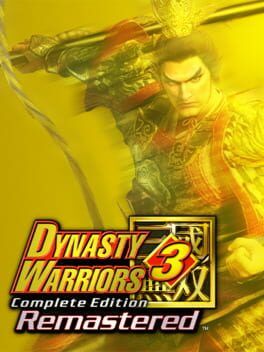
Image: IGDB
Store links: Dynasty Warriors 3: Complete Edition Remastered on Steam
A PS2 battlefield rebuilt, with its old bones still visible
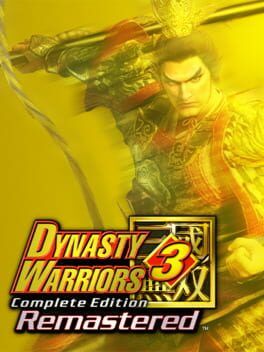
Dynasty Warriors 3: Complete Edition Remastered arrives with the kind of contradiction that defines many retro revivals in 2026: Koei Tecmo has rebuilt a fan-favorite PlayStation 2 Musou entry with modern visuals, but the sources agree that the structure underneath remains deliberately old. Push Square calls it a “borderline remake” while noting that it has not been officially positioned as one, because it keeps the original release’s structure, mechanics, and even animations. 8Bit/Digi and Push Square both identify Unreal Engine 5 as the technology behind the overhaul, and that choice gives this Dynasty Warriors 3 remaster its sharpest sales pitch: the old war machine has been dressed for modern hardware without being redesigned into a new game.
That tension is the review. Dynasty Warriors 3 Complete Edition Remastered is most convincing when it lets the old cadence breathe. Officers still cut through crowds with broad, readable strings. Battlefields still sprawl out as tactical sandboxes where a distant gate, an isolated ally, or a named enemy officer can become the next urgent destination. The tempo is blunt and ritualistic: ride, collide, scatter, regroup, push deeper. Compared with modern action games that layer parries, cancels, gauges, stance systems, and cinematic lock-on duels on top of every encounter, this is cleaner and rougher.
It also cannot hide what it is. Push Square’s review says huge and often empty battlefields can still be a chore to cross, while Loot Level Chill says the combat feels startlingly basic when measured against newer Musou games. Both observations line up with the central buyer question. If you want a preserved classic with enough new handling to soften the age, this Complete Edition has a strong case. If you want Dynasty Warriors: Origins-style modernization or a fully reauthored action game, the remaster’s loyalty to 2001 becomes a constraint.
Combat flow: simple strings, better movement, familiar repetition
At its core, Dynasty Warriors 3 Complete Edition Remastered remains a one-versus-many hack-and-slash game built around light attacks, heavy finishers, Musou attacks, officer duels, and battlefield routing. Loot Level Chill describes the basic loop as the version people are talking about when they reduce old Dynasty Warriors to light attacks followed by heavy attacks, but the same review also says cutting through thousands of soldiers still carries real satisfaction. That is the combat’s stubborn strength. Its pleasures are immediate, legible, and physical.
The most important modernization, according to Push Square, is the addition of a dedicated directional dodge that can cancel out of attacks, along with counterattacks. That matters because Dynasty Warriors 3’s original rhythm could feel stiff once enemy officers started blocking, interrupting, or punishing overextended strings. Sportskeeda notes that enemies can still block Musou attacks and that ordinary enemies, especially archers, can deal punishing damage. Those traits preserve the old difficulty spikes rather than sanding them completely away.
The new tools improve the flow without rewriting the language. A dodge cancel turns a crowd-clearing combo from a commitment into a tactical sentence with punctuation. You can swing into a mob, feel pressure from an officer, slip out, and re-enter without the stop-start awkwardness that can make older action games feel fossilized. Push Square reports that purists can toggle the new mechanics off in the options, which is a smart preservation choice. The remaster recognizes two audiences at once: players who want their muscle memory left alone, and players who need a little 2026 responsiveness before the classic design clicks.
Even with those additions, repetition is inseparable from the experience. The game asks you to find pleasure in routing another cluster of soldiers, chasing another officer, saving another commander, then doing it again from a different perspective. That rhythm is either hypnotic or exhausting. For this Musou remaster review, the combat earns respect because it has been modernized at the joints, not replaced at the spine. It still swings like Dynasty Warriors 3, for better and worse.
The campaign is a war of perspectives rather than a modern narrative showcase
The remaster’s story remains tied to the Three Kingdoms material that has long powered Koei Tecmo’s strategy and action catalog. 8Bit/Digi describes the game as a fictionalized retelling of China’s Three Kingdoms period after the fall of the Han Dynasty, centered on the rise of Cao Wei, Shu Han, and Eastern Wu. Sportskeeda says the game covers events from the Yellow Turban Rebellion through the Battle of Wuzhang Plains. DualShockers notes that the original Dynasty Warriors 3 released on PlayStation 2 in 2001 and Xbox in 2002, which helps explain why the storytelling still feels built for another era of action games.
Noisy Pixel’s review is especially useful on this point, noting that the story is sparse compared with later entries and that much of the lore comes through pre-battle information. That is important for new players. Dynasty Warriors 3 Complete Edition Remastered does not behave like a modern cinematic campaign that carefully onboards every faction, betrayal, and historical figure through extended cutscenes. It gives you context, then sends you into the dust.
That approach has a particular charm. Campaigns are less about a single authorial path and more about replaying the same wars through different loyalties. Noisy Pixel says Musou Mode lets players choose a character and play through a campaign, with repeated conflicts offering different perspectives and unique FMVs. Loot Level Chill reports that there are over 40 characters to unlock and play across modes, and that every character has a story mode of at least seven missions. That volume turns the narrative into a mosaic. You are not watching one protagonist conquer history. You are circling the same battlefield until its loyalties, rivalries, and tragedies begin to form a larger shape.
As storytelling, it is functional rather than elegant. As structure for an action game, it works because each campaign becomes another excuse to inhabit a different weapon, moveset, and allegiance. Newcomers who want a clean dramatic arc may struggle. Players who enjoy character-led repetition and factional context will find a durable rhythm.
Complete Edition content gives the remaster real staying power
The “Complete Edition” label is doing important work here. Multiple sources, including DualShockers, Noisy Pixel, and Sportskeeda, report that Dynasty Warriors 3 Complete Edition Remastered includes content from Dynasty Warriors 3: Xtreme Legends. That matters because Xtreme Legends became a familiar part of the series’ expansion model, and folding that material into the remaster makes the package feel less like a museum sample and more like the version modern players should reasonably expect.
The amount of content is one of the remaster’s easiest recommendations. Loot Level Chill points to Musou Mode, Free Mode, Challenge Mode, and co-op support across the entire game. Free Mode lets players revisit missions with their chosen characters, while Challenge Mode offers time-attack-style options for players who want a sharper test than campaign progression. Horses, bows, buff items, and healing pickups also remain part of battlefield management, according to Loot Level Chill, giving stages small tactical layers beyond crowd clearing.
This is where the old design ages better than expected. Modern live-service games often stretch time through currencies, daily tasks, and seasonal checklists. Dynasty Warriors 3 Complete Edition Remastered stretches time through character breadth and replayable battles. That difference gives it a directness I appreciate. You unlock people, learn their reach and timing, and carry them into familiar conflicts until the map starts to feel like a theater you know from several seats.
The tradeoff is that quantity can magnify repetition. Forty-plus characters and numerous campaigns sound generous, but if the basic combat loop does not grab you, the content list becomes a warning rather than a promise. This is a large meal built from familiar ingredients. Fans will feast. Skeptics may taste the first plate and decide they understand the rest.
Presentation: Unreal Engine 5 polish meets preserved PS2 theatricality
The visual upgrade is the remaster’s most immediately persuasive feature. Push Square says classic stages have been reborn with current-generation visuals and that character models stay true to their original designs while being made from far more polygons. 8Bit/Digi also reports that the game rebuilds the PlayStation 2 classic in Unreal Engine 5 for modern consoles and PC. The result, based on the available reviews, is not a reinvention of art direction. It is a resurfacing job that lets the scale and color of Dynasty Warriors 3 read more cleanly on contemporary displays.
That restraint is welcome. The characters still look like themselves. The battlefields are cleaner and more dramatic, but the staging remains recognizably old Dynasty Warriors. Noisy Pixel says the remaster preserves scenes with the same characters, animations, scenes, and audio, including campy elements that remain part of the appeal. This is where the project’s philosophy becomes clearest: modernize the image, preserve the performance.
Audio appears similarly archival with a few important additions. Sportskeeda specifically notes that the remaster includes the original English dub alongside Japanese and Chinese dubs. That is a strong option set for a game whose English voice work has become part of its cultural memory. Some players will want the meme-worthy nostalgia of the original dub. Others will prefer a different language track to change the tone. The key is that the remaster does not force one reading of the material.
The presentation upgrade makes Dynasty Warriors 3 easier to return to, but it does not erase its age. Empty space, repeated animations, and sparse story framing are still visible beneath the polish. The best way to understand the look is as restoration with selective reinforcement. It lets an old stage hold modern light without pretending the set was built yesterday.
Performance and platform guidance: promising, but hard data is thin
The available source material supports two platform points with confidence: 8Bit/Digi reviewed the PC version and says the remaster is available on modern consoles and PC, while Push Square reviewed the PS5 version. That makes Dynasty Warriors 3 PS5 PC interest well served at a basic availability level. What the supplied sources do not provide are firm frame-rate targets, graphics modes, PC requirements, Steam Deck status, or detailed benchmark data.
That absence should shape buying advice. None of the excerpts provided here document severe technical problems, and Push Square’s PS5 review describes the game as looking pretty good. Still, Unreal Engine 5 remasters can vary widely by platform, and a lack of reported problems in excerpted reviews is not the same thing as a measured performance guarantee. PC players in particular should look for storefront requirements and independent benchmarks before buying if they are sensitive to shader compilation stutter, CPU load in crowd-heavy scenes, or ultrawide and controller support.
On PS5, the safer expectation is that the game’s age and preserved structure should reduce some systemic risk compared with a fully new open-world action game, but that is an inference, not a confirmed technical finding from Koei Tecmo in the provided material. For a game built around battlefield flow, performance matters because dropped responsiveness would hurt the exact thing the remaster is trying to rescue: the pleasure of sweeping through hundreds of enemies without friction.
My practical guidance is simple. If you are a Dynasty Warriors diehard and want this specific entry restored, the current reporting gives enough confidence to jump in on PS5 or PC. If your main concern is technical polish rather than nostalgia, wait for platform-specific analysis, especially on PC.
Verdict: essential for Musou faithful, selective for newcomers
Dynasty Warriors 3 Complete Edition Remastered succeeds because it understands that this game’s value is historical, mechanical, and communal. It was one of the entries that helped define the Western Musou audience, as Push Square notes, and the remaster gives that legacy a serious presentation upgrade rather than burying it under a new design philosophy. The dodge, counters, and toggleable modern mechanics help. The Xtreme Legends content strengthens the package. The preserved structure gives longtime players the specific game they remember, not a vague tribute.
As a 2026 action game, it is less universally compelling. New players may find the combat repetitive, the maps too empty, and the storytelling too thin. The remaster is friendlier than the original because movement and defensive options have improved, but it remains an old-school Musou game with old-school expectations. It asks you to enjoy battle as rhythm, not constant novelty.
That is enough for a strong recommendation with caveats. This is not the Musou remaster to convert every skeptic. It is the one that proves preservation can have momentum when the combat flow is cleaned up without losing its identity. For fans of Dynasty Warriors 3, this Complete Edition feels close to essential. For curious newcomers, it is best approached as a restored action artifact that still has bite, repetition, charm, and scale.
Final Verdict
A solid gaming experience that delivers on its promises and provides hours of entertainment.