
Review

By The Completionist
A New Standard-Bearer For Dice-Driven RPGs
Duskpunk is very explicit about its lineage. It borrows Citizen Sleeper’s core loop of rolling a handful of dice each cycle and slotting those results into actions, then dunks that structure into a dirty copper vat of Dishonored-style industrial fantasy. Rather than feeling like a derivative mashup, it lands as a confident evolution of this emerging dice-RPG subgenre, with a few important caveats.
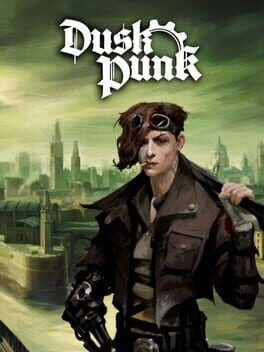
You play a survivor of a brutal, vaguely defined War, washed up in a choking steampunk city of smoke-stacked skylines, rusted walkways and clanking machinery. From the opening hours, your life is precarious. You are broke, traumatized and mostly anonymous, scraping by on day labor and petty hustles while factions tug at the edges of your conscience. The structure is immediately familiar to Citizen Sleeper fans, but the tone leans closer to Dishonored’s Dunwall than to Erlin’s Eye: more soot and sickness, less cosmic melancholy.
Narrative Design: From War Trauma To Worker Revolt
Duskpunk’s story is less about cosmic intrigue and more about material struggle. Citizen Sleeper made you a corporate fugitive drifting in a liminal station community. Duskpunk casts you as a veteran who escaped a meat-grinder conflict only to land in another economic battlefield. The game constantly ties your short-term survival choices to long-term political consequences without turning them into preachy morality plays.
Conversations are dense but sharp. Characters speak in clipped industrial slang and weary understatement, which suits the world and keeps scenes from dragging. Where Citizen Sleeper often foregrounded philosophical introspection, Duskpunk prefers terse exchanges in crowded pubs, back alleys and factory floors. You seldom receive neat exposition dumps; you infer the shape of the War and the city’s power structure from gossip, overheard arguments and the way different neighborhoods react to your presence.
Structurally, the narrative is built as a lattice of storylets tied to locations, timers and reputation thresholds. Citizen Sleeper fans will recognize the cadence of returning to the same characters over multiple cycles as your relationship and their circumstances evolve. Duskpunk complicates this with an emphasis on collective tension. It tracks not only your health, stress and resources but also ambient unrest and institutional suspicion. These abstract meters quietly tilt the tone of future scenes.
For example, invest your good dice in helping a group of striking workers and you may trigger scenes of solidarity, communal meals and whispered plans. Neglect them or repeatedly spend your highest dice on mercenary jobs for the city’s enforcers and the same part of town will feel palpably different. Guards loiter where workers once chatted. Dialogue beats change from hopeful agitation to bitter resignation or outright hostility. The branching is not as sprawling as a CRPG, but within its scope the game is responsive enough that you feel the weight of your allocation choices on people rather than just on stat blocks.
In comparison to Citizen Sleeper, Duskpunk’s character arcs are more grounded and immediate. It trades long, slow-burn science fiction threads for shorter, punchier vignettes of survival, trauma and organizing. Some players may miss the station’s big metaphysical questions, but the tighter focus on class, labor and post-war dislocation suits the format and gives the game a clearer thematic throughline.
Steampunk World-Building Without The Shine
Dishonored is the obvious visual reference point, yet Duskpunk wisely avoids imitation. Its city is less theatrical and more claustrophobic. You never freerun across its rooftops. You haunt it, cycle by cycle, from the ground level.
The art style blends painterly backdrops with UI-forward node maps. Each district is a cluster of interactable locations, illustrated with grimy detail: tar-streaked chimneys, flickering gas lamps, rail lines that merge into shadow. The limited perspective works in the game’s favor. Because you are not zipping through 3D spaces, every illustration shoulders more narrative weight. A single shot of an overcrowded dormitory, stacked bunks squeezed between pipes, carries as much mood as a full level in a larger immersive sim.
Where Citizen Sleeper felt liminal and dreamlike, with its drifting station and neon haze, Duskpunk feels heavy and enclosed. The city is segmented into neighborhoods defined by class, industry and proximity to the tools of repression. Street preachers share alleys with informants. Boiler yards employ broken bodies under watchtowers. These details are delivered sparingly but consistently, so that after a dozen cycles you begin to navigate by feel. You know which districts smell of oil and which of sewage, which screens promise work and which promise violence.
Importantly, the steampunk here is ugly. Brass and clockwork are present, but rarely fetishized. Prototypes and gadgets usually arrive framed as tools of exploitation or desperation rather than toys. That ugliness reinforces the game’s focus on survival and power rather than on spectacle. It also differentiates it from Dishonored’s more operatic setpieces.
Tabletop-Style Mechanics: Dice Allocation As Moral Triage
Mechanically, Duskpunk adheres closely to the Citizen Sleeper blueprint. Each cycle you roll a small pool of dice. Higher results mean safer or more efficient actions. Lower results raise the risk of negative outcomes that can damage your body, fray your nerves or sour relationships. You then assign these dice to actions across the city: jobs, investigations, favors, small personal rituals.
Where it diverges is in how it frames those choices. In Citizen Sleeper, the question was often how to balance your decaying synthetic body against the demands of various storylines. In Duskpunk, the friction is between personal survival and collective risk. You can spend your best dice stacking food, medicine and rent money, leaving only scraps for other people’s causes, or you can gamble your stability to push volatile situations toward uprising or reform.
The game turns this into a kind of moral triage. On many cycles, there are more urgent tasks than you have good dice to cover. A heat wave might be straining the city’s power grid at the same time a crackdown looms over a radical newspaper office. You might choose to burn a precious 6 on reinforcing your own position, accepting that someone else will take the consequences. Or you could throw that 6 into a protest action and hope that the injury you take from a failed, low-die side job will not spiral into long term debilitation.
This tension feels recognizably tabletop-adjacent. It evokes a GM presenting you with several crises that all tick forward if ignored, then letting the dice decide how your partial interventions play out. The interface makes the stakes legible without overexplaining their narrative implications. Hovering over an action clarifies the mechanical risks and rewards, but the true cost becomes apparent only several cycles later when a background meter tips and a storyline shifts tone.
Compared to Citizen Sleeper, Duskpunk adds a thicker management layer. You are juggling more tracked conditions and citywide variables, and there are more interlocking clocks counting toward different flashpoints. This can be thrilling if you enjoy plate-spinning. It can also be overwhelming, especially in the midgame when your roster of acquaintances and responsibilities balloons. Occasional clarity problems in the UI mean it is not always obvious which projects are mutually exclusive or which clocks will collide, which may frustrate players who prefer transparent systems.
Does It Advance The Dice-RPG Subgenre?
As a follow-up to Citizen Sleeper’s template, Duskpunk does more than apply a new coat of soot. It leans into the strengths of dice-driven storytelling and pushes them in distinct directions.
First, it deepens the sense that dice are not just randomizers but expressions of circumstance. Your daily roll feels like a weather report for your life. Strings of bad dice create believable spirals of misfortune that you can usually mitigate but not fully escape. Good runs invite greed and overreach. The game is comfortable letting fate feel unfair, as long as that unfairness is legible and characterful.
Second, it emphasizes communal stakes. Many dice-RPGs focus tightly on the protagonist’s arc. Duskpunk keeps reminding you that you are one body in a crowded city. By tying long-term narrative states to diffuse variables like unrest and fear instead of purely to personal flags, it suggests a direction this subgenre could continue to explore: systems where you are both a character and a contributor to a larger historical trajectory.
Third, it demonstrates that this structure can carry grounded, non-cosmic stories. Citizen Sleeper blended corporate dystopia with speculative consciousness questions. Duskpunk shows that you can strip away the sci-fi metaphysics and still get a rich, replayable narrative out of the same core dice economy, provided the writing and world-building are strong enough.
Where it falls short is in onboarding and late-game pacing. Newcomers to dice-driven RPGs may bounce off the initial information load, especially since the game expects you to intuit a lot from subtle visual cues. And like its predecessor, Duskpunk can sag near the end of a run, when many of your key arcs are resolved yet the global megaclocks still require several cycles of clean-up.
Even with those issues, Duskpunk feels like a milestone for this young subgenre. It is not merely a "Citizen Sleeper in a Dishonored city" pitch. It is a confident statement that this style of tabletop-inspired, dice-allocation narrative game has legs, and that future designers now have a sharper toolkit to build from.
Verdict
Taken on its own terms, Duskpunk is a rich, tense and thematically coherent dice-RPG that wears its influences proudly while carving out its own identity. Its grimy steampunk city feels lived in. Its tabletop-style mechanics are meaningfully integrated into narrative choice. And its focus on the push and pull between individual survival and collective struggle gives the dice more emotional bite than simple success or failure.
It does not resolve every pacing and onboarding issue inherent to this structure, but it pushes the form forward in clear ways. For anyone interested in where narrative, systems and tabletop sensibilities intersect, Duskpunk is essential.
Score: 9/10
Final Verdict
A solid gaming experience that delivers on its promises and provides hours of entertainment.