
Review
By Pixel Perfect
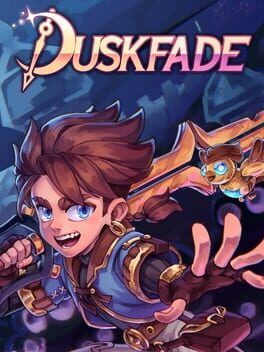
Image: IGDB
Store links: Duskfade on Steam
A charming 3D platformer arrives with a Switch 2 caveat
Duskfade launches into a familiar but useful tension for Nintendo’s new hardware: the game’s best ideas are built around fast movement, open-ended platforming, and return visits, while the Switch 2 version is also the one where frame-rate behavior matters most for players planning to take it portable. According to Nintendo World Report’s Switch 2 review, Duskfade targets 60 frames per second while docked and 40 frames per second in handheld mode. GameCritics, reviewing the same platform, praised the game’s charm and loop but listed visual quirks and frame-rate issues on Switch 2 as its low point.
That makes the launch question less about whether Duskfade has an identity and more about how much technical inconsistency you are willing to accept from a retro-styled action platformer. The answer depends on how you play. Duskfade is built by Weird Beluga, with Metacritic listing Fireshine Games as publisher, and it released on Aug. 13, 2026. Metacritic lists critic coverage across PC, PlayStation 5, Xbox Series X, and Nintendo Switch 2, with the aggregate sitting in the “Generally Favorable” range at launch. The Switch 2 version has enough reported strengths to belong in that conversation, but it is also where a buyer’s guide needs to be blunt.
This Duskfade review is focused on the Duskfade Nintendo Switch 2 version because that is where the game’s appeal is most obvious and its compromises are most practical. A PS2-era-inspired 3D platformer with warm colors, short traversal challenges, collectibles, and wide-linear stages sounds ideal for handheld sessions. It often is. The question is whether the Switch 2 performance profile supports the precision its best platforming asks for.
Movement is the reason to play
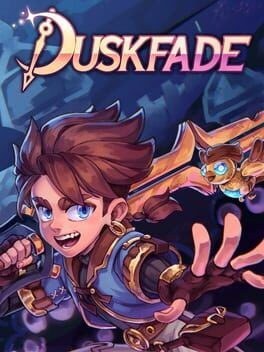
The strongest consensus across the available review material is that Duskfade understands the most important rule of 3D platformers: movement must feel good before anything else can work. GameCritics describes protagonist Zirian as smooth to control, pointing to double jumps, air dashes, and later movement upgrades such as a grappling hook that can chain into jumps and dashes to cross larger gaps. Nintendo World Report similarly identifies platforming as the star, saying levels feel open even when their structure is ultimately linear.
That combination is Duskfade’s core trick. It does not appear to be chasing a full collectathon layout where every zone becomes a sprawling toy box. Nintendo Life describes the structure as “wide-linear,” meaning each level pushes the player toward a destination while still making room for side paths, hiding spots, and optional rewards. Nintendo World Report gives a more mechanical outline: from a central hub town, players travel to regions, sever chains tied to a clocktower, move through an open field zone, enter a dungeon, and finish with a boss.
For launch buyers, that structure is important. Duskfade is not asking you to memorize a giant map or spend half an evening wondering where the next objective is. Its appeal is in the feeling that you are wandering off the main route while the level quietly keeps you oriented. Nintendo World Report specifically praised how naturally environments funnel the player forward even while branching paths make exploration feel spontaneous. That is the kind of design that fits portable play better than a friction-heavy adventure does. You can clear a path, find a collectible, reach a dungeon checkpoint, or push to a boss without needing to rebuild the entire mental map after sleep mode.
The upgrade loop gives that exploration extra bite. Nintendo World Report notes that regions contain upgrades expanding movement and combat abilities, and that completed areas hold more to find once new abilities are unlocked. It cites a movement upgrade that lets Zirian zip across floating grapple points and a heavy attack that can shatter strong crystal formations. The criticism is that Duskfade usually separates combat tools and exploration tools rather than blending them as elegantly as it could. That is a fair limitation, but the reported loop still sounds satisfying: go out, learn a new trick, return later, and see old spaces with a slightly sharper eye.
Combat has personality, but platforming carries the adventure
Duskfade’s combat is where the homage cuts both ways. Multiple reviews compare its action to Kingdom Hearts and other early-2000s action platformers. GameCritics describes Zirian juggling enemies with a sword that invites that comparison, while Nintendo World Report says the combat is not bad but less accomplished than the platforming. Its stated issues are a slightly slow dodge and enemies with unsatisfying hit knockback.
That matters because Duskfade is asking for two different rhythms. Its platforming wants clean momentum and confident chains: jump, grapple, dash, correct in midair, land, and keep going. Combat appears to be chunkier. Nintendo World Report’s criticism suggests that dodge timing and enemy reactions do not always provide the snap that action fans may expect from modern hack-and-slash games. If you are coming to Duskfade primarily for deep combat expression, launch reviews suggest you should temper that expectation.
The better news is that boss encounters seem to use the game’s platforming strengths rather than treating combat arenas as flat rooms. GameCritics highlights an early boss built around unstable platforms that required smart grappling hook use. Cubed3 also praises boss battles, saying they demand concentration, change strategies mid-fight, and often make the arena a functional part of the encounter. That is exactly where Duskfade’s design sounds most confident. When enemies become traversal puzzles with teeth, the game’s inspirations serve the mechanics instead of sitting on top of them.
Difficulty also appears approachable. GameCritics says Duskfade is not the hardest retro-style game and notes a wide range of difficulty options for different skill levels, while still praising moments that emphasize timing and patience in jumps. That should help families, younger players, and lapsed platformer fans who want the tone and movement fantasy without running into a hard wall. Players who want demanding precision can still find it in traversal and bosses, but the available reviews do not frame Duskfade as a punishing throwback.
The story is heartfelt when it stays personal
Duskfade follows Zirian as he tries to save his sister from a mysterious clocktower after calamity strikes Tick Town. Nintendo Life gives the fullest setup in the provided material: Zirian and his sister Allira are grieving their recently deceased grandfather, and the conflict begins when Allira interacts with misunderstood technology left by the ancient Master Clockmakers. Monsters and darkness follow, while Zirian sets out with a clockwork bird companion named Cuckoo.
The personal premise is the part that seems to land. Nintendo Life says the story has heart even when it lacks depth, pointing to themes of grief, love, loss, time, and learning not to live in the past. GameCritics also says the simple story carries enough emotional weight and charm to motivate the journey. This is a sensible fit for a platformer that leads with motion and color. Duskfade does not need a maze of political intrigue to support its loop. It needs a reason to care when Zirian looks up at the tower and heads back into another broken region.
The lore is less convincing. Nintendo Life criticizes the Master Clockmakers subplot as unfocused and occasionally confusing, saying past events are delivered through scattered dialogue between unseen characters. That criticism lines up with a broader risk in small-scale nostalgia projects: a world can feel magical through architecture, music, creature design, and level composition, but too much exposition can flatten the mystery it is trying to build.
For players deciding at launch, the useful distinction is this: Duskfade appears strongest as a heartfelt, character-led adventure and weaker as a lore delivery system. If you want an emotionally direct quest with a bright world and a melancholy edge, the story supports the platforming. If you need the mythology to cohere with the same precision as the traversal, reviews suggest it may wobble.
Switch 2 presentation is lovely, but performance is the buying risk
Duskfade’s visual identity is one of its biggest draws. GameCritics praises its early-2000s adventure look, colorful character designs, and protagonist styling that evokes shonen anime and obscure JRPG energy. Cubed3 describes beautiful environments with deep pinks, purples, blue rivers, and wooden architecture, while Nintendo Life frames the game as a modern echo of lower-budget AA console adventures with charm and experimental spirit. Nintendo World Report also calls presentation, both visual and auditory, a strength.
The required caution is performance. Nintendo World Report reports that the Switch 2 version targets 60fps docked and 40fps handheld at the time of review. GameCritics flags visual quirks and frame-rate issues on Switch 2. The source material provided does not establish how often those frame-rate drops occur, whether the issues were addressed by a launch patch, or how the Switch 2 version compares directly to PC, PS5, or Xbox Series X in matched scenes. Those are unanswered questions, and they matter more here than they would in a slower adventure.
A 40fps handheld target can be a reasonable compromise on a portable display when frame pacing is stable, especially for an indie 3D platformer with ambitious environments. The problem is that the provided reviews do not uniformly describe a perfectly stable experience. If your tolerance for frame-rate unevenness is low, especially in midair challenges or boss fights built around moving platforms, waiting for post-launch patch notes or broader player footage is the safer move. If you usually prioritize art direction, level flow, and the ability to play away from the TV, the reported technical issues sound like a caveat rather than a dealbreaker.
The price is also not included in the provided source material, so this review cannot weigh Duskfade’s value against a confirmed launch cost. That absence matters for a buyer’s guide. A charming 3D platformer with some Switch 2 performance roughness is easier to recommend at a modest indie price than at premium pricing. Check the Nintendo eShop listing before buying, and if you are performance-sensitive, look for any launch-day update notes from Weird Beluga or Fireshine Games.
Portable play fit: strong sessions, with a docked option for precision
Duskfade’s structure sounds naturally suited to handheld play. Hub-based progression, regions with field zones and dungeons, optional collectibles, and movement upgrades give it a clear rhythm. You can make progress in short sessions without needing a massive reorientation period, and the wide-linear levels reported by Nintendo Life and Nintendo World Report are exactly the kind of spaces that let exploration feel playful rather than exhausting.
The portable fit is strongest when you treat Duskfade as a discovery game. Follow a path, spot a side route, use a new movement ability, grab a hidden collectible, and move on. That loop benefits from the Switch 2’s suspend-and-resume nature. It also makes Duskfade a good match for players who miss the PS2 and GameCube-era action-platformer cadence but do not want a 60-hour open-world checklist.
For tougher bosses or dense platforming sections, docked play is the safer recommendation based on the reported frame-rate targets. Nintendo World Report’s 60fps docked target gives the TV setup the advantage for timing-heavy jumps, dodges, and grapple chains. Handheld play is still part of the appeal, but the reported 40fps target and GameCritics’ note about frame-rate issues mean I would reserve the fiddlier sections for docked mode if you have that option.
This is also where Duskfade separates its likely audience. If you want a technically pristine showpiece for Switch 2, this is not the cleanest launch bet from the provided reviews. If you want a colorful, earnest 3D platformer with satisfying traversal and a manageable scope, the Switch 2 version still makes sense, particularly for players who value portability over absolute smoothness.
Score and launch recommendation
Duskfade earns its recommendation through movement, level flow, art direction, and a warm sense of adventure. The best version of the game described across the review material is the one where Zirian is chaining a grapple into a double jump and air dash, where an optional path catches your eye, and where a boss asks you to think about the arena instead of only the attack button. That is enough to make this Duskfade game review positive.
The limitations are clear. Combat is serviceable rather than sharp, according to Nintendo World Report’s criticisms of dodge speed and enemy feedback. The story works better at the personal level than in its broader lore, based on Nintendo Life’s review. Switch 2 performance is the biggest practical concern, with a reported 60fps docked target, 40fps handheld target, and separate reports of visual quirks and frame-rate issues.
Our verdict: buy Duskfade on Nintendo Switch 2 at launch if you want a compact, heartfelt 3D action-platformer and you are comfortable with some technical rough edges. Wait for patch confirmation or platform comparisons if handheld smoothness is your top priority. Duskfade stands out because its movement loop has confidence and craft, but the Switch 2 version asks you to accept that charm and consistency are not the same thing.
Final Verdict
A solid gaming experience that delivers on its promises and provides hours of entertainment.