
Review

By Pixel Perfect
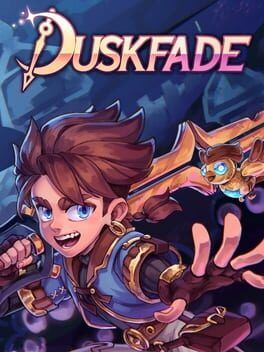
Image: IGDB
Store links: Duskfade on Steam
A warm retro platformer arrives with one practical Xbox caveat
Duskfade launched on Aug. 13, 2026 for PC, PS5, Xbox Series X|S, and Nintendo Switch 2, according to the r/Games review thread’s platform listing and Metacritic’s release page. The concrete launch picture is encouraging: Metacritic lists Weird Beluga as developer, Fireshine Games on the game page, and a generally favorable critical reception, while the r/Games thread cites OpenCritic at an 81 average with 79 percent of critics recommending it across 42 reviews. The tension for Xbox players is narrower and more useful than the aggregate score suggests. Metacritic’s platform tabs in the supplied material show only two Xbox Series X critic reviews, compared with larger pools on PC, PS5, and Nintendo Switch 2, so the Duskfade Xbox review landscape is thinner at launch.
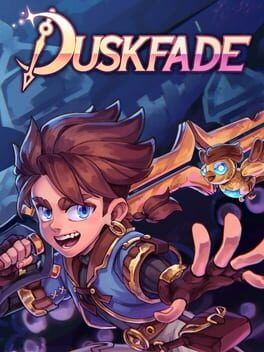
That matters for a buyer’s guide because Duskfade is built around a very specific promise: a family-friendly, old-school 3D action platformer with a clockwork fantasy hook, a mechanical bird companion, and a structure that recalls the PS1 and PS2 era. GamingBolt describes it as a relatively simple 3D platformer with hack-and-slash combat, drawing comparisons to classics such as MediEvil. Xbox Tavern similarly frames it as a mascot-platformer throwback, with Zirian and Cuckoo traveling through distinct biomes, breaking chains, and working toward entry into the mysterious clock tower.
This GameLoop review is therefore less about whether Duskfade reinvents 3D platforming and more about whether its craft, pacing, and Xbox readiness make it worth picking up at launch. On the evidence available, the answer is yes for players hungry for colorful action platformers and willing to accept straightforward combat. For players who need hard Xbox frame-rate data, resolution targets, or broad technical testing before buying, the sources leave an important gap.
The clock tower premise gives the adventure a sturdy emotional spine
Duskfade’s setup is clean, almost storybook simple. GamingBolt reports that Zirian and his sister Allira are grieving after the death of their grandfather. Allira shuts herself away while working on an experiment meant to improve both their lives, only for that experiment to go wrong and summon a massive mystical clock tower in the center of town. With Allira apparently trapped inside, Zirian takes up his grandfather’s blade and sets out to rescue her.
The time-clock premise is strongest when it turns that rescue mission into a world structure. GamingBolt says Zirian meets Cuckoo, a mechanical bird with gaps in its memory, inside the clock tower. The pair then set out to destroy the tower by traveling to four corners of the world and releasing mystical chains that keep it upright. Metacritic’s summary describes the larger pitch as a mission to “shatter the shackles of time” through jumping, swinging, and slashing in a world shaped by the Master Clockmakers, with the tower plunging the land into eternal night.
The emotional layer is more delicate than the cover art might suggest. GamingBolt highlights grief as the story’s central theme, noting that Zirian, Allira, and the world’s citizens each process loss in different ways. DayOne also credits the game for attempting more mature themes, even though that outlet found the story predictable and felt the early reliance on flashbacks weakened the opening hook. That split is important. Duskfade appears to be sincere rather than narratively daring. Its story gives purpose to the biome-hopping adventure, and according to DayOne, cutscenes do not overstay their welcome, with worldbuilding often left to NPC conversations rather than heavy exposition.
For players asking whether the clockwork premise pays off, the answer depends on appetite. If you want a layered time-travel puzzle box, the available reviews do not support that expectation. If you want a bright action platformer where clocks, chains, memory, and grief provide a cohesive fantasy frame, Duskfade seems to use its premise well.
Duskfade gameplay favors readable movement and familiar combat over complexity
The most consistent thread across the supplied criticism is that Duskfade gameplay is accessible, familiar, and polished rather than mechanically radical. Xbox Tavern reports that Zirian starts with light and heavy attacks, then gains special attacks and traversal upgrades as the adventure progresses. Cuckoo also receives upgrades, including automatic projectile support. Combat includes potions for healing, enemy lock-on, projectile reflection, a dodge with invincibility, and a perfect dodge that triggers bullet time. That gives Duskfade a broader toolkit than a basic button-masher, even if Xbox Tavern still calls the combat fairly basic.
The structure sounds comfortably classic. Xbox Tavern says the game sends players through distinct biomes that build toward boss fights, with the broader goal of breaking chains before entering the clock tower. It also notes that enemy encounters are generally placed in open arena-like spaces, which means combat does not usually interfere with tricky platforming sections. That is a smart design choice for a family-leaning action platformer. It keeps the challenge legible: when you are fighting, you are fighting; when you are platforming, you are reading jumps, hazards, and traversal upgrades.
Boss design seems to lean on recognizable patterns. Xbox Tavern describes bosses as varied and typically built around three damage phases separated by platforming phases. That will sound either satisfyingly structured or too predictable depending on how much old-school DNA you want. The same outlet reports that difficulty levels can be changed at any time and do not block achievements, a welcome accessibility detail for families, younger players, and completionists who do not want to restart after misjudging the challenge curve.
There are caveats. Metacritic’s critic excerpts include DualShockers saying the game’s simplicity may not resonate with everyone, especially because of straightforward combat and occasionally childish writing. Player 2, as quoted by Metacritic, calls out minor issues with pacing and game-feel while still praising the overall foundation. Duskfade’s mechanical identity is therefore clear: approachable, charming, and handsomely built, but unlikely to satisfy players looking for the precision ceiling of the toughest modern platformers or the depth of a full action RPG.
Pacing is the main risk in a game built around nostalgia
Duskfade’s biggest design gamble is the same thing that makes it appealing: it deliberately looks backward. GamingBolt connects it to PS1 and PS2-era 3D platformers, while DayOne calls it a PS2-inspired platformer that can feel nostalgic and beautiful but also frustrating and dated. That contrast is the heart of this Duskfade game review. The game is being praised because it remembers a style that major publishers rarely prioritize now, but some critics also see the old shape showing through in less flattering ways.
The pacing concern appears in several places. DayOne says the story’s flashback-heavy approach leaves the early game short on compelling hooks, even though the same review praises the balance of story and gameplay once the adventure is moving. In Metacritic’s excerpt, Player 2 points to minor pacing and game-feel issues. The r/Games review thread quotes Console Creatures as saying Duskfade starts on the wrong foot but gathers momentum quickly enough to recover. These accounts do not describe a broken or bloated game. They describe a launch platformer that may ask for a little patience before its world, movement, and boss structure settle into rhythm.
That is an important buyer note because platformers live and die by tempo. If the opening hours lean on flashbacks, tutorializing, or basic combat before the traversal suite expands, Duskfade may feel slower than its colorful trailers imply. The flip side is that the reported structure gives it a steady adventure-game cadence: explore a biome, learn the local hazards, fight through readable encounters, face a boss, and loosen another chain from the clock tower.
My read from the available evidence is that Duskfade’s pacing is acceptable if you are coming for cozy discovery and classic progression. It is less safe for players who bounce off predictable stories or need immediate mechanical novelty. The game seems to grow warmer as its toolkit and world open up, but it may not grab every player in its first swing.
The art direction does a lot of the heavy lifting
Every Duskfade review excerpt in the supplied material that discusses presentation comes back to craft. GamingBolt praises the game’s production values, polish, and charm. Xbox Tavern says Duskfade is Weird Beluga’s first Xbox game, but that the visual quality does not make it feel like a tentative debut on the platform. The same review highlights detailed environments filled with vegetation, carts, pots, light posts, crystals, and breakable items, plus goodies that burst from enemies and objects in a way that reminded the outlet of Ratchet and Clank.
DayOne adds a useful technical and artistic note, reporting that Duskfade runs on Unreal Engine 5 and describing the visual style as almost stained glass, with soft glowing lighting and painterly environments. That outlet praises the variety of areas, citing steampunk touches, clock-hand laser obstacles, an underwater academy, clockwork temples, a Greek-styled sky world, and a beach level. It also says some character models can lean too close to a mobile-game look, but that the surrounding world largely compensates.
The audio picture is positive with a softer ceiling. DayOne describes the orchestrated soundtrack as premium and compares its feel to the Epic Mickey series, while noting that specific themes did not remain especially memorable after finishing the story. DayOne also says the voice acting weakened the story for that reviewer. That combination suggests Duskfade’s soundscape supports the fantasy well but may not carry the emotional beats as strongly as the art direction does.
For an indie 3D platformer, presentation is a major part of the value argument. Xbox Tavern says the game punches above what the outlet expected from an indie game and an indie price, and the broader critic consensus in the supplied material backs up the idea that Duskfade looks more expensive than its scale might imply. If you are drawn to small games that stand out through visual confidence, Duskfade has one of the stronger launch cases in its lane.
Xbox performance looks promising, but hard technical data is missing
The Xbox question is the one place where the available source material requires caution. The supplied excerpts include Xbox-focused coverage from TheXboxHub and Xbox Tavern, both of which are positive overall. TheXboxHub’s page categorizes its review under Xbox Series X Reviews and gives Duskfade a 4/5 label. Its visible social description says that if players want an old-school type platformer, Duskfade is worth considering, calling it original and modern. Xbox Tavern, writing from an Xbox perspective, praises the graphics, animation, environmental density, and overall production quality.
What the sources do not provide is just as important. None of the supplied excerpts list Xbox Series X or Series S resolution targets, frame-rate modes, load-time measurements, patch version, or a detailed breakdown of bugs. No source excerpt confirms whether Series S has visual cutbacks, whether performance is locked, or whether Unreal Engine 5 introduces traversal hitches. Because Metacritic’s supplied platform breakdown also shows only two Xbox Series X critic reviews, the Xbox-specific sample is small.
That does not mean there is evidence of a bad Xbox version. There is no supplied claim of severe technical trouble, and Xbox Tavern’s praise for the game’s look would be hard to square with a disastrous presentation. It does mean a Duskfade Xbox review should be careful with the word “performance.” Based on the supplied record, Xbox players can reasonably expect a visually polished version, but buyers who are sensitive to frame pacing, image quality, or Series S compromises should wait for platform-specific footage or a technical analysis before paying at launch.
For most platformer fans, I would not treat the missing performance data as a deal-breaker. Duskfade’s design appears built around readable arenas, distinct platforming spaces, and stylized visuals rather than twitch-heavy competitive precision. Still, launch-day Xbox buyers deserve specifics, and the current source set does not give enough to grade the port with total confidence.
Verdict: worth it for classic platformer fans, with a short wait for tech-first buyers
Duskfade is worth picking up at launch if your ideal weekend game involves bright worlds, readable combat, collectible-flavored exploration, and the gentle satisfaction of watching a small studio swing above its weight. Weird Beluga’s clockwork adventure appears to understand the emotional appeal of the 3D action platformer: a hero with a distinctive weapon, a companion with secrets, biomes that feel hand-dressed, bosses with clear patterns, and a fantasy world that invites curiosity. GamingBolt’s praise for charm and production values, Xbox Tavern’s detailed account of combat and upgrades, and Metacritic’s generally favorable critic picture all point toward a confident debut in a genre that still has room for heart.
The tradeoffs are equally clear. Duskfade’s combat is accessible but straightforward. Its story takes on grief with sincerity, according to GamingBolt, but DayOne found it predictable and slow to hook early on. Its pacing has drawn mild criticism from multiple cited outlets, even as those same reactions often describe a game that improves once it settles. Its Xbox version has positive review coverage, but the supplied material does not include the hard performance metrics that cautious console buyers often want.
So, is Duskfade worth it? For families, younger players, nostalgic platformer fans, and anyone missing colorful PS2-style adventure design, yes. For players who need deep combat systems, narrative surprise, or verified Xbox technical targets, wait for more platform-specific reporting or post-launch footage. Duskfade looks like a charming, sincere, well-presented action platformer with a few dated edges. In a launch window crowded with bigger games chasing bigger noise, that smaller kind of confidence is enough to make it stand out.
Final Verdict
A solid gaming experience that delivers on its promises and provides hours of entertainment.