
Review

By Big Brain
A Classic Reborn, Properly Finished
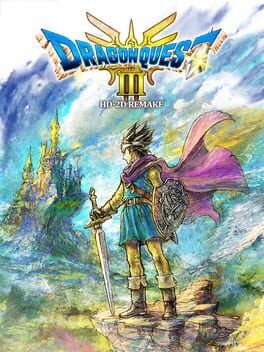
Dragon Quest III HD-2D Remake is one of those rare revisits that feels less like a nostalgia project and more like a course correction. The original Famicom game is a landmark JRPG, but time has not been kind to its grind, opaque systems, and technical limits. This remake finally lets the underlying design breathe.
In its post-launch state, with patches in place and the free Switch 2 upgrade available, Dragon Quest III is not just a respectful reimagining. It is the best way to play this story and, for most people, the best starting point for the Erdrick trilogy.
The Job System: Old-School Flexibility With Modern Clarity
Dragon Quest III’s job system has always been its secret weapon, and the remake doubles down on it by sanding off almost all the friction while preserving its depth.
You still create a custom party at Patty’s Party Planning Place, choosing from familiar archetypes like Warrior, Mage, Priest, Martial Artist, Thief, Merchant, and Gadabout before eventually unlocking more advanced jobs such as Sage. On paper this is standard JRPG fare, but in practice the remake makes experimentation far richer than before.
First, the game does a much better job explaining each job’s strengths, stat trends, and skill focus. The original often felt like trial by error. Here, clear stat previews and skill descriptions give you enough information to build toward a plan without needing a wiki open on your phone.
Second, the pace of progression has been tuned. Early-game battles grant enough experience to let new jobs come online quickly, and weapon and armor availability is better aligned with what you are likely to be using. Reclassing at the Dharma Temple is still a big decision that temporarily reduces levels, but the post-reclass slump is shorter thanks to more generous exp curves and the overall smoother difficulty ramp.
Most importantly, cross-pollination between jobs feels satisfying. Reclass a Martial Artist to a Mage and you will see that investment pay off in survivability that standard Mages simply cannot touch. Turn a Thief into a Sage and you get a utility monster that can heal, nuke, and still contribute outside combat through better item drops and trap detection. There is real joy in discovering that your weird party idea actually works.
The remake’s interface supports this experimentation. Skill lists are easier to parse, sorting equipment is painless, and the battle UI surfaces turn order and status with modern readability. This is still classic turn-based Dragon Quest, but it no longer feels stuck in 1988 when you are trying to decide whether to grind a few more levels before your next job change.
An Expanded, Cohesive World
Dragon Quest III has always been ambitious in scope, with a full world to explore and a late-game twist that recontextualizes the Erdrick saga. The HD-2D remake leans into that ambition by making the world feel more connected and alive without bloating the structure.
The broad strokes remain. You start as the child of the hero Ortega, set out from Aliahan, then gradually loop around a globe-spanning map filled with towns inspired by different cultures, dungeons that test your resource management, and ships and other tools that open up new routes. What has changed is how much more readable and tactile it all feels.
Town layouts are more expressive, with varied elevation, lighting, and camera angles that highlight landmarks like castles, ports, and shrines. Environmental storytelling is subtle but effective: a cracked wall hints at a secret passage, a distant glow on the horizon draws you toward a late-game continent, and shifting weather gives a sense of mood to long overland treks.
The expanded detail does not come at the cost of pacing. Fast travel is sensible, signposting is clearer, and NPC dialogue has been polished to steer you gently toward your next major objective without spelling everything out. The game trusts you to explore, but it rarely wastes your time.
Crucially, the famous late-game connection to Dragon Quest I and II lands harder than ever. The visual fidelity of specific locations and the foreshadowing sprinkled through side conversations give the trilogy a stronger spine. When you eventually roll into Dragon Quest I & II HD-2D Remake, that sense of historical continuity makes those simpler stories feel less like relics and more like deliberate epilogues.
Switch 2 Upgrade: The Version To Play
At launch, Dragon Quest III HD-2D Remake was charming but technically constrained on the original Switch. Resolution drops, uneven frame pacing, and occasional loading stutters could dull the impact of the gorgeous 2D artwork and dynamic lighting.
The free Switch 2 upgrade changes the experience dramatically. The performance patch adds multiple graphics options, with a clear focus on delivering a stable, high frame rate and sharper visuals. Docked and handheld alike benefit from noticeably cleaner image quality, richer lighting gradients, and snappier transitions in and out of battles.
Combat flows more smoothly at higher frame rates, making attack animations, spell effects, and camera sweeps feel crisp rather than smeared. Exploring large towns and overworld regions no longer triggers obvious hitching when the camera shifts. Even subtle touches like water reflections and volumetric light shafts hold together without the shimmer and aliasing that marked the older hardware.
The net result is that on Switch 2, Dragon Quest III finally looks like the flagship HD-2D showpiece it was clearly intended to be. If you have access to Nintendo’s new hardware, playing there is an easy recommendation. The post-launch patch does not rewrite the game’s structure, but it absolutely elevates the moment-to-moment experience.
Why Newcomers Should Start With III, Not I & II
Square Enix positions Dragon Quest III as the narrative beginning of the Erdrick trilogy, and in practice it works even better as a starting point than the marketing suggests.
Mechanically, Dragon Quest I and II are far more straightforward. They have charm and historical importance, but their designs are rooted in an era of harsher grind and thinner characterization. The HD-2D remakes modernize their presentation and smooth some edges, yet they still play like lean, early JRPGs.
Dragon Quest III, by contrast, hits a sweet spot between classic simplicity and modern expectations. The job system lets you immediately engage with party building and role experimentation. The world structure gives you a strong sense of adventure without burying you in sub-systems. Quality-of-life updates like autosaving, quick rest options, clearer maps, and more generous itemization mean that your time is respected even as the game remains deliberately old-school.
From a story perspective, starting with III means meeting Erdrick as a living legend in the making rather than a distant ancestor described in past tense. Watching that legend form, then rolling into I and II later, makes the entire trilogy feel like a carefully constructed saga rather than three disconnected museum pieces.
For newcomers curious about classic JRPGs but wary of feeling left behind by age, Dragon Quest III HD-2D Remake is a perfect bridge. It teaches you the rhythm of Dragon Quest combat, the tone of its humor, and the themes of its worlds in a way that feels generous instead of punishing.
Verdict
In its post-launch, fully patched form, Dragon Quest III HD-2D Remake on Switch 2 is a superb restoration of one of the genre’s foundational works. The refined job system remains endlessly entertaining, the expanded world feels cohesive and inviting, and the visual and performance upgrades finally let the HD-2D art style sing.
If you are planning to tackle the Erdrick trilogy, start here. By the time the credits roll, you will not just understand why Dragon Quest became a phenomenon. You will be eager to see how Dragon Quest I and II close the loop.
Final Verdict
A solid gaming experience that delivers on its promises and provides hours of entertainment.