
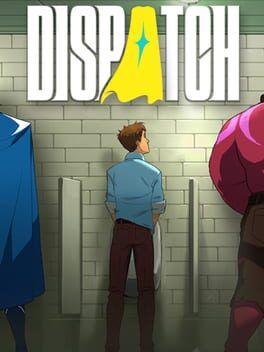
Review

By Apex
A Superhero Show You Actually Play Week To Week
Dispatch is built like a TV season first and a video game second, and that is exactly why it works. You play Robert Robertson, a powerless dispatcher in a city overflowing with capes, crises, and corporate nonsense. Your job is simple on paper: answer calls, triage disasters, and send the right hero to the right mess. In practice, it is a constant juggling act of egos, office politics, and very real stakes out in the field.
Where most superhero games obsess over the person in the mask, Dispatch lives in the space between incidents. You are the voice in the ear, not the fist in the face, and the entire structure of the game leans into that perspective. Every episode is framed like a half‑hour animated dramedy, complete with cold opens, A and B plots, and end‑of‑episode stingers that tease the next week’s fallout.
Weekly Episodes That Actually Understand Pacing
If you lived through the Telltale boom, you remember the promise of episodic gaming and how often it fell apart. Gaps between releases turned tension into amnesia, choices rarely echoed beyond a line or two of dialogue, and finales struggled to tie the web of branches together.
Dispatch’s weekly cadence is the cleanest fix to that formula in years. Episodes land like actual TV drops rather than sporadic content chunks. Cliffs from one week are still fresh in your mind when you load the next, and the writers use that rhythm to build momentum instead of constantly re‑introducing the cast.
Individual chapters are tightly scoped. You usually deal with one or two city‑wide emergencies while some simmering interpersonal feud hits a boiling point back at the office. The show‑like structure keeps scenes moving; there is almost no dead air or filler puzzle padding. Instead of wandering around a hub poking at hotspots, you are hopping between calls, checking live updates from the field, and making split‑second routing decisions that will absolutely come back to haunt you.
Compared to something like The Walking Dead’s season one, Dispatch spends less time lingering in quiet, reflective spaces, but it almost never blows its pacing on meandering scenes. It understands that in a weekly format, every episode needs to feel like an event, and it generally nails that mission.
Choice And Consequence Beyond Colored Dialogue
Early Telltale games were built on the fantasy that characters would “remember that” and the world would bend around your decisions. In practice, most branches reconverged quickly, and the real variation lived in which line you heard before the plot snapped back to the same spine.
Dispatch pushes harder on actual narrative math. The game quietly tracks:
Your professional reputation as a dispatcher.
Your personal relationships with individual heroes and coworkers.
Your overall performance handling crises: how many civilians you save, how many incidents you resolve, and how many you botch.
Those numbers are not just hidden stats for flavor. Screw over a hero one too many times and they will drag their feet when you need them most, underperform in the field, or even refuse assignments that trigger whole alternate solutions. Favor one hero in the rota and another will call you out in the break room later, souring casual conversations that were warm in a different save file.
The most obvious evolution over Telltale’s structure is how Dispatch ties choices to systems rather than single flags. Instead of “saved Doug” versus “saved Carley,” you are managing an ongoing ledger of who you put in harm’s way, whose personal life you wrecked with a late‑night call, and which corners you cut to keep the city’s incident board manageable. That ledger feeds back into both the story and the mechanics of dispatching itself, altering success odds and the tone of your episodes in a way you can feel without needing a post‑credits flowchart.
The Dispatch Board: Your New Dialogue Wheel
Mechanically, Dispatch is still mostly a narrative adventure, but the superhero‑dispatch premise lets it layer a light strategy game on top of the classic choice‑driven formula.
You run everything from a centralized console. Incidents pop in real time, each tagged with severity, location, and recommended hero types. Your roster is made up of misfit capes with distinct specialties and equally sharp flaws. Some heroes are perfect for property damage but terrible with hostages. Others are community favorites who will save PR but maybe not the day.
Choosing who goes where is the closest the game gets to a traditional “puzzle,” and it is also where its identity really diverges from Telltale. Routing a hot‑headed bruiser to a delicate negotiation might solve today’s crisis through brute force while quietly tanking your reputation with city officials. Sending the one healer on call to a low‑priority incident could leave you helpless when something worse hits five minutes later.
It feels a bit like grafting the time‑pressure of a management sim onto a visual novel. The key is that the game never drowns you in numbers. It keeps the UI readable and the stakes human. You are not optimizing spreadsheets; you are trying not to ruin someone’s night or set a neighborhood on fire.
As an evolution of the old Telltale dialogue wheel, the dispatch board works because it makes your decisions about more than just tone. You are choosing actions and allocations, then watching the consequences ripple through cutscenes and relationships in subsequent episodes. When a hero chews you out during a quiet locker‑room scene, it hits harder because you remember exactly which choice in the console put them in that position.
Relationships That Play Out Over A Season, Not A Menu
One of Dispatch’s smartest tricks is how it turns Telltale’s fleeting approval system into a proper season‑long relationship web. Talk to a hero kindly on a call debrief, cover for them in a report, or risk an assignment to give them a win, and you slowly build rapport. Push them too hard, dismiss their concerns, or treat them like a resource rather than a person and the distance becomes obvious.
This is not a BioWare‑style romance checklist. There are romantic threads, but they are embedded into the everyday rhythms of the job. Your flirtations have to live alongside ethical decisions about who you endanger and who you protect. That tone fits the workplace‑comedy framing the game is going for. The writing rarely lets you forget that these are coworkers first and capes second.
Compared to Telltale staples like The Wolf Among Us or Tales from the Borderlands, the character work in Dispatch feels less broad and more lived in. There is silliness, absolutely, but when a hero calls you at 3 a.m. from the aftermath of a bad night, the intimacy of that moment feels earned by a season of smaller choices.
The game does stumble sometimes. A couple of later episodes rush through pivotal confrontations so they can hit their big spectacle beats. There are moments when characters forgive or condemn you a little too quickly, presumably to keep the plot from splintering into total chaos. Those are the few times you can see the puppet strings, where the old Telltale constraints peek back through the curtain.
Even so, Dispatch is one of the first episodic adventures in years where I reached the finale genuinely unsure which characters would still be on speaking terms with my version of Robert. That uncertainty is where the format comes alive.
Payoff That Feels Earned Instead Of Inevitable
The big question for any branching narrative is whether your choices matter in the end. Telltale’s catalog is infamous for building giant illusion machines that funnel back into a narrowly defined endpoint. Thematically, that sometimes worked, but as a player it could feel deflating.
Dispatch does not suddenly unlock radically different timelines, but it does a better job of honoring your save file. Season‑long arcs resolve in different tones and configurations based on how you treated key relationships and how well you managed the city. The climactic crisis in the back half of the season can play out with a tight, loyal team that trusts you implicitly or as a barely functional mess full of grudges, last‑minute defections, and bitter compromises.
What makes the payoff satisfying is not that every branch is wildly different, but that the game commits to the version of Robert you have been role‑playing. A compromise‑driven, conflict‑averse dispatcher faces a different flavor of disaster than a hardline operator who burned bridges to keep casualty numbers low. In both cases, the ending feels like the only way this particular season could have gone, which is a neat narrative magic trick.
Some of the grander consequences are still conveyed through post‑episode montages and news headlines rather than fully playable sequences, which may disappoint anyone hoping for completely divergent late‑game missions. But compared to the “different colored final cutscene” problem that dogs so many choice‑driven games, Dispatch lands in a much more satisfying place.
Replay Value That Is Not Just A Collectible Hunt
Most episodic adventures are one‑and‑done experiences. Replay means hunting for missed dialogue variants, not genuinely different paths. Dispatch is one of the rare games in this mold that benefits from a second season‑length run.
Because the dispatch mechanics and relationship systems are intertwined, changing your priorities meaningfully changes how the story feels. A utilitarian playthrough where you treat heroes like pieces on a board produces different office dynamics than a run where you bend over backwards to keep everyone happy. Missions that felt trivial become disasters when you deliberately send the wrong hero, just to see what breaks.
The weekly episode structure also helps replay value. Instead of slogging through long, indistinct chapters, you can replay specific episodes as “bottle stories” to see how one or two decisions flip an outcome. The game supports this by making it easy to load earlier episodes without completely trashing your primary save.
It still is not the kind of thing you will replay five times in a row. Branches have hard limits, and by your third pass the bones of the structure are clearly visible. But for anyone who loved digging into the permutations of Life is Strange or replaying The Walking Dead to explore a couple of key forks, Dispatch offers a genuinely compelling second run.
Production Values That Meet The Moment
From a presentation standpoint, Dispatch walks a careful line. It leans heavily on stylized, TV‑friendly visuals rather than chasing photorealism, which lets it sell expressive character animation on a mid‑tier budget. The art direction favors bold silhouettes and clean color palettes, so the busy UI never completely overwhelms the screen.
Voice acting is where it really shines. The cast sells the script’s balance of banter and vulnerability, and the direction avoids the stiff, line‑reading feel that sometimes haunted older Telltale projects. Because so much of the game is people talking across headsets, those performances carry enormous weight, and Dispatch rises to the challenge.
Technically, it is not flawless. There are occasional animation pops, camera oddities, and a handful of audio drops that remind you this is still a AA production. None of it is game‑breaking, but the seams are there if you look for them.
Verdict: A Real Successor, Not Just A Nostalgic Imitation
Dispatch is not just “Telltale with capes.” It uses the superhero‑dispatch conceit and weekly release structure to finally deliver on promises that episodic adventure games have been making for a decade. Choices matter not because a tooltip tells you they do, but because the systems beneath the story track your successes, failures, and relationships in believable ways.
It is still a mostly linear season of television at heart, and if you never warmed to that format, Dispatch will not convert you. Some late‑game branches could be bolder, and a few emotional beats sprint when they should jog.
But as a modern evolution of the episodic, choice‑driven adventure, Dispatch is one of the strongest arguments the genre has had in years. It respects your time, respects your decisions, and understands that the real drama in a superhero world often lives in the headset, not on the rooftop.
Final Verdict
A solid gaming experience that delivers on its promises and provides hours of entertainment.