
Review
By Headshot
Overview
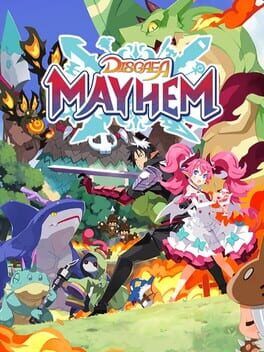
Disgaea Mayhem is Nippon Ichi’s first real attempt to tear the series off its beloved grids and drop it into a full 3D action RPG format. On paper it sounds perfect: level caps up to 9,999, billion-damage combos, seven weapon types, Magichange-style transformations, and a mercenary story about securing dessert for a spoiled Netherworld princess.
In practice, Mayhem lands somewhere in the awkward middle. It has flashes of the absurd power fantasy Disgaea is known for, but the combat depth, build nuance, and encounter design never quite catch up to the numbers on screen.
Combat: Flashy, Fast, and Weirdly Flat
Moment to moment, Mayhem plays as a third-person character action game. You control N.A., locking onto groups of enemies, weaving light and heavy strings, dodging through telegraphed attacks, and cashing out with big skill animations. Every weapon type fists, swords, spears, axes, bows, guns, and staves has its own move set and range profile. Switching between a sword’s wide arcs and a spear’s thrust-heavy spacing feels good for the first few hours.
The problem is how quickly you hit the ceiling. Combo routes are short, enemy poise breaks fast, and generous hit stop plus wide hitboxes mean you can brainlessly mash your way through most encounters. There is a nominal stagger and guard-break system, but mobs fold so quickly that learning timings rarely matters outside of a handful of late-game elites and bosses.
Positioning is similarly undercooked. You can kite huge packs, but arenas are mostly flat boxes with the occasional pillar or hazard. Without the elevation puzzles, push-and-pull of turn order, or geo-panel trickery that defined mainline Disgaea, Mayhem struggles to replace that mental layer with anything equally satisfying. It wants to be a wild character action game, yet rarely demands the mechanical precision or pattern recognition of the genre’s best.
Build Customization: Numbers for the Sake of Numbers
On the surface, Mayhem looks like a theorycrafter’s playground. You level N.A. up to 9,999, reincarnate to reset and push base stats higher, socket gear with modifiers, and unlock weapon-specific skills. Each weapon line has passives that tilt your kit toward crits, status effects, or raw damage. There are also familiar Disgaea-style quirks like capturing monsters to deploy as assist attacks or temporary transformations.
The trouble is that very little of this actually changes how you play. A crit-focused fist build and a raw-attack axe build both end up as different flavors of “run into the mob and delete it in seconds.” Staff builds let you lean into ranged spells, but encounters almost never pressure you to play keep-away. Bows and guns should be ideal for space control, yet the AI happily walks into your shots and dies before any interesting patterns emerge.
Because difficulty rarely scales in a meaningful way, the reincarnation loop feels like busywork rather than a strategic choice. You grind simply because the game says the number can go higher, not because a new build will open up novel playstyles or solve fresh combat problems. Coming from a franchise where min-maxing geo setups and stacking absurd modifiers was a game within the game, Mayhem’s customization is all surface-level excess.
Encounter Variety and Level Design
For a game literally called Mayhem, the encounter design is remarkably conservative. Stages tend to funnel you through corridors and open arenas where you mop up waves of demons, Prinnies, and oversized bosses. Every so often, the game spices things up by dropping environmental hazards or time-limited objectives, but they rarely demand more than “kill things faster.”
Enemy types share too many behaviors. Whether you are fighting Netherworld slimes or armored brutes, most of them shamble toward you, swing, then wait to be punished. Projectile enemies and teleporting casters exist, but they are outnumbered and under-tuned, so they seldom change your priorities. After a few chapters, it starts to feel like you are running the same fight in slightly different rooms.
Boss battles are a partial exception. Larger foes actually have defined phases, AOE patterns, and super attacks that can chunk your health if you are careless. The best of these encounters flirt with the kind of chaos the title promises, with mobs, projectiles, and boss mechanics layered together. Unfortunately, the game does not build on that foundation consistently. Too many bosses devolve into circle-strafing while you wait for a punish window, then unloading the same high-damage combo you have used for hours.
Performance: PS5 vs Switch 2
On PS5, Mayhem runs at a mostly solid 60 frames per second in both performance and quality modes during standard encounters. The issue crops up in the very scenarios the game is marketed around: enormous mob fights full of particle-heavy skills and damage numbers. When you aggro a full room, trigger an assist call, and pop a couple of super attacks at once, the frame rate can hitch for seconds at a time. It never drops into outright slideshow territory, but the lurching is noticeable and undercuts the sense of fluidity.
Switch 2 is better than expected but still clearly behind. Portable and docked modes target 60, yet big set pieces dip more regularly than on PS5, often into the low 40s when the screen fills with enemies and effects. Image quality is also softer, with more visible shimmering on character outlines and environmental detail.
The upside is that input latency remains reasonably consistent. Dodges and parries are still dependable even when the frame rate wobbles. That keeps the game playable in its worst moments, though it is hard not to feel disappointed when the supposed over-the-top climax of a mission becomes the moment the engine groans the loudest.
Story and Humor Without the Tactics Crutch
Disgaea’s best stories have always leaned on absurdity while using the slow burn of grid-based campaigns to let cast dynamics breathe. Mayhem tries to compress that into an action-RPG structure where you blast through missions far faster, and it suffers for it.
N.A. is an amusing enough lead, a mercenary with a sweet tooth and a mercenary code that mostly boils down to “pay me and feed me,” paired with a dessert-obsessed princess whose whims drive most of the contract jobs. Their banter hits some genuinely funny notes, especially when veteran Disgaea weirdos wander into the plot, but the pacing is off. Scenes end just as a joke finds its rhythm, and the story jumps to the next locale without building real emotional stakes.
Without the chessboard of a traditional Disgaea map to contrast the comedy with surprisingly sharp character beats, Mayhem’s narrative feels like skits glued between missions. There are earnest attempts at theme, particularly around what it means to be a disposable mercenary in a world where lives and levels are both infinitely recyclable, yet the game rarely slows down enough to explore those ideas.
The localization is at least lively, full of puns, shouting, and knowingly ridiculous item and skill names. If you have always enjoyed Disgaea’s tone, you will find plenty of lines to screenshot. Just do not expect the kind of gradual, sneaky character development that made entries like Disgaea 1 and 5 memorable.
For Core Disgaea Fans
If you live for Disgaea’s intricate grids, geo-panel puzzles, and party micromanagement, Mayhem is going to feel like a diet version of the series. The familiar signifiers are here levels that climb into the thousands, reincarnation loops, damage numbers that barely fit on the screen but they are not tied to the same tactical richness.
You can absolutely sink hours into perfecting a build, but you will quickly realize that the game rarely asks for that level of investment. There are no endgame labyrinths that truly push your creativity, no clever map gimmicks that force you to rethink your approach. It is Disgaea’s aesthetic and numeric excess draped over a fairly straightforward action RPG.
That does not make it worthless for long-time fans, but you should calibrate expectations. Treat it as a side-story experiment, a chance to see familiar tone and iconography in a new gameplay wrapper, rather than a replacement for the mainline series. If what you love about Disgaea is solving combat puzzles and exploiting systems, Mayhem will likely feel like shallow fanservice.
For Newcomers Wanting an Over-the-Top Action Game
If you have never touched Disgaea and simply want a loud, colorful action RPG with ridiculous numbers, Mayhem is easier to recommend, but with caveats. The controls are responsive, enemy health melts in spectacular fashion, and the progression treadmill constantly hands you new toys and bigger stats. It is satisfying in the same way a musou game or a mid-tier anime brawler can be satisfying for a weekend.
Where it stumbles for newcomers is in the repetition. The game does not have the mechanical complexity of a Devil May Cry or the encounter craft of a Nier. You are here to bash demons, watch the numbers swell, and occasionally laugh at a cutscene. If that sounds like enough, you will get decent mileage out of it, especially on PS5 where performance is strongest.
If, however, you are hoping for a breakout action RPG that matches its wild premise with equally wild depth, Mayhem does not quite clear that bar. It is fun in short bursts, but its systems do not evolve enough to sustain long marathons.
Verdict
Disgaea Mayhem is a respectable experiment that does not fully commit to what it wants to be. As a Disgaea game, it strips away the tactical heart of the series and replaces it with an action system that never reaches the same strategic highs. As an action RPG, it has style and personality but lacks the depth and encounter craft needed to stand with the genre’s heavy hitters.
Core Disgaea fans should approach as tourists rather than true believers: there is enjoyment to be had in seeing Netherworld chaos from a new angle, but this is not the next great grind-obsessed timesink. Newcomers who only want a flashy, low-commitment action romp will find something serviceable yet forgettable.
In the end, Mayhem lives up to its name in spectacle, but not in design.
Final Verdict
A solid gaming experience that delivers on its promises and provides hours of entertainment.