
Review

By Apex
Directive 8020 Review
Supermassive Games has spent years refining its interactive horror formula across The Dark Pictures Anthology, but Directive 8020 feels like the first entry that fully understands how to balance cinematic storytelling with genuine player tension. After the uneven pacing of Man of Medan and the frustratingly rigid structure of The Devil in Me, this latest entry arrives with a level of confidence that immediately stands out.
Directive 8020 trades haunted hotels and serial killers for deep-space paranoia, and the result is easily the most atmospheric game in the anthology since House of Ashes. Drawing heavily from Alien, The Thing, and Event Horizon, the game traps players aboard the colony ship Cassiopeia as its crew encounters a shape-shifting organism capable of perfectly mimicking humans. That premise alone injects every conversation with suspicion. Every disagreement feels dangerous because the game constantly makes you question whether the person standing next to you is still human.
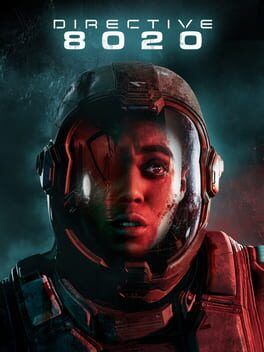
The sci-fi horror atmosphere is the strongest Supermassive has ever produced. Cassiopeia is packed with dimly lit corridors, flickering machinery, and claustrophobic maintenance tunnels that feel oppressive from the moment the game begins. Sound design does a huge amount of heavy lifting here. Mechanical groans echo through empty hallways while distant creature noises constantly suggest something moving just outside your field of vision. Unlike some earlier anthology entries that relied too heavily on jump scares, Directive 8020 understands the value of sustained dread.
Its body horror sequences are especially effective. The alien transformations are grotesque in a way Supermassive has rarely attempted before, twisting human features into distorted, unnatural imitations that are genuinely uncomfortable to look at. The visual fidelity helps enormously. Facial animation is dramatically improved compared to previous Dark Pictures games, making emotional confrontations land harder and the horror imagery more disturbing.
What really elevates Directive 8020 above most anthology entries is how meaningful its branching narrative feels. Supermassive has always advertised player choice as the central attraction, but prior games often funneled major decisions toward similar outcomes. Directive 8020 still has some convergence points, but the routes leading there feel significantly more reactive. Characters develop different relationships based on your trust decisions, and suspicion can permanently fracture the crew in ways that alter major scenes later in the story.
The paranoia mechanic creates some of the studio’s best decision-making moments to date. Choosing whether to trust an infected crewmate becomes far more stressful when the game refuses to telegraph the correct answer. Several scenes force split-second judgments with incomplete information, and the uncertainty makes failures feel earned rather than scripted.
The new stealth mechanics are another major improvement. Earlier Dark Pictures games often reduced tension to simple quick-time events, but Directive 8020 adds sections where players must carefully navigate around hostile threats while avoiding detection. These sequences are not mechanically deep enough to rival dedicated stealth games, but they inject a much-needed layer of interactivity into Supermassive’s formula.
Stealth also helps pacing considerably. The Devil in Me frequently became bogged down by slow environmental interactions and awkward traversal, while Directive 8020 keeps players actively engaged during exploration. Movement still has occasional stiffness, and some contextual interactions remain clunky, but the added gameplay variety prevents long stretches of passive wandering.
Compared directly to House of Ashes, Directive 8020 feels more refined and focused. House of Ashes succeeded because it embraced action-horror pacing and gave players likable characters trapped in escalating danger. Directive 8020 builds on that structure with stronger atmosphere, better visual presentation, and more psychologically driven tension. House of Ashes still arguably has the more memorable ensemble cast, but Directive 8020 delivers the superior horror experience.
Against The Devil in Me, the improvement is even more dramatic. That game struggled with pacing problems, inconsistent character writing, and gameplay systems that felt underdeveloped. Directive 8020 corrects nearly all of those issues. The narrative momentum stays strong throughout most of the campaign, and the sci-fi setting gives the anthology a fresh identity after several entries built around more familiar horror tropes.
Replay value is excellent thanks to the branching structure. Different survival outcomes, fractured alliances, and alternate discoveries make repeat runs genuinely worthwhile rather than simple collectible hunts. Cooperative play remains one of Supermassive’s best features as well, since arguing over who to trust becomes far more entertaining when another player is directly responsible for disastrous choices.
The game is not flawless. Some dialogue still falls into stiff exposition, and certain reveals can feel predictable for longtime sci-fi horror fans. A few branching paths also collapse together more aggressively than the game initially suggests. But these issues rarely derail the experience because the atmosphere and tension remain consistently compelling.
Directive 8020 feels like the culmination of everything Supermassive Games has been trying to achieve with The Dark Pictures Anthology. It delivers stronger horror, more meaningful choices, better pacing, and smarter gameplay integration than nearly every previous entry in the series. For fans of cinematic horror games, it is easily one of Supermassive’s best efforts to date and a convincing argument that the anthology still has room to evolve.
Final Verdict
A solid gaming experience that delivers on its promises and provides hours of entertainment.