
Review

By MVP
A 16-bit fossil dug up for modern machines
Dino Land is not a new pinball game so much as an excavation. Ratalaika and Shinyuden have taken Wolf Team’s 1991 Genesis / Mega Drive oddity, wrapped it in a light emulator shell, and dropped it onto modern consoles and PC. What you get is essentially the original cartridge, quirks and all, now running at HD resolutions and sprinkled with a few convenience features like rewind, save states, and a CRT-style filter.
If you come in expecting a modern physics simulation with deep progression hooks, you will bounce off this faster than a ball off an outlane post. Dino Land is pure 16-bit arcade design: three themed tables and a final boss area, lives-as-balls, and a focus on score chasing rather than unlock trees or meta progression.
Table design: clever ideas in cramped real estate
The hook in Dino Land is that each table represents a different chunk of the prehistoric food chain. One focuses on ground-dwelling dinos, another on flying reptiles, and another on aquatic creatures, culminating in a more chaotic boss stage. Instead of sterile ramps and neon plastics, the entire layout is shaped around dinosaur bodies, volcanoes, and primitive structures.
There is some genuine charm to the layouts. Ramps curve around dinosaur necks, bumpers are disguised as snapping jaws, and certain targets trigger short, almost boss-like sequences. These ideas give each table a clear identity, and as a preserved artifact of early console pinball design it is fun to see how Wolf Team tried to merge action-game sensibilities with pinball fundamentals.
The problem, looking at it from 2025, is how cramped and opaque these layouts feel. Key shots can be oddly placed relative to the flippers, and important objectives are not clearly communicated. It is easy to spend several balls just pinging around the same cluster of bumpers without ever feeling in control of your progression through a table. Compared with even mid-tier modern digital tables, Dino Land rarely offers the sense of flow that makes good pinball so satisfying.
Physics: serviceable, but undeniably stiff
The physics are identical to the original release, which is a polite way of saying they are extremely approximate. The ball feels more like a puck sliding around than a steel sphere gaining and losing momentum. Angles off the flippers are inconsistent, nudging is barely a factor, and some collisions send the ball in ways that look and feel arbitrary.
For players used to Pinball FX, Pinball Arcade, or even the more recent indie tables, Dino Land’s physics will feel like a step back in time, and not necessarily in a good way. There is certainly a learning curve to mastering its peculiarities, and pinball purists might enjoy dissecting its patterns, but you never quite shed the sense that you are wrestling with the simulation rather than expressing skill through it.
Progression and hooks: score, survive, repeat
Dino Land’s progression structure is about as old-school as it gets. You start with a small stock of balls, play for score, and aim to advance through the themed boards to the final showdown. There are bonuses to trigger and extra balls to earn, and the new port adds conveniences like a gallery, jukebox, cheat toggles, and rewind for those who want to experiment without constantly starting over.
What is missing is any meaningful modern hook. There are no long-term unlocks, no table mods to grind for, no cosmetic rewards, and no clever challenge ladders. Once you have seen the four boards, the only real incentive is to chase scores or replay them under self-imposed conditions. That was perfectly normal in 1991, but on today’s storefronts, surrounded by rich pinball packages and live-service tables, Dino Land lands as a very slight offering.
Prehistoric theme on modern hardware
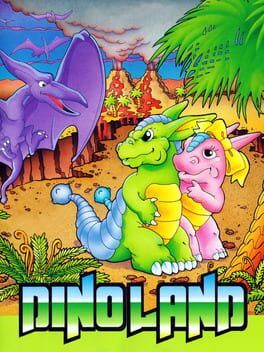
Visually, the game is faithful to its 16-bit roots, which is both its strength and its ceiling. The pixel art is detailed and colorful, and the dinosaur designs have a goofy Saturday-morning energy that fits the lighthearted tone. On a big modern display the artwork is clean, and the optional filters help recreate a CRT fuzz if you want a more authentic look.
Still, there is no getting around the fact that this is a single static viewpoint table with chunky sprites and limited animation. Modern pinball players are used to fully 3D tables, dynamic cameras, and lavish lighting. Dino Land’s visuals sit firmly in the museum case. If you love that look, this port preserves it well. If you do not already have nostalgia for it, there is nothing here that reinterprets the aesthetic for a new era.
The soundtrack is very much of its time: short, looping tunes with crunchy FM synth and sharp sound effects for hits and bonuses. It is catchy in small doses, and the new jukebox feature is a nice touch if you just want to listen to the tracks, but it also adds to the sense that this is a lovingly preserved curiosity rather than something truly competitive in today’s market.
How well does it actually play in 2025?
As a preservation project, Dino Land is easy to appreciate. The low asking price, multi-platform reach, and added quality-of-life options mean a once-niche Genesis pinball experiment is now simple to sample on Switch, PlayStation, Xbox, and PC. For historians and fans of Wolf Team’s other oddities, that alone has value.
As a modern pinball experience though, Dino Land struggles. The tables are gimmicky but not especially deep, the physics feel stiff, and the overall package is lean. There is no robust tutorialization, no real onboarding to teach you each table’s goals, and very little reason to stick around once the initial novelty wears off.
If your interest is primarily in how well its classic sensibilities translate, the answer is that they are mostly intact and mostly unembellished. You are getting exactly what players saw in the early 90s, not a reimagining or a best-of-both-worlds update. That purity will please some and completely lose others.
Verdict
Dino Land is a neat little time capsule, but as a multi-platform “new” retro pinball release it feels more like a curiosity than a must-play. Its dinosaur theme is charming, and there is a certain satisfaction in wrestling a ball through its eccentric layouts, yet it cannot escape its stiff physics, shallow progression, and dated presentation.
If you have nostalgia for the original cartridge or a deep interest in obscure 16-bit pinball experiments, this is a faithful and convenient way to revisit it. If you are simply looking for a great pinball game on your modern console or PC, there are far better tables to flip.
Final Verdict
A solid gaming experience that delivers on its promises and provides hours of entertainment.