
Review
By Story Mode
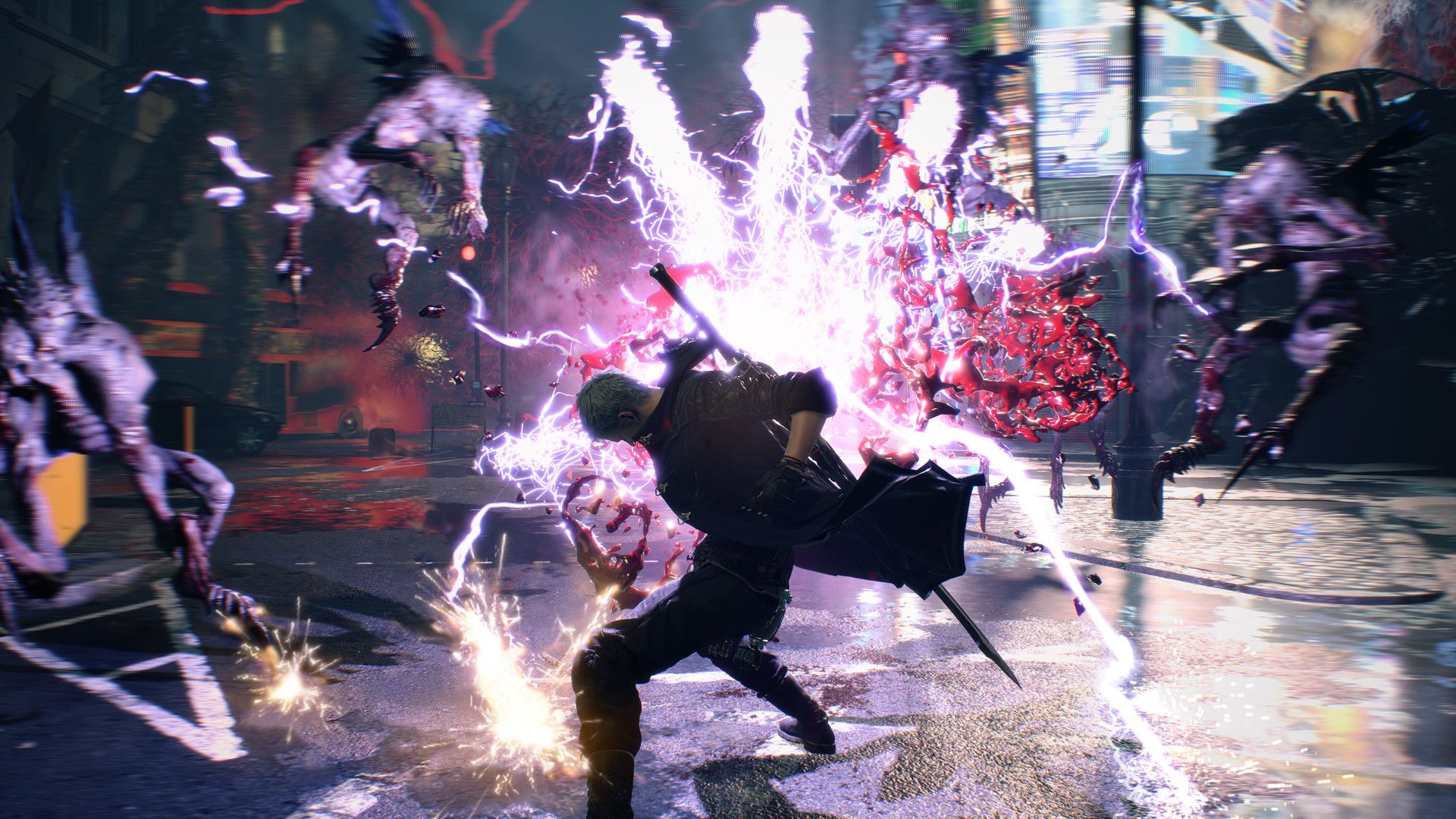
Image: cubed3.com
A fast port with one obvious cut
Devil May Cry 5: Devil Hunter Edition arrives on Switch 2 with the one requirement an action game of this caliber cannot fake: speed. Digital Foundry reports that Capcom’s port maintains a remarkably consistent 60fps in its default 60Hz docked mode, while NintendoSmash says the game runs at a constant 60 FPS in both handheld and docked play. That is the headline for this Devil May Cry 5 Switch 2 review, because DMC5 lives in the space between a button press and a launcher connecting. If that gap feels muddy, the whole performance collapses.
The tension is that this is not the complete modern Devil May Cry 5 package some veterans know from other platforms. NintendoSmash and Creative Bloq both note that Devil Hunter Edition includes Vergil and years of DLC, but lacks Turbo Mode and Legendary Dark Knight Mode, two additions associated with the newer PS5-era version. Creative Bloq specifically calls it a very complete version rather than the Special Edition fans may have wanted. That distinction matters. Switch 2 gets a strong portable version of one of Capcom’s sharpest action games, but returning players are being asked to trade certain high-end extras for handheld play.
On that trade, the port mostly wins. Devil May Cry 5 was originally released in 2019, and Nintendo Life frames it as one of the games that helped cement Capcom’s modern run alongside Resident Evil 2. Six-plus years later, the bones still move like they were built yesterday. The campaign’s arena fights, character swaps, style grading and escalating boss encounters remain clean, immediate and theatrical. Devil Hunter Edition on Switch 2 does not change that structure. It gives it a new stage, one that fits in your hands.
Combat rhythm survives the move to handheld
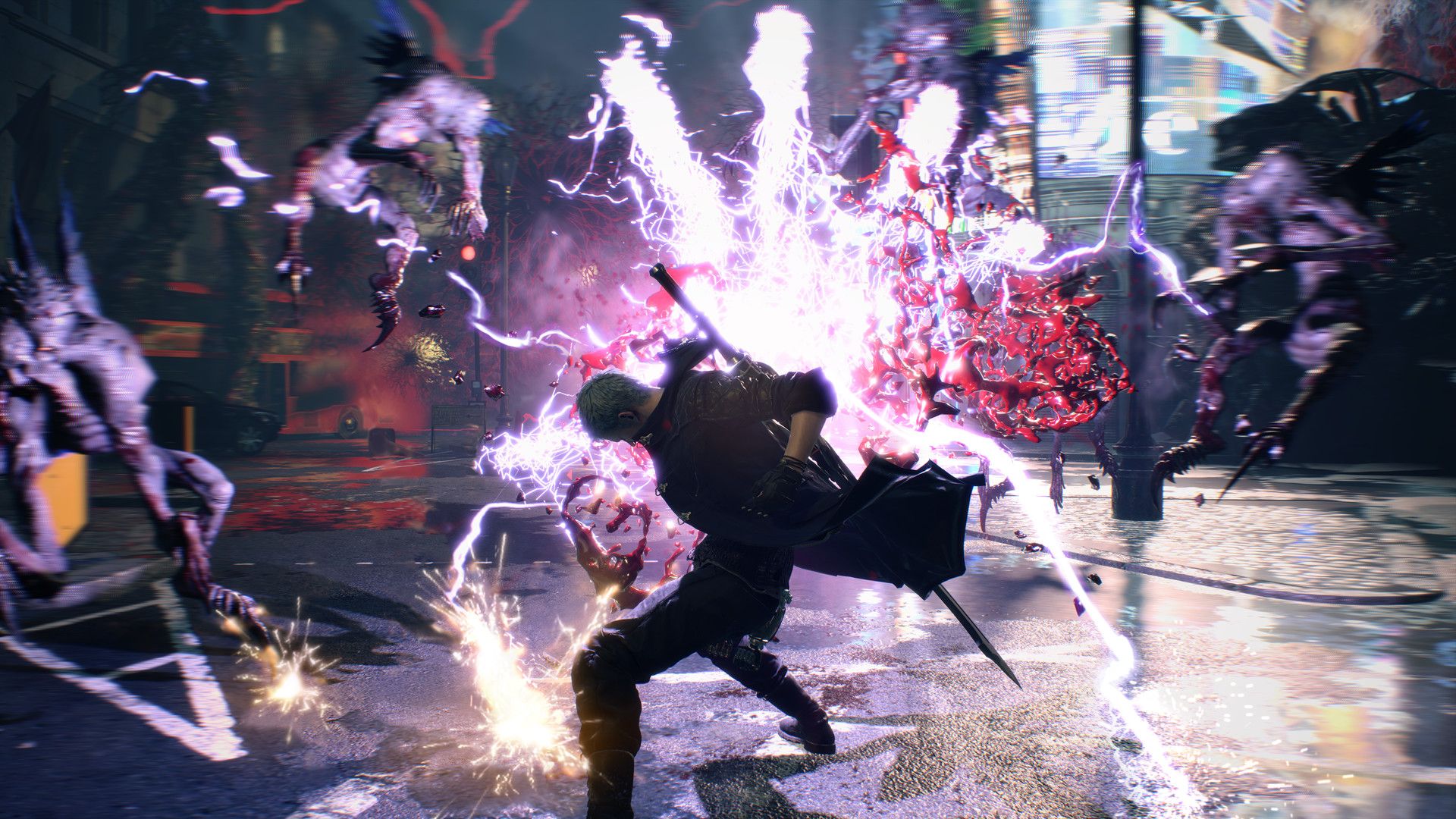
DMC5 is a game about rhythm before it is a game about damage. Nero revs Red Queen between strikes, peppers enemies with Blue Rose, burns through Devil Breaker arms and turns improvisation into pressure. Dante is the opposite kind of storm, shifting styles on the D-pad and cycling melee and ranged weapons until the screen becomes a moving diagram of player intent. V hangs back and commands familiars, with Shadow, Griffon and Nightmare doing the tearing while he closes in to finish. Vergil, included here as DLC according to NintendoSmash and Creative Bloq, asks for more deliberate precision with Yamato, Beowulf and Mirage Edge.
That spread of characters is the reason Devil Hunter Edition remains such an easy recommendation for first-timers. NintendoSmash lists Nero, Dante, V and Vergil as playable, while Nintendo Life emphasizes how each character brings distinct tools to the style-ranking chase. The system still rewards variety over survival alone. You can mash through lower difficulty encounters, but the game’s real pulse starts when you begin chasing S, SS and SSS ranks by swapping approaches, taunting at the right moment, keeping enemies suspended and refusing to repeat yourself.
Input feel is the invisible boss fight in any portable action port. Digital Foundry says Capcom resisted offering an unlocked frame rate and instead prioritized input consistency and graphical stability at the 60fps target. That is the right call for DMC5. An unlocked frame rate might look good in a settings menu, but this combat depends on predictable timing. Style switching, jump cancels, Nero’s charged actions and Vergil’s tighter windows all benefit from a stable cadence. Based on the reported performance profile, this is a port built around responsiveness rather than a specs-sheet gamble.
Handheld play also suits DMC5’s mission structure better than expected. The campaign is divided into focused, story-driven missions across Red Grave City, as NintendoSmash describes, with combat chambers and cinematic breaks rather than sprawling open routes. That gives Devil May Cry 5 portable value beyond novelty. It is easy to imagine clearing a mission, practicing a route in Training Dimension, or making one Bloody Palace attempt without committing an entire evening.
Performance is the showcase, with load times doing quiet work
DMC5 Switch 2 performance is the strongest argument for this edition. Digital Foundry’s technical review says the Switch 2 version easily outclasses the PS4 version in key areas, especially stability. The original PS4 release could be erratic during gameplay, according to that analysis, while the Switch 2 release holds to its 60fps target in default docked play. NintendoSmash’s report extends that confidence to handheld mode, saying the game maintains 60 FPS in both handheld and docked positions.
That performance changes the character of the port. Devil May Cry 5 has always been a visually busy game, but its readability depends on motion clarity. Enemy windups, launcher timing, dodge windows and style transitions all need to be legible at speed. A softer image can be tolerated. A choppy combat loop cannot. Capcom’s apparent choice is practical: preserve the rhythm first, let the image reconstruction do the rest.
Load times are another major quality-of-life win. Digital Foundry says the Switch 2 reduces the lengthy PS4 interstitial loading sequences to mere seconds, making them barely noticeable during typical play. That is not a glamorous upgrade, but it affects pacing in a game that constantly cuts between encounters, pre-mission prep, cutscenes and retries. DMC5 is at its best when it feels like a concert set with no dead air. Faster transitions keep the set moving.
There are unanswered technical questions that matter to enthusiasts. Digital Foundry identifies the default docked mode and discusses apparent upscaling, but the provided source material does not include a full public breakdown of every handheld resolution target, power profile or latency measurement. What is confirmed by the cited reviews is the practical result: reviewers are consistently pointing to 60fps as the port’s defining success. For an action game, that is the right priority.
The visual compromises are visible, but usually acceptable
The Switch 2 version does not brute-force Devil May Cry 5 into parity with PS5, Xbox Series X|S or a strong PC. Digital Foundry reports that the Switch 2 image appears to use DLSS to upscale from an internal resolution of approximately 540p during gameplay. That number sounds harsh, especially next to the native 1080p image of the PS4 version, but Digital Foundry’s conclusion is more nuanced: the final Switch 2 output is surprisingly clean and, in its view, outdoes the PS4 effort thanks to a more stable, slightly softer presentation compared with the older game’s aliasing issues.
That softness is the main visual tradeoff. Character models, hair and fine detail do not always have the bite players may remember from stronger hardware. Metacritic’s critic excerpts include a note about a slight crispiness to character-model hair in line with other RE Engine titles on Switch 2, while one user review quoted on Metacritic complains that the resolution is poor despite stable 60fps. Those reactions can both be true. DMC5 on Switch 2 can be clean in motion and still plainly reconstructed.
Brightness is the stranger issue. Digital Foundry says Switch 2 output appears noticeably brighter than other versions even when default settings are matched, and calls for a closer gamma match for home display use. A Metacritic critic excerpt similarly says the default brightness is too high and can wash out visuals, but adds that it can be corrected in the options menu. Practical advice: adjust brightness early. Red Grave City loses some of its gothic pressure when blacks lift too far and demonic spaces flatten into gray.
Some limits also come from the original game’s technology. Digital Foundry notes that DMC5 arrived early in the RE Engine’s life and relies on techniques such as cubemap reflections, precalculated global illumination and sometimes inconsistent shadow accuracy. In other words, this was never Capcom’s most advanced modern renderer. What still carries the presentation is direction: the cutscene framing, creature silhouettes, attack effects and absurd weapon pageantry. Creative Bloq praises the boss designs as brilliantly weird, and that weirdness survives the downshift.
Content package: generous, but not the Special Edition
Devil Hunter Edition is well stocked for players arriving fresh. NintendoSmash says it includes the original Devil May Cry 5 story, major updates and DLC, including Vergil, Devil Breaker arms for Nero, costume packs, battle tracks, alternate voices, extra taunts and more. It also lists Bloody Palace Mode, Photo Mode and Training Dimension as part of the package, with Bloody Palace unlocking after finishing the game and Training Dimension allowing players to practice combos with custom parameters.
That is enough to make this a serious action-game purchase on Switch 2. The campaign is substantial, Vergil adds a higher-skill character with his own rhythm, and Bloody Palace gives the combat system room to breathe after the credits. For first-time players, Devil Hunter Edition is a broad introduction to DMC5’s full combat vocabulary.
The missing modes are the deciding factor for veterans. NintendoSmash and Creative Bloq both identify Turbo Mode and Legendary Dark Knight Mode as absent. Turbo Mode is important because it changes the tempo for players who already know the game inside out. Legendary Dark Knight Mode is important because it floods arenas with enemies, creating a denser kind of chaos that became part of the appeal of later versions. NintendoSmash suggests it is understandable that adding those modes might lower performance on Switch 2, but that is the outlet’s interpretation rather than a Capcom technical statement in the provided material.
So this Devil Hunter Edition review has to draw a firm line. If your idea of the best DMC5 is the most feature-complete console or PC version, Switch 2 does not replace that. If your priority is a strong portable edition with the core campaign, Vergil, Bloody Palace and stable 60fps, it earns its place.
Story, pacing and set pieces still land
Devil May Cry 5’s story remains a lean action melodrama with just enough operatic family damage to give the fighting weight. NintendoSmash summarizes the setup: after Devil May Cry 4, Red Grave City is threatened by the demonic Qliphoth tree, which feeds on human blood, while Nero, Dante and newcomer V confront Urizen. Nintendo Life notes that the game includes a story-so-far video for players who are not caught up, while warning that it is hardly comprehensive.
That is fair. DMC5 works best when you accept its momentum. The plot is less a mystery box than a chain of entrances, reversals and character payoffs staged around escalating fights. Nintendo Life calls the narrative well paced from start to finish, and that pace is still one of the game’s secret weapons. It moves with confidence, cutting from rubble-strewn city streets to grotesque demon arenas, from banter to boss spectacle, from absurd style to sincere payoff.
The character rotation keeps the campaign from settling into one groove. Nero gives the early hours a clean action baseline. V bends the combat into something stranger and more tactical. Dante arrives like a walking arsenal, with Nintendo Life highlighting his style switching and weapon swapping, and Creative Bloq pointing to late-game weapons such as the Cavaliere R motorcycle sword as an example of the game’s over-the-top imagination. Vergil then recontextualizes the campaign for repeat play.
There is some repetition in the level flow. Metacritic’s critic excerpts include one review arguing that repetitive levels can lead to boredom despite praising the character abilities and story. That criticism has teeth. DMC5’s arenas often follow a familiar rhythm: move through a corridor, lock into a fight, chase rank, repeat. The reason it still works is that the enemies are instruments, not obstacles. The level design sets the tempo. The combat system writes the melody.
Verdict: the best portable DMC5, but not the only version to own
For new players, Devil May Cry 5: Devil Hunter Edition on Switch 2 is easy to recommend. The reported 60fps performance, reduced load times, included DLC and portable format make it a strong way into one of the best modern character-action games. The story-so-far video will not turn newcomers into lore scholars, according to Nintendo Life, but it gives enough runway for the campaign’s immediate stakes. Once the combat takes over, the series history becomes less of a barrier.
For returning players, the answer depends on what you want from a second copy. Buy again if you want Devil May Cry 5 portable, if handheld Bloody Palace sounds useful, or if the idea of practicing Nero, Dante, V and Vergil routes away from a TV has real value. Wait or skip if Turbo Mode and Legendary Dark Knight Mode are central to how you play, or if you already have the PS5 or PC versions and only care about the fullest feature set.
Availability details are slightly messy in the provided sources. Creative Bloq lists the release date as 22 June, while Metacritic lists the Switch 2 release date as Jun 23, 2026. That may reflect regional timing or listing differences, but the safe advice is to check the local Nintendo eShop page before planning around a specific date. No supported price or upgrade path appears in the provided material, so returning buyers should assume this is a separate purchase unless their storefront says otherwise.
The score reflects a port that makes the right performance bet. It sacrifices some feature completeness and image sharpness, but it preserves the combat rhythm that defines DMC5. On Switch 2, Devil May Cry 5 feels like a stage show rebuilt for a smaller theater: the lights are a little harsher, some effects are trimmed, but the band still plays fast, loud and in time.
Final Verdict
A solid gaming experience that delivers on its promises and provides hours of entertainment.