
Review

By Pixel Perfect
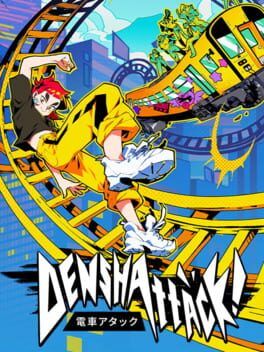
Image: IGDB
Store links: Denshattack! on Steam
A ridiculous premise arrives with serious momentum
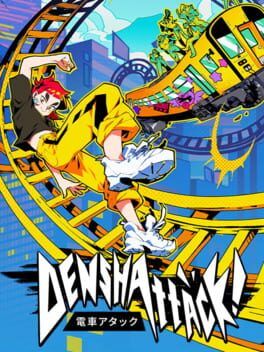
Denshattack! launched on July 15, 2026, with Playday reporting releases for Switch 2, PS5, Steam, and Xbox as a day-one Xbox Game Pass title. That availability matters because this is the kind of indie skateboarding game whose elevator pitch can sound like a meme before the controller is in your hands: flip, drift, grind, and trick-chain a train through a colorful dystopian Japan.
The immediate tension in any Denshattack review is whether that idea has legs once the novelty of a kickflipping locomotive wears off. The early critical record says it does. Metacritic lists the PS5 version as “Generally Favorable,” with 28 critic reviews on that platform in the source text, while Pure Xbox reported a Metacritic score of 88 around launch and highlighted especially strong notices from Eurogamer, IGN, DualShockers, But Why Tho?, Game Informer, and Push Square. Those are aggregate signals rather than a substitute for playing, but they do point to a rare consensus: Denshattack! is being judged less as a gag and more as a fully built arcade trick game.
That matches the clearest throughline across the available reviews. Rock Paper Shotgun argues that Denshattack! had risked being perceived as a joke game because of its train-flip absurdity, then calls it “utterly and genuinely brilliant.” Eurogamer frames it as an unlikely arcade grind game drawing from Jet Set Radio, Tony Hawk’s Pro Skater, Hi-Fi Rush, and OlliOlli. The question for buyers is less “is this strange?” and more “can you handle a fast, dense, trick-heavy game that expects you to learn its language?”
The trick system carries the train skating fantasy
The strongest case for Denshattack! is mechanical. Across the source material, the game is described as a high-speed arcade action racer where Emi, a ramen delivery driver, becomes a Denshattacker and pilots a gravity-defying train through races, score challenges, boss fights, and objective-driven stages. Playday says the basic verbs begin with braking, jumping, and honking, then expand into Tony Hawk-style flip and grind tricks using the right stick, track hopping with the left stick, wall driving, boost pads, magnetic gravity transfers, manuals, boss minigames, and more.
That escalation is important because a train skating game could easily coast on spectacle. Denshattack! instead appears to build a proper input vocabulary. Rock Paper Shotgun highlights the “Tricktionary,” an in-game move list that maps individual tricks to stick motions, while GamersHeroes also notes fighting game-style manoeuvres used to chase better ranks. Insider Gaming adds that the game includes more than 30 trains, each with tradeoffs affecting mechanics such as speed, tricks, points earned, grinds, and manuals.
The result is a game with a simple fantasy and a surprisingly demanding execution layer. Eurogamer says the first hours can be frustrating even for someone experienced with OlliOlli and Tony Hawk’s games, but describes the eventual mastery of drifting and trick-linking as arcade “nirvana.” That is the buyer’s-guide warning and recommendation in one sentence: Denshattack! wants your fingers to learn patterns before it fully opens up, and it rewards that commitment with score-chasing depth rather than one-note chaos.
Fast, generous, and sometimes hard to read
Denshattack! is consistently praised for game feel, but the source material also makes clear that its speed has a price. Rock Paper Shotgun says the game’s velocity creates a demand for attention to rapidly approaching hazards. Eurogamer calls it hard, with a steep tutorial curve that installs a “just-one-more-go” loop early. Pure Xbox quotes IGN as saying the learning curve can be steep and that players will make a lot of mistakes before mastering the long list of input combos.
That difficulty is not presented the same way by every outlet. ConsoleCreatures says it encountered “not one moment of frustration or annoyance” and describes the mechanics as tightly designed. Metacritic’s review excerpts include a more cautious note from one critic who says the tracks are often too chaotic to sight-read on a first try, with visual effects adding to that problem. Insider Gaming similarly says the skill check became heavy near the end of the game.
Those reactions are not actually contradictory. They describe different tolerances for arcade failure. If you like OlliOlli-style repetition, Tony Hawk-style score routes, and learning a course through retries, Denshattack! sounds tuned for you. If you need clean first-run readability, this may feel overwhelming, especially once the game layers hazards, boosts, trick inputs, and spectacle on the same track. The available reviews do not point to broken design, but they do point to a game that can be exhausting when its maximalism outruns your ability to parse the route.
Levels keep changing before the joke can flatten out
The best evidence that Denshattack! escapes novelty is its structure. ConsoleCreatures describes five level types: finish-the-stage runs, high-score trick stages, races, multi-objective routes, and boss battles. Playday describes nine chapters and dozens of levels, with medals for time, tricks, and dares, which are challenge objectives. Rock Paper Shotgun estimates roughly nine hours of story stages, while Insider Gaming reports more than 10 hours with the game and says full completion could take much longer because of mini-objectives, top scores, and best times.
The set pieces sound deliberately excessive, but they are also doing design work. ConsoleCreatures cites examples such as landing on a giant Ferris wheel and riding it through a bay, crashing through enemies, and facing a boss that throws giant baseballs. GamersHeroes mentions mecha boss fights against the Dashing Queens, knocking back giant baseballs, and crashing a live kabuki play three times. Rock Paper Shotgun notes that big spectacle is not saved only for finales, with many normal stages offering a major stunt or a striking view.
That variety is what separates Denshattack! from a single clever prototype. Each new skill appears to widen both traversal and scoring rather than only adding visual flair. Rock Paper Shotgun says the drip-feed of new skills begins with utilitarian abilities before escalating into fantastical techniques like riding rainbows. Playday similarly notes hidden rainbow tracks and thermal vents taught through Emi’s growing crew. The level design appears built around constant mechanical refreshment, which is exactly what a stylish arcade game needs if it wants replayability after the first laugh.
A loud world with a warmer heart than expected
Denshattack! takes place in a climate-ravaged version of Japan where the wealthy live inside domed cities and everyone outside survives around the rail lines. Rock Paper Shotgun describes Emi as a ramen-on-rails driver before she is pulled into Denshattack, an illegal and quasi-spiritual stunt-racing culture tied to rival gangs. ConsoleCreatures says the story becomes overtly anti-capitalist and anti-corporate, with Emi fighting megacorporate control while building a community around her. Playday names Maraido as the corporation running the domed cities and a police force, with a “weird little mole mascot.”
Reception to the story is more mixed than reception to the movement. ConsoleCreatures calls the narrative great and praises its earnest shounen energy, while Eurogamer calls it surprisingly decent. Insider Gaming is cooler on it, describing the plot as solid but unspectacular and saying the gameplay is the clear strength. Metacritic excerpts also include at least one critic who says the story and characters did not do much for them, even though the game feel carried the experience.
That split is useful. Denshattack! is probably not where you go for restraint or subtle character drama. Its tone is loud, anime-influenced, and deliberately cheesy according to ConsoleCreatures. Still, the premise gives its chaos a shape: class division, environmental collapse, rail culture, ramen deliveries, rival crews, and community resistance. For a game about stunt trains, that is enough narrative framing to keep the campaign from feeling like a menu of disconnected courses.
Presentation and music sell the motion
The source material repeatedly credits Denshattack!’s presentation as a major part of its appeal. Eurogamer describes cel-shading, high-contrast art, eclectic music, and a pop-punk sensibility, while Rock Paper Shotgun praises the game’s eye for spectacle and its views of a verdant Japan. ConsoleCreatures calls it maximalist without losing heart, and Pure Xbox’s roundup quotes several critics who emphasize its colorful presentation and explosive visual identity.
The soundtrack also appears to be a standout. GamersHeroes calls out an “epic funk soundtrack” and names contributors including Tee Lopes, Sean Bialo, Andrew One, and 2 Mello. That musical lineage fits the game’s obvious Jet Set Radio comparisons, but the reviews suggest Denshattack! is closer mechanically to OlliOlli in how it teaches, tests, and re-tests route execution.
Technical performance is the one area where the provided sources are less specific. The material does not include frame-rate targets, resolution details, PC requirements, or platform-by-platform performance analysis. ConsoleCreatures says there are “no broken mechanics,” and multiple outlets praise feel and responsiveness, but that is not the same as a measured technical breakdown. Players choosing between Switch 2, PS5, Xbox, and Steam should treat the broad reception as encouraging while waiting for platform-specific performance testing if that is their deciding factor.
Who should play Denshattack! now
Denshattack! is an easy recommendation for players who enjoy expressive arcade movement, score routes, medals, and the satisfaction of turning early chaos into muscle memory. It appears especially attractive through Denshattack Xbox Game Pass availability, since the day-one Game Pass launch lowers the risk for anyone curious about its train-surfing premise but unsure about the learning curve. Pure Xbox reported that the game launched onto Xbox Game Pass, while Playday also identifies it as a day-one Game Pass title on Xbox.
Players who bounce off dense input lists, fast hazards, or repeat-heavy challenge design should approach with more caution. The sources do not describe an aimless novelty game, but they do describe a demanding one. Eurogamer’s comparison to OlliOlli is especially helpful: the joy comes from executing a line better on the next run, not from calmly sightseeing.
As a Denshattack game buyer’s guide, the verdict is clear. Undercoders and publisher Fireshine Games have a concept that could have stopped at “Tony Hawk, but trains,” then built enough systems, stages, and replay hooks to sustain it. The story may land differently depending on your appetite for shounen sincerity and anti-corporate melodrama, and the lack of detailed technical reporting leaves some platform questions unanswered. Still, the available evidence points to one of the year’s sharpest arcade surprises: stylish, difficult, generous, and much deeper than its first joke suggests.
Final Verdict
A solid gaming experience that delivers on its promises and provides hours of entertainment.