
Review

By Pixel Perfect
Image: IGDB
Store links: Denshattack! on Steam
A ridiculous pitch that critics say holds up past the first laugh
Denshattack! launched on July 15, 2026, according to Metacritic and Insider Gaming’s review listing, and the immediate tension is obvious: can a game about a ramen-delivery train doing skateboard tricks survive once the joke has finished landing? Across the supplied launch coverage, the answer is a confident yes, with a few useful warnings for players who struggle with high-speed visual chaos or exacting trick inputs.
Developer Undercoders and publisher Fireshine Games have built an indie action game around a premise that sounds like a dare: Emi, a ramen delivery driver in a climate-ravaged future Japan, is pulled into Denshattack, an illegal underground train-stunt culture built around racing, grinding, drifting, and score chasing. Rock Paper Shotgun describes the setup as a Japan where wealthy citizens live in domed cities while everyone else survives outside the protected infrastructure. IGN similarly identifies the megacorp Miraido and its high-speed VACTRAIN network as the corporate pressure point in Emi’s story.
That context matters for the review because Denshattack! is not sustained by novelty alone. The supplied critics repeatedly return to the same pattern: the joke gets attention, then the handling, scoring, spectacle, and replay structure keep the wheels on the track. Rock Paper Shotgun calls the game “utterly and genuinely brilliant” and cites an approximately nine-hour story, while Insider Gaming reports more than 10 hours played and highlights a packed structure of objectives, scores, times, and replay goals. Metacritic’s listing shows a “Generally Favorable” critic reception across platforms, with its page citing 29 all-platform critic reviews and separate listings for PC, PlayStation 5, Xbox Series X, and Nintendo Switch 2.
Speed is the hook, but control is the real test
The best Denshattack game moments described in the source material come from a tension every great arcade racer understands: you feel barely in control, but the game still expects you to learn. Rock Paper Shotgun praises the “barely-controlled velocity” of multi-track drifting and ruined-bridge grinding, while also noting that the speed forces players to pay attention to incoming hazards. GamersHeroes echoes that alertness requirement, describing short, fast levels where players jump, side-step, wall ride, stomp, manual, balance, honk, and chase combo ranks while trying not to fly off the rails.
This is where the train skating game comparison becomes useful without reducing Denshattack! to its influences. Eurogamer points to Jet Set Radio, Tony Hawk’s Pro Skater, Hi-Fi Rush, and OlliOlli as clear reference points, but argues that Denshattack! resembles OlliOlli in its world-map structure, straight-line progression, and steep tutorial curve. That comparison is important for buyers: this is not a passive spectacle ride. Eurogamer says its first few hours may be the most frustrating, even for someone with extensive OlliOlli and Tony Hawk experience, because the controls take time to internalize.
IGN’s description helps explain the physical feel. Denshattack! maps tricks to the right analog stick, with simple flicks leading into more complex inputs such as advanced flips. Rock Paper Shotgun notes that the in-game “Tricktionary” lists individual moves and their input motions, and says the system is easy to pick up while hiding enough depth for score-attack players. That is the key to its staying power: the inputs start readable, then begin asking for commitment. The game is generous with sensation, but not with mastery.
The trick system gives score chasers something to chew on
For players searching “Denshattack review” to learn whether the scoring has legs, the reported evidence is strong. Multiple outlets describe a structure built around replayability rather than a one-and-done campaign. Console Creatures says levels are divided into five types: reaching the end, chasing high trick scores, races, multi-objective routes, and boss battles. Insider Gaming describes levels with mini-objectives, top scores, and best times, and calls the replayability “staggering.” Metacritic’s critic excerpt also mentions checklists and medals for players who want to replay levels repeatedly.
The trick depth appears to come from the layering of systems rather than raw complexity alone. You drift between tracks, grind rails, catch air, manual to preserve combos, unlock special rails through combo multiplier ranks according to Eurogamer, and use a growing move list to push scores higher. GamersHeroes compares the trick motions to fighting-game-style maneuvers and specifically calls out the Tricktionary as a way to track them. That combination gives Denshattack! the shape of a proper arcade score game: early clears are the beginning, not the final exam.
There are caveats. Metacritic’s page includes a critic excerpt saying controls can occasionally get in the way. Another excerpt warns that tracks can be too wild to sight-read on a first attempt, with effects making that harder. Insider Gaming says the skill check becomes heavy near the end. Those comments line up with Eurogamer’s warning about a frustrating early learning period. Denshattack! appears to be at its best for players who enjoy failing, decoding a route, and returning with better hands. If you need instant readability at high speed, the same maximalism that makes it sing may occasionally shout over the melody.
Commuter chaos stays fresh because the stages keep changing the joke
The novelty question falls apart fastest when looking at the level variety reported across the reviews. Console Creatures says every new level feels distinct and unpredictable, citing moments such as landing on a giant Ferris wheel, breaking it free, and riding it through a bay. GamersHeroes points to mecha boss fights against the Dashing Queens, giant baseballs, and crashing through a live kabuki play. Rock Paper Shotgun also mentions giant baseball chases and says normal stages often contain at least one major stunt or striking view.
That matters because Denshattack! could have been a single gag repeated for a campaign: train goes fast, train does flip, player laughs, credits roll. Instead, the sources describe escalation through new skills, route types, rival crews, boss mechanics, and spectacle. Rock Paper Shotgun says the skill drip feed begins with practical abilities and later expands into wilder movement, including riding rainbows. IGN describes Emi meeting gangs across Japan, defeating leaders, and pulling them into her orbit, a familiar shounen structure that functions as a delivery system for new locations and rival personalities.
The result sounds closer to a compact arcade campaign with a toybox brain than a meme stretched thin. Console Creatures says there is “not one moment of frustration or annoyance” in its experience and praises the tight design, though that sits in tension with Eurogamer and Metacritic excerpts that emphasize difficulty and readability issues. The fair read is that Denshattack! keeps changing its set pieces, but your tolerance for its speed, effects, and late-stage demand will shape how smooth that ride feels.
Story, style, and soundtrack give the chaos a warm center
Denshattack! does not need its story to carry the game, but the sources suggest it gives the campaign enough heart to avoid becoming empty noise. Console Creatures describes the narrative as shounen in aspiration, with Emi’s positivity, community focus, and anti-corporate fight grounding the explosions. IGN calls the story charming and anime-like, while also acknowledging that many character archetypes are familiar. Insider Gaming is cooler on the narrative, calling it solid but unspectacular and saying it wanted to skip cutscenes near the end to return to levels.
That split is useful buyer guidance. If you come for a layered dramatic text, the supplied reviews do not suggest that Denshattack! is aiming there. If you want a bright, sincere wrapper around an arcade trick campaign, the story appears to do its job. Emi’s ramen-on-rails origins, the domed-city class divide, and the gang-by-gang escalation give the speed a rebellious flavor without interrupting the main pleasure for long.
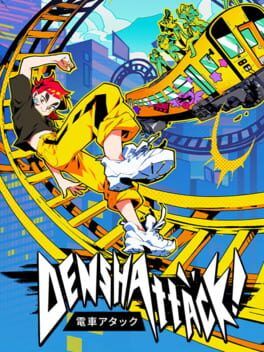
The presentation is a major reason the game stands out. Eurogamer points to cel-shading, high-contrast art, eclectic music, and a pop-punk tone. IGN praises the anime-style look. Rock Paper Shotgun says the game has an unusually keen eye for spectacle and views of a verdant Japan. GamersHeroes gives special attention to the soundtrack, naming contributors Tee Lopes, Sean Bialo, Andrew One, and 2 Mello, and calling the music a contender among the year’s standouts. For an indie action game review, that craft matters: Denshattack! sells absurd movement by making every grind, crash, horn blast, and trick chain feel like part of a louder visual rhythm.
Platforms, Steam availability, and who should board now
The Steam storefront page provided for Denshattack! confirms the game’s presence on Steam and advertises a 10 percent saving, though the supplied Steam text does not include the final price. Metacritic lists platform coverage for PC, PlayStation 5, Xbox Series X, and Nintendo Switch 2, with its main listing showing PlayStation 5 release information for July 15, 2026. Because the supplied material does not include frame-rate targets, PC requirements, Switch 2 technical details, or upgrade paths, those remain unanswered from the available sources.
Based on the critical record supplied, Denshattack! is easiest to recommend to players who like arcade mastery loops: Tony Hawk-style score chasing, OlliOlli-style retries, Jet Set Radio attitude, and fast levels that become more satisfying as your hands learn the route. It is also a strong fit for anyone who misses the era when extreme-sports games were strange, stylish, and mechanically serious under the surface.
Players who should pause are those who dislike visual overload, first-run route memorization, or trick systems that ask for dexterity over time. Eurogamer’s early-control frustration, Metacritic’s sight-reading warnings, and Insider Gaming’s late-game skill-check comment are not dealbreakers, but they are real caveats. Denshattack! appears to reward patience and replay rather than frictionless cruising.
Verdict: Denshattack! has the shape of a novelty and the spine of a serious arcade game. Its rail grinding speed delivers the first hit, its trick scoring gives score chasers a reason to return, and its commuter chaos stays fresh because the campaign keeps inventing new ways to abuse the tracks. The occasional control and readability bumps keep it from a perfect run, but this is one of the sharper indie surprises of 2026 for players who want style with mechanical bite.
Final Verdict
A solid gaming experience that delivers on its promises and provides hours of entertainment.