
Review

By Pixel Perfect
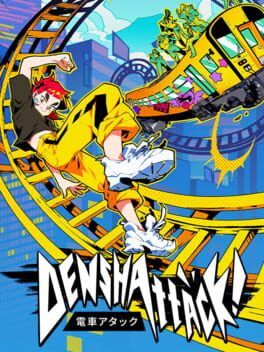
Image: IGDB
Store links: Denshattack! on Steam
A $19.99 train trick game with a serious arcade question
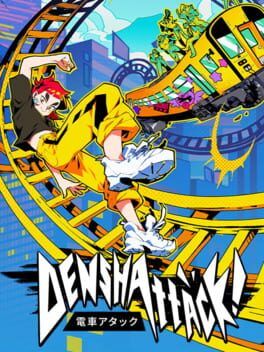
Denshattack! arrives with a concrete pitch that sounds like a dare: a cel-shaded arcade platformer where trains drift, jump, grind, flip, and fight back against a corporate-controlled future Japan. CGMagazine lists the PC release date as July 14, 2026 with an MSRP of $19.99, while Nintendo Everything lists the Switch 2 release date as July 15, 2026. Niche Gamer’s listing gives July 16, 2026 and names Windows, PlayStation 5, Xbox Series X|S, and Switch 2 as platforms. That date mismatch is worth noting for buyers checking storefronts by region, but the supported picture is clear enough: Undercoders’ new game is positioned as a modestly priced, multi-platform arcade release, published by Fireshine Games, with Boltray Games also credited by Rock Paper Shotgun’s image attribution and Niche Gamer’s listing.
The tension is whether the premise survives contact with repetition. A train doing skateboard tricks is a brilliant trailer gag, and several outlets, including Rock Paper Shotgun and Nintendo Everything, describe the game’s early impression in exactly that novelty zone, near Tony Hawk’s Pro Skater and Jet Set Radio comparisons. The stronger finding across the supplied reviews is that Denshattack! does not burn out after the first laugh. Rock Paper Shotgun calls it “utterly and genuinely brilliant,” CGMagazine scores the PC version 9/10 after roughly 15 hours, and Metacritic’s supplied page lists the game as “Generally Favorable” across critic reviews, with 20 PC reviews and 5 Switch 2 reviews visible in the all-platform breakdown.
For this Denshattack review, the core buyer question is simple: does the game turn rail surfing speed and stunt scoring into something you want to master, or does it coast on spectacle? Based on the provided review material, the answer leans strongly toward mastery, with one important caveat. Denshattack! is generous with spectacle, but it also asks you to read tracks quickly, accept failed first runs, and replay stages until its wild routing starts to make sense.
The rails are fixed, but the movement is anything but passive
The clever craft in Denshattack! begins with a limitation. You are driving a train, which means the game cannot offer the same free-roaming geometry as Tony Hawk’s Pro Skater or Jet Set Radio. WayTooManyGames points out that you still need to stick to railroad tracks, with defined starts, ends, objectives, and routes. The game’s solution is to make the track itself feel unstable, layered, and expressive. You hop between rails, brake into drifts, stomp down to cut airtime, grind ruined structures, and use right-stick trick inputs while maintaining speed.
That control model is repeatedly described as approachable but demanding. Niche Gamer says movement uses the left stick, tricks use the right stick, the right trigger jumps, the left trigger handbrakes, and inputs can be remapped in settings. Rock Paper Shotgun highlights the Tricktionary, an in-game move list that documents individual tricks and their inputs. The same review argues that the thumbstick-flick trick system is easy to pick up while still deep enough for score chasers, which is exactly where Denshattack!’s lasting hook seems to live.
The best arcade platformers build a grammar you can feel before you can explain it. Here, that grammar is speed, angle, airtime, variety, and recovery. WayTooManyGames compares parts of the experience to rhythm play because curves, obstacles, jumps, and trick windows arrive fast enough that the player has to anticipate rather than simply react. That also explains why some reviews flag sight-reading difficulty. Metacritic’s supplied critic excerpts include criticism that tracks can be too chaotic to parse on a first try, and WayTooManyGames says the game can be overwhelming because it asks you to handle hazards, movement, and scoring at high speed with little margin for error.
That difficulty is not a defect by itself. For Switch 2 and PC players looking for an arcade platformer review verdict, the important distinction is whether the pressure feels readable after practice. The source consensus suggests it does. Console Creatures says the levels feel tightly designed and reports no broken mechanics in its excerpt. Niche Gamer says the game can feel like a lot at first, but clicks once absorbed. That is the profile of a skill game rather than a novelty toy.
Score attack gives the stunt system its shelf life
Denshattack!’s most convincing long-term argument is not the absurdity of kickflipping a train. It is the scoring economy around that absurdity. Niche Gamer explains that chaining tricks multiplies your score, medals depend on speed and mission completion, and collectibles unlock customization options and new trains with different boosts and drawbacks. It also notes that repeated use of the same trick hurts your score, pushing players away from safe habits and toward variety.
That matters because fixed-route arcade games live or die on replay value. Console Creatures describes five broad level types: finish-line runs, high-score challenges, races, multi-objective stages with routes, and boss battles. Rock Paper Shotgun says the story stages last around nine hours, while CGMagazine’s reviewer reported roughly 15 hours after rolling credits and spending additional time with the game. Those two numbers do not conflict so much as describe different play styles. A straight story run appears shorter; score chasing, side goals, medals, collectibles, and route mastery stretch the game.
The game’s best design decision may be that it refuses to separate traversal from scoring. Drifting is speed control and style. Jumping is evasion and combo opportunity. Stomping down is both safety and rhythm. The result, according to the supplied reviews, is a rail surfing game where survival and expression constantly overlap. If you play only to reach the end, you will see the set pieces. If you play to improve medals, the track becomes a puzzle box.
There is a real warning here for players who dislike repetition. Metacritic’s supplied excerpts mention that the game rewards replaying levels to complete checklists and earn medals, while another excerpt says players should be ready for failing runs because they do not yet know what is happening. Denshattack! seems best suited to players who enjoy rerunning a stage until chaos turns into choreography. If you bounced off score-attack platformers because the first clear was enough, this may feel thinner than the praise suggests. If your favorite part of an arcade game is shaving seconds and finding a cleaner line, Denshattack! has the right spine.
A shounen rebellion with ramen, domes, and corporate rot
The story setup is consistent across the sources, even if reviewers differ on how much they value it. Denshattack! follows Emi Araki, a young ramen delivery driver in a climate-damaged future Japan where a mega-corporation called Miraidō controls domed cities and the broader social order. Nintendo Everything says over 70 percent of the population lives within the domes, while Emi starts outside them and is introduced to Denshattack by Fernando, a budding journalist. CGMagazine describes Emi as a 19-year-old delivering ramen in Beppu, Ōita Prefecture, and dreaming of riding the VACTRAIN, an underground train controlled by Miraidō.
The tone is big, earnest, and proudly anime-influenced. Console Creatures calls the story shounen in aspiration and delivery, praising Emi’s infectious energy and the way the cast grows by turning enemies into friends. Rock Paper Shotgun emphasizes the strange spiritual side of Denshattack as an illegal, rebellious, almost mystical practice, with themed gangs and techniques Emi learns to progress. The anti-corporate angle is not background wallpaper either. Several sources describe a Japan split between protected elites and communities left outside the domes, with Emi’s rail rebellion aimed at Miraidō’s control.
How well that lands will depend on your tolerance for sincerity at high volume. Console Creatures says the story can be cheesy but earnest. Metacritic’s supplied excerpts include at least one critic who cared far less for the story and characters than for the game feel. WayTooManyGames is more dismissive, saying the premise can feel like unnecessary sugarcoating around the essential fact that you are a former ramen delivery girl entering the Denshattack Tournament.
My read from the supported material is that the plot functions best as propulsion and flavor rather than the main reason to buy. It gives the tracks stakes, feeds the game’s maximalist identity, and keeps Emi from being a blank mascot. It is unlikely to convert players who require subtle writing, but for an indie platformer review, the relevant question is whether the story strengthens the arcade loop. Here, the answer appears to be yes, mostly because the world gives the game permission to be ridiculous without feeling empty.
Spectacle is the reward, but readability is the risk
The strongest praise in the source set clusters around spectacle. Rock Paper Shotgun says almost every normal stage has at least one memorable megastunt or sweeping view of green, ruined Japan. Console Creatures cites examples including landing on a giant Ferris wheel, breaking it free, and riding it through a bay, as well as a boss that throws baseballs. These are not incidental flourishes. They are how Denshattack! keeps a fixed-track game from feeling like a corridor.
The visual identity draws obvious comparisons. WayTooManyGames invokes Jet Set Radio’s cel-shaded style and extreme-sports attitude. Rock Paper Shotgun also names Jet Set Radio and Tony Hawk’s Pro Skater as clear influences, while arguing that Denshattack! has a wide eye for spectacle of its own. CGMagazine identifies it as a cel-shaded, trick-based 3D platformer. Across those descriptions, the game’s personality sounds unusually coherent: punkish rail culture, post-disaster landscapes, arcade trick language, and a future Japan rebuilt around corporate transport systems.
That density creates the game’s main accessibility concern. The faster and louder Denshattack! gets, the harder it can be to parse. Rock Paper Shotgun notes that the game’s velocity requires attention to hazards. WayTooManyGames says there is a lot happening onscreen at blistering speed. Metacritic’s supplied excerpts include criticism that wild tracks and effects can make first attempts difficult to sight-read. This is especially relevant on Switch 2, where handheld play may make small hazards and rapid route choices feel more compressed, although the provided Nintendo Everything excerpt does not give frame-rate or display-mode details.
The buyer guidance is to treat early confusion as part of the learning curve, but not to ignore it. Denshattack! appears built for replay literacy. The first run shows you the fireworks. The second run teaches you where the rails bend. Later runs are where high scores and medals start to feel earned. Players who want clean readability on the first pass may find the style noisy. Players who enjoy being overwhelmed before they become fluent will likely see that intensity as the point.
Switch 2 and PC notes: strong support, limited technical data
The supplied material supports Denshattack! on PC and Switch 2, with broader platform listings also naming PlayStation 5 and Xbox Series X|S. CGMagazine reviewed the PC version and lists the genre as Adventure, Platformer, Racing, and Sport. Nintendo Everything reviewed the Switch 2 version and identifies Undercoders as developer and Fireshine Games as publisher. Niche Gamer says it reviewed Switch 2 and lists Windows, PlayStation 5, Xbox Series X|S, and Switch 2.
What the supplied excerpts do not provide is granular performance testing. There are no cited PC requirements, Steam Deck notes, Switch 2 resolution targets, frame-rate numbers, loading comparisons, or handheld versus docked analysis in the provided text. That limits how definitive any Denshattack Switch 2 review or Denshattack PC recommendation can be on technical grounds. The best supported statement is that multiple outlets reviewed PC and Switch 2 builds without the provided excerpts flagging major stability problems. Console Creatures goes as far as saying there are no broken mechanics, but that is a design and feel claim rather than a benchmark.
For PC players, the practical attraction is likely control precision, replay capture, and score chasing. For Switch 2 players, the pitch is portable arcade mastery, provided the final storefront version matches the responsiveness described by reviewers. Because Denshattack! is so dependent on rapid inputs and reading hazards at speed, performance consistency matters more here than in a slower platformer. If you are sensitive to frame pacing, it is reasonable to wait for platform-specific technical coverage or user reports before buying on Switch 2.
At $19.99 according to CGMagazine and Niche Gamer, the value case is strong if you plan to chase medals and side objectives. If you only want one story clear, Rock Paper Shotgun’s roughly nine-hour story estimate makes it a fair but less exceptional value. The game’s price and structure favor players who replay.
Verdict: a small game with real arcade teeth
Denshattack! works because it understands that style needs friction. The train kickflips get your attention, but the reason the game appears to hold up across PC and Switch 2 coverage is its layered stunt system, medal economy, level variety, and willingness to make speed dangerous. It is silly, yes, but the supplied reviews consistently describe a game with craft beneath the joke.
The weaknesses are also clear. First-run readability can suffer when the game floods the screen with hazards, effects, and route changes. The story’s shounen anti-corporate earnestness will charm some players and bounce off others. The provided source set also leaves technical questions unanswered, particularly for Switch 2 buyers who want hard performance data before committing.
Even with those caveats, Denshattack! looks like one of the year’s easiest recommendations for arcade platformer fans, score chasers, and players hungry for a rail surfing game with a specific identity. It is less suited to players who dislike replaying stages or who want a calm, instantly readable platforming flow. For everyone else, Undercoders’ train trick rebellion has enough speed, scoring depth, and mechanical personality to last well beyond the punchline.
Final Verdict
A solid gaming experience that delivers on its promises and provides hours of entertainment.