
Review

By Pixel Perfect
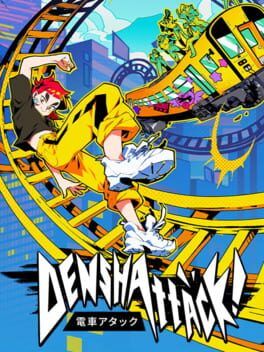
Image: IGDB
Store links: Denshattack! on Steam
A train-skating indie arrives with unusual momentum
Denshattack! lands in a crowded release calendar with one concrete advantage most stylish indies never get: instant visibility. Pure Xbox reports that Undercoders’ train-tricking arcade game launched onto Xbox Game Pass on July 15, 2026, while Nintendo Everything lists the Switch 2 version as releasing the same day with Fireshine Games publishing. Metacritic’s public listing shows the game on PlayStation 5 with a “Generally Favorable” critical reception, and its platform tabs also list PC, Xbox Series X, and Nintendo Switch 2 coverage.
That availability creates the useful tension at the heart of this Denshattack review. A game about flipping, grinding, drifting, and boosting a locomotive through a dystopian Japan could have coasted on premise alone. The surprise is that the sources around launch describe something sturdier: a high-speed trick racer with score-chasing depth, a steep learning curve, and enough authored spectacle to keep its joke from burning out after the first GIF.
There is one place where the record is thinner than buyers may want. The assignment here specifically asks about Denshattack on Switch 2, and Nintendo Everything reviewed that version, identifying Switch 2 as the system, Undercoders as developer, and Fireshine Games as publisher. Its provided excerpt praises the game as high-octane and difficult to put down, but it does not give frame-rate targets, resolution, handheld battery behavior, loading notes, or docked versus portable comparisons. So the Switch 2 verdict has to be careful: the version exists and has been reviewed positively, but the supplied material does not support technical claims beyond the absence of reported issues in the excerpt.
The core idea works because the train has real friction
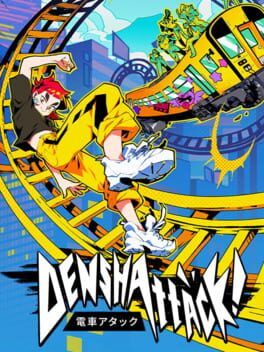
Denshattack gameplay is easiest to describe as Tony Hawk logic bolted to an arcade rail racer, but that shorthand only gets you to the station. Emi Araki begins as a ramen delivery driver outside the domed cities of a climate-damaged Japan, then gets pulled into Denshattack, an illegal stunt-racing culture built around train battles, rival crews, and resistance to the Miraidō Corporation. Rock Paper Shotgun describes Emi’s journey from ramen-on-rails work into a country-spanning stunt career, while Nintendo Everything’s review excerpt frames Denshattack as creative expression and rebellion against Miraidō.
On the track, that setup turns into a constant forward shove. DayOne describes starting rounds with a timed launch, then managing a train that is always moving unless the player brakes for corners. Its excerpt notes a brake meter with a sweet spot that converts careful slowing into a speed boost, which is exactly the kind of small mechanical wrinkle that keeps speed from becoming autopilot. You are not simply holding accelerate and watching chaos happen. You are tapping the brakes, reading curves, flicking the right stick for tricks, hopping tracks, grinding rails, riding walls, hitting boost pads, and trying to keep a combo alive while the level throws scenery at your face.
The best compliment I can give Denshattack is that its absurdity does not excuse sloppy fundamentals. Rock Paper Shotgun highlights the “barely-controlled velocity” of multi-track drifting and ruined-bridge grinding, while Eurogamer says the first hours can be frustrating even for someone experienced with OlliOlli and Tony Hawk games. That tracks with the design on paper: a train is a heavy, ridiculous vehicle for a trick game, so the controls need to feel readable enough to master and stubborn enough to sell the fantasy. Denshattack appears to find that seam. It is generous with motion and feedback, but demanding when hazards, corners, and combo routes compress your reaction window.
Trick chaining is the real test, and it has teeth
The trick system is where Denshattack graduates from novelty into something score chasers can chew on. Rock Paper Shotgun points to a thumbstick-flick trick system and an in-game “Tricktionary” that lists moves and inputs, including advanced maneuvers difficult enough to challenge dexterity. Eurogamer’s excerpt adds the longer learning path: jump, brake, drift, slam back onto tracks after derailing, kickflip, heelflip, special moves, wall-ride, transfer between vert ramps, then connect combos with manuals.
That layering matters. A lesser version of this game would introduce grinding and flips, then repeat the gag across increasingly loud backdrops. Denshattack instead behaves like a proper arcade sports game, feeding the player new verbs and asking them to thread those verbs into longer, cleaner lines. Console Creatures describes five level types, including finish-line runs, high-score stages, races, multi-objective routes, and boss battles. DayOne’s excerpt says levels are scored through tricks, time, and dares, with bronze, silver, and gold medals attached to completion goals.
The tradeoff is accessibility. Multiple sources flag a steep or initially frustrating learning curve. Pure Xbox quotes IGN saying players will make many mistakes before mastering the long list of input combos, while Eurogamer says the early hours may be the roughest. That is not a flaw by itself, but it is a buying consideration. If you want an easy spectacle racer, Denshattack may ask for more patience than the premise suggests. If you enjoy the moment when an OlliOlli line finally clicks or a Tony Hawk combo route becomes muscle memory, this is where the game’s identity seems strongest.
Spectacle keeps feeding the mechanics instead of smothering them
Denshattack’s art direction and stage craft are doing a lot of work, but the provided reviews consistently describe spectacle as part of the playable rhythm rather than set dressing. Rock Paper Shotgun says the roughly nine-hour story stages continually introduce new skills, beginning with practical tools before escalating into surreal abilities such as riding rainbows. It also notes that major set pieces are not reserved only for climaxes, with normal stages often containing a memorable stunt or sweeping view of green, ruined Japan.
Console Creatures gives concrete examples of that escalation, including landing atop a giant Ferris wheel, breaking it loose, and riding it through a bay, as well as a boss encounter involving giant baseballs. DayOne mentions later abilities such as hidden rainbow tracks and thermal vents. These are the kinds of ideas that sound like trailer bait until you consider how they interact with Denshattack’s central problem: a fast game needs constant readability, but an arcade stunt game needs surprise. The strongest accounts suggest Undercoders keeps surprising players without letting the game dissolve into random noise.
There are still limits. Metacritic’s excerpted critic blurbs include one PlayStation 5 review noting that tracks can be too wild and hard to sight-read on a first attempt, especially with intense effects. Game Informer, quoted by Pure Xbox, similarly says Denshattack moves so fast that there is little time to absorb its world. That is the cost of the game’s tempo. It wants you alert, not sightseeing. For some players, that will make replaying levels feel necessary in the best old-school way. For others, the density may turn first attempts into messy reconnaissance runs.
The story is earnest, loud, and built for momentum
The story premise is broader than “train does kickflip.” Nintendo Everything describes a dystopian future where Miraidō Corporation helps place domes over Japan’s largest cities, with more than 70 percent of the population living inside and mascot Molty selling dome life on television. Emi, who lives outside those domes, meets journalist Fernando during a delivery run and enters Denshattack as a form of rebellion. Rock Paper Shotgun’s version of that setup emphasizes climate-ravaged Japan, class separation, and Emi’s shift from ramen service to stunt-racing resistance.
The tone sounds proudly anime-shaped. Console Creatures calls the story shounen in structure, centered on Emi’s infectious energy, a growing crew, and an anti-corporate message about community. DayOne describes nine chapters in which Emi makes friends and enemies while confronting the corporation through the “power of friendship,” rainbow tracks, and increasingly strange lessons. That description may tell you immediately whether the writing will charm or exhaust you.
For my money, the story’s value is functional as much as emotional. It gives the level themes a reason to escalate, makes the rival gangs feel like stage identities rather than menu labels, and keeps the game’s anti-corporate imagery from becoming background wallpaper. It can be cheesy, according to Console Creatures, and some Metacritic-linked blurbs suggest the story and characters will not land for everyone. But Denshattack appears sincere enough to avoid feeling smug about its own weirdness, which is often the difference between a cult arcade game and a meme with credits.
Switch 2, Game Pass, and the platform question
For practical buying advice, the cleanest confirmed value proposition is on Xbox. Pure Xbox reports that Denshattack! launched onto Xbox Game Pass, making it an easy trial for subscribers curious about the premise but wary of the learning curve. DayOne also identifies it as a Day One Game Pass title on Xbox and says it is coming to Switch 2, PS5, and Steam. Metacritic’s listing separately shows PlayStation 5 release information dated July 15, 2026 and platform pages for PC, Xbox Series X, and Nintendo Switch 2.
Switch 2 is the harder recommendation to phrase with confidence. Nintendo Everything’s review page is explicitly for Switch 2 and lists a July 15, 2026 release date, but the provided excerpt focuses on story and general play impressions, not performance metrics. A Reddit review thread included in the source bundle lists Switch 2 and PC as June 15, 2026 releases and PS5 and Xbox Series X/S as July 15, 2026 releases, which conflicts with Nintendo Everything’s Switch 2 metadata. Because those listings disagree, readers should check the current eShop, Steam, PlayStation Store, or Xbox store page in their region before making plans around timing.
As for performance, this Denshattack Switch 2 review can only say what the sources support. The game has been reviewed on Switch 2, and the excerpted Nintendo Everything copy describes the experience as thrilling, high-octane, and hard to put down. It does not confirm a frame rate, visual mode, or any Switch 2-specific compromises. Given how much Denshattack depends on split-second reads at high speed, that missing detail is meaningful. If you are sensitive to performance dips in precision arcade games, Xbox Game Pass is the lowest-risk route where available. If Switch 2 portability is the priority, wait for storefront details or full technical comparisons before buying on that platform.
Verdict: a stylish experiment that earns its score attack obsession
Denshattack! succeeds because its best joke becomes a language. The train flips, yes, and that image is funny every time. But the reported design around it is sturdy: speed that demands attention, trick inputs with real mastery potential, level types built for replay, and set pieces that keep refreshing the fantasy across a roughly nine-hour story described by Rock Paper Shotgun.
Its weaknesses are tied to its ambition. The learning curve is steep. The visual chaos can make first-run sight-reading difficult. The story’s shounen earnestness will either warm you up or skate past your tolerance for friendship-powered rebellion. And on Switch 2, the lack of supported performance specifics in the supplied material keeps me from giving that version a clean technical endorsement, even though Nintendo Everything’s excerpt is positive on the overall experience.
Still, Denshattack is exactly the kind of indie game worth making room for: specific, mechanical, loud, and surprisingly disciplined underneath the fireworks. If you have Game Pass, try it immediately. If you are buying outright, go in expecting a skill game rather than a gag reel. Once your fingers learn the rails, the train earns its swagger.
Final Verdict
A solid gaming experience that delivers on its promises and provides hours of entertainment.