
Review

By Pixel Perfect
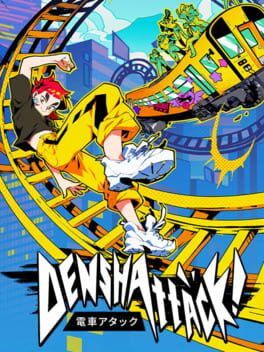
Image: IGDB
Store links: Denshattack! on Steam, Denshattack: Seasonal Skins Pack on Steam
A train game built around a contradiction
Denshattack! launched on July 15, 2026 for Nintendo Switch 2, PlayStation 5, Windows, and Xbox Series X/S, according to the game's public Wikipedia listing, with Undercoders credited as developer and Fireshine Games as publisher. That wide release gives a strange little premise an unusually clear runway: this is a 3D platformer about doing skateboard tricks with trains, a setup that sounds like it should fight itself at every junction.
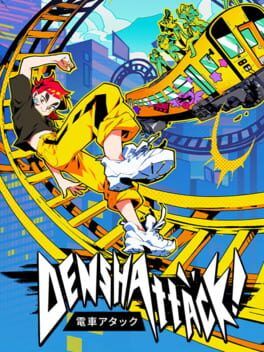
That contradiction is the heart of this Denshattack review. Trains usually mean fixed routes, fixed timing, and obedience to rails. Skate games, from Tony Hawk's Pro Skater to skate., are built on expression, improvisation, and the joy of making a route your own. Mercury News describes Denshattack! as Undercoders combining those opposing ideas into an explosively fun game, while SUPERJUMP frames it as a Y2K Dreamcast-style arcade fever dream. The question for buyers is whether that energy becomes a coherent game, or whether the spectacle derails the timing challenges and action puzzle structure beneath it.
On the evidence available from multiple reviews and public listings, Denshattack! holds together better than its premise has any right to. It is messy by design, loud in aesthetic intent, and deliberately absurd in its setpieces, but the reported controls, level variety, scoring hooks, and escalation all point toward a game that understands the difference between chaos and confusion.
The movement sells the impossible first
The most important confirmed design detail is also the funniest: you control a train like a skater. Mercury News reports that players jump with the right trigger, slam down onto tracks with the left trigger, and perform flip tricks with the right analog stick. Wikipedia's gameplay summary similarly lists ollies, kickflips, jumps between tracks, and trick chaining as central mechanics. That control layout matters because Denshattack! needs immediate physical comedy and precision at the same time. If the train does not feel readable, the gag collapses into novelty.
The sources consistently suggest that Undercoders makes the absurdity legible. Levels are mostly on-rail routes from Point A to Point B, but the rails break, split, climb, loop, and reassemble in ways that force the player to treat track space as a puzzle path. Mercury News compares some jumps between disconnected rails to the mine-cart chase energy of Indiana Jones and the Temple of Doom, while The Mancunion notes later abilities such as multi-track drifting, off-rails traversal, grinding, and reaching imaginary tracks in the sky through combo momentum.
That is where Denshattack! distinguishes itself from a simple skate-game reskin. The train is restricted enough to make each decision feel timed, but expressive enough to let a good line look improvised. The best comparison is not only Tony Hawk, though that influence is obvious in the score-chasing. The game also leans toward platform routing: reading a level, understanding when to jump, when to slam down, when to swap rails, and when to chase a stylish detour instead of the safest path.
Timing turns the spectacle into an action puzzle
The arcade surface is loud, but Denshattack! appears to work because its challenges are built around timing windows and route recognition. Wikipedia lists multiple level formats, including races, score attacks with time limits, rival races, boss battles, and unique level challenges called dares. It also notes that players are graded for score, completion time, and those dares after finishing stages. That rank structure gives the game its action puzzle spine: reaching the end is the first solve, then improving the line becomes the real test.
The Mancunion describes the opening as intense but says the game keeps adding moveset options and stage gimmicks without becoming overwhelming. SUPERJUMP reaches a similar conclusion, saying the challenge rises gradually while adding tricks and abilities to the starting toolset. For an indie game built on such a high-speed conceit, that pacing is crucial. A score-attack system can quickly become alienating if the player feels punished before understanding the grammar of movement. Denshattack! seems to avoid that by teaching through spectacle, then letting mastery sit behind ranks, dares, collectibles, and replay.
There is a practical tradeoff here. Players who want a pure puzzle game with clean, quiet problem solving may find Denshattack!'s speed and visual noise excessive. Players who enjoy arcade platformers, character action scoring, or skate-game repetition will likely find the loop more rewarding. The puzzle is not about placing blocks or solving menus. It is about seeing the correct rhythm inside a moving carnival and executing it before the track disappears under the wheels.
Arcade chaos that escalates without losing the route
Denshattack!'s reported setpieces are proudly ridiculous. Mercury News cites an early flourish in which Emi dislodges a Ferris wheel and rides it down a mountainside. The Mancunion also mentions riding across a Ferris wheel, fighting a legally distinct kaiju-like monster, facing a giant humanoid mech, encountering a mechanical sandworm reminiscent of Dune, and even sections that shift toward bullet-hell shooting and rhythm-game structure. SUPERJUMP points to boss battles between talented train drivers known as Denshattackers, reinforcing how far the game stretches its central train-trick idea.
This is where many small games buckle. Variety can read as confidence, or it can expose a thin core. Denshattack! benefits from having one absurd rule that every escalation can orbit: the train must keep moving stylishly. A boss fight, a race, a score arena, or a gimmick stage can all still ask the same underlying questions. Did you time the jump? Did you land cleanly? Did you understand the rail layout? Did you keep the combo alive?
The Mancunion says even crashes only create a few seconds of downtime, which is an important quality-of-life note for a game about repeated attempts and high-speed failure. The provided sources do not include detailed platform-by-platform frame-rate analysis, resolution targets, or PC requirements, so any technical performance verdict has to be cautious. What can be said is that reviewers describe the pace as kinetic and flowing rather than constantly interrupted, which is the performance standard that matters most for this specific style of arcade challenge.
A stylish dystopia with more bite than the premise suggests
The setting gives Denshattack! more texture than its elevator pitch. Wikipedia describes protagonist Emi as a train driver delivering ramen in a near-future Japan devastated by climate change, where people who can afford it live in domed cities controlled by the megacorporation Miraido. SUPERJUMP adds that Miraido controls the VACTRAIN system connecting the domes and is powered by an AI construct on the Moon, while Mercury News reports that areas outside the domes are shaped by train gangs. Across those accounts, Emi's rise through the Denshattack scene becomes a journey across Japan that pulls other drivers into resistance against Miraido's control.
The tone is deliberately heightened. SUPERJUMP reads the game as cyberpunk and punk-rock in its anti-authoritarian sentiment, while The Mancunion calls the corporation cartoonishly evil. That kind of broad villainy suits an arcade platformer where the politics are painted in spray-can colors rather than whispered through lore terminals. The story appears to exist to give momentum, region-to-region identity, and boss-stage personality to the mechanical loop.
Visually, the game is one of the clearer indie standouts of 2026's reported slate. Mercury News highlights a dazzling art style that fits the anime-inspired themes, and SUPERJUMP places it in conversation with style-forward games such as Jet Set Radio, Crazy Taxi, Hi-Fi Rush, Katana Zero, and Viewtiful Joe. Those comparisons should not be read as proof that Denshattack! matches every one of those games in depth or influence. They do, however, clarify its target lane: bold color, arcade readability, youth-culture rebellion, and a willingness to make every rail bend feel like a poster image.
Progression, replay, and the buyer's calculation
Denshattack!'s long-term value seems tied to whether players enjoy replaying stages for cleaner execution. Wikipedia reports that players can purchase different trains and decal art using paint cans or gear collectibles found in levels. It also says each train has its own perks and weaknesses, such as doubled trick score or altered grinding maneuverability, and that completing dares adds sections to Fernando's fanzine. Those systems suggest a campaign built for completionists, route optimizers, and players who like cosmetic expression attached to mechanical tuning.
That replay structure is also where the game's difficulty will divide people. The main path appears approachable based on SUPERJUMP and The Mancunion's descriptions of challenge that ramps without overwhelming the player. The higher ceiling sits in ranks, dares, high scores, and stage mastery. If your patience for score-chasing is low, Denshattack! may feel like a spectacular ride whose deeper incentives are easy to leave behind. If you are the player who repeats a platforming stage until the line feels perfect, this off the rails action puzzle has the right kind of hooks.
Practical purchasing notes are limited by the supplied public material. The Steam page confirms the store presence at the listed app URL, but the provided Steam text does not include price, system requirements, Steam Deck status, or current user-review data. Public listings identify Nintendo Switch 2, PS5, Windows, and Xbox Series X/S availability, but the sources provided do not compare performance across platforms. If you are sensitive to frame rate or handheld readability, it is worth checking current platform-specific footage or storefront notes before buying.
Verdict
Denshattack! works because Undercoders treats its joke as a serious movement system. The train-skate premise gets the attention, but the structure beneath it is disciplined: trigger-based jumping and slamming, analog-stick tricks, split-second rail reading, score attack pressure, rival races, boss fights, collectibles, ranks, and dares. The best sourced criticism points in the same direction, describing a game that is frantic without becoming unreadable and stylish without abandoning mechanical purpose.
Its limits are also clear. This is not the safest recommendation for players who dislike replay-driven scoring, visual overload, or arcade escalation that keeps adding new gimmicks. The lack of detailed technical comparisons in the available material also means cautious buyers should verify their preferred platform before purchase. Still, as a Denshattack indie game assessment, the picture is unusually strong: a small studio taking a ludicrous idea, committing fully, and finding craft inside the chaos.
Denshattack! is an easy recommendation for fans of arcade platformers, skate-style trick systems, score chasing, and kinetic indie experiments. It is at its best when the rails vanish, the combo meter begs for one more risk, and the impossible train somehow lands exactly where your hands believed it would.
Final Verdict
A solid gaming experience that delivers on its promises and provides hours of entertainment.