
Review
By Story Mode
A dwarven detour into bullet heaven
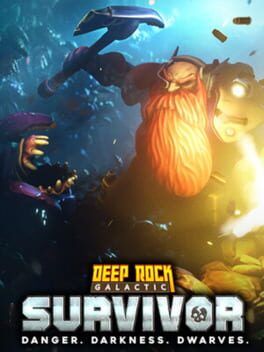
Deep Rock Galactic: Survivor takes one of PC’s best co-op shooters and strips it down to a single-player, top-down auto-shooter. On paper that sounds like a downgrade. In practice, Funday Games has mined the Survivors-like vein for all it’s worth and come back with a backpack full of nitra, gold, and a surprisingly sharp sense of identity.
This is not just “Deep Rock, but Vampire Survivors.” It is a deliberate attempt to answer a tough question: can you turn a class-driven, co-op-first FPS into a solo, build-driven bullet heaven without losing what made the original special? For the most part, Survivor pulls it off, and in a genre overflowing with copycats it ends up feeling unusually confident.
Class identity: the DRG crew survives the genre hop
The heart of Deep Rock Galactic has always been its four dwarven classes and the way their tools interlock in co-op. Moving to a solo auto-shooter could have flattened that into generic stat sticks. Instead, Survivor keeps each class readable and distinct, both moment to moment and over the course of a run.
Gunner is the most immediately familiar archetype. Heavy guns, big arcs of lead, and a kit that rewards standing your ground instead of kiting forever. His overclocks and artifacts lean into damage uptime and crowd control, so a Gunner run often becomes about carving stable kill-zones through the swarm rather than constantly juking.
Driller is where you really feel the “this is still Deep Rock” design. His drills chew through rock at a ridiculous pace, and several of his weapons are tuned around close-range area denial. In the FPS, Driller is your pathmaker and panic button. Here he still fills that role, but it plays out as a constant tug-of-war between digging safer routes and overextending into new pockets of bugs and resources. No other Survivors-like lets you redraw the map like this while also making it a core part of your class identity.
Engineer and Scout translate better than you might expect. Engineer’s turrets and tech gadgets slot perfectly into the auto-shooter format, turning him into the “zone control” class, especially in confined corridors you’ve dug yourself. Scout remains the mobile option with better traversal and tools that reward hit-and-run mining, echoing his grappling-hook antics from the original without trying to literally replicate them from a top-down view.
Compared to Vampire Survivors, where characters are mostly passive stat bundles after the first minute, picking a class in Survivor changes how you think about the arena. Movement routes, what you dig, when you commit to an objective, and which weapons synergize all pivot off that choice. It feels much closer to building a loadout in the original Deep Rock than picking a sprite with slightly different numbers.
Progression and meta: a proper sense of mining for the long haul
In pure progression terms, Survivor is far more structured than Vampire Survivors or its peers. Runs are organized as multi-stage “dives” through a specific biome. You clear a stage, hit a hub-like intermission where you can spend resources, then drop deeper into the same expedition with your existing build.
Within a run, you are still chasing the usual Survivors-like dopamine: level ups, random weapons, rapid scaling. But layering DRG’s resource game on top changes the rhythm. You are not just vacuuming XP gems. You are constantly tempted off the optimal kiting path by nitra veins, gold caches, or secondary objectives that fund your long-term upgrades.
Meta progression is generous without feeling like a grindy mobile spreadsheet. Credits and minerals feed into permanent unlocks for weapons, artifacts, and class perks. Importantly, the most interesting toys are not buried behind dozens of hours. New guns, overclocks, and artifacts roll in at a steady clip, so the early-mid game already has the build diversity that many Survivors-likes only find after you have unlocked half their catalog.
Where Vampire Survivors uses its meta layer largely to raise your power ceiling, Survivor uses it to broaden the decision space. Unlocking a new weapon tree does not just mean more damage, it means an entirely different way to route your dive or approach mining. That feels very in line with the original Deep Rock’s philosophy of sidegrades and loadout flavor rather than straight power creep.
Stage design: finite arenas that actually matter
The biggest structural difference between Deep Rock Galactic: Survivor and most bullet heavens is that its stages are not endless open fields. Each mission drops you into a finite, fully destructible cave. There is a border. There are chokepoints, dead ends, and dense mineral clusters. You can drill and reshape parts of it, but you are still working within a defined space.
This single decision pays off again and again. Instead of the genre’s usual circle-strafing figure eight around a vague center, you are planning routes in three dimensions, even from a top-down perspective. Do you tunnel toward that nitra cache and risk trapping yourself in a cul-de-sac if a boss wave spawns? Do you burrow a fallback tunnel early so you have a safe retreat when elites arrive? Do you over-mine one side of the map and end up with an open plain that is great for projectiles but terrible for line-of-sight breaks?
Compared directly to Vampire Survivors’ early stages, which are effectively infinite carpets of enemies, Survivor feels far more like a series of handcrafted arenas even when the caves are procedurally generated. It has more in common with a roguelite like Hades, where room shape and hazards matter, than with the flat pastures many Survivors-likes settle for.
The mining objectives help, too. Some stages ask you to collect a quota of resources, others to defend points or escort objects. Because you are balancing XP gain with objective progress and mineral routes, you end up improvising little tactical plans instead of mindlessly sweeping for as many gems as possible.
The downside is that runs can feel more constrained when you get a bad cave layout. Where Vampire Survivors lets a good build brute force just about anything once the numbers click, Survivor sometimes forces an ugly death because a key resource vein or objective spawned in an awkward pocket guarded by heavy enemies. Whether that feels unfair or exciting will depend on how much you enjoy adapting to the map rather than simply overpowering it.
Build variety: smart toys, sharper tradeoffs
If endless build roulette is why you love the genre, Deep Rock Galactic: Survivor is one of the more satisfying sandboxes out there. Between weapons, overclocks, artifacts, and class perks, there is a lot of tinkering to do, and the best part is that it rarely collapses into one or two obviously optimal setups.
Weapons are the stars. Each class gets a suite of familiar DRG hardware, and being able to equip up to four at once makes for dense synergies. Engineer turrets pair beautifully with slow fields and fences that double as both damage and XP magnets. Gunner’s heavy guns work well with knockback artifacts that let him stand his ground against elite waves. Driller’s flame and sludge tools are natural compliments to tight tunnel play and resource-rich choke points.
Compared to Vampire Survivors, where most weapons are just bullet patterns in different shapes and colors, Survivor leans on utility and map interaction. Some weapons pierce rock to let you kill and mine at the same time. Others create temporary walls or hazards that alter enemy flow. You are not just making a ball of damage, you are sculpting how and where that damage happens.
Not every system shines equally. The reroll and weapon selection tools are a bit stingier than in genre leaders, and there is no equivalent of Vampire Survivors’ Banish system in the default ruleset. Once your unlock pool gets large, fishing for a very specific build can be frustrating. Survivor is at its best when you lean into what the run gives you instead of chasing a spreadsheet-perfect combo.
What keeps it compelling is that even a “bad” build usually has clear strengths and weaknesses, and the cave layout plus class tools often give you ways to compensate. You might lack raw screen-clearing power but have enough drilling and zone control to play a slower, more objective-focused style. The game rewards experimentation more consistently than most of its peers.
Co-op feel in a solo package
Nothing about Survivor changes the fact that you are alone in the cave. There are no bots filling your squad, no drop-in co-op, no ghostly dwarves popping in from other timelines. For a series defined by four drunk miners yelling at each other over voice chat, that is a real loss.
The developers try to bridge the gap with tone and structure. The corporate satire, barky announcer, and familiar Deep Rock banter are all present. The multi-stage dives with prep and debrief bookend runs in a way that will feel comforting to DRG veterans. There is a faint sense of “crew” in how you slowly unlock and invest in each class across multiple expeditions.
Still, there is no getting around it: if what you love about Deep Rock Galactic is the social chaos, Survivor is a side dish, not a replacement. Where it succeeds is in capturing the tactical feel of the co-op experience. You are still thinking in terms of roles, synergies, and how tools solve specific problems, just compressed into a single loadout instead of four overlapping ones.
Interestingly, that makes it a better translation of a co-op shooter to solo play than most big-budget spin-offs manage. Instead of blindly chasing co-op features or bolting on forgettable bots, Survivor embraces being a focused single-player roguelite and keeps the spirit of the original through systems rather than literal co-op.
PC and console comparison: where it stands among Survivors-likes
On PC, Deep Rock Galactic: Survivor lands in a crowded genre, but it earns its space. Compared directly to Vampire Survivors, it trades some of that game’s raw chaos and simple accessibility for more tactical movement, stronger stage identity, and a clearer sense of class-driven play. It never quite hits the same “numbers go wild, screen goes white” absurdity, but it is more interesting moment to moment once you understand its tooling.
Against other PC Survivors-likes, Survivor’s destructible caves and DRG-flavored objectives are its edge. Many of its competitors are competent but visually bland and design-light. Survivor looks good, feels crunchy, and has a more authored structure without losing the quick-run appeal. It is one of the few that can genuinely claim a mechanical hook beyond sheer volume of projectiles.
Console and mobile ports hold up well. The auto-shooting foundation means performance and controls were never going to be a huge hurdle, and the slower, more deliberate routing playstyle actually suits gamepads nicely. On handhelds, runs feel snackable without being brainless. Load times are short, and the visual clarity holds even when the swarm density spikes.
The main caveat across platforms is that Survivor can feel a bit more demanding than its peers. You cannot just zone out, kite loosely, and win by inertia once your build is online. The caves, objectives, and class tools keep you making positional decisions almost to the last minute. For some players that is the entire appeal. For others, it might be a bit too much thinking for a genre they expect to be pure background noise.
Verdict
Deep Rock Galactic: Survivor is not a lazy cash-in on a hot genre. It is a sharp, confident bullet-heaven spin-off that understands both the appeal of Deep Rock’s dwarven co-op and the specific rhythms that make Survivors-likes so compulsive.
By anchoring its chaos in finite, destructible caves and leaning hard into class identity and utility-driven builds, it manages to stand out in a space that has filled up very quickly. It does not replace Vampire Survivors as the genre’s purest power fantasy, but it absolutely belongs in the conversation as one of the most interesting and replayable takes on the formula, especially on PC.
If you come for the DRG name expecting a four-player bug-squashing reunion, you might bounce off its solitary focus. If you are willing to meet it on its own terms, though, Deep Rock Galactic: Survivor is one of the breakout bullet heavens of the last few years, and an easy recommendation for anyone who likes their roguelites crunchy, tactical, and just a little bit drunk on corporate space mining.
Final Verdict
A solid gaming experience that delivers on its promises and provides hours of entertainment.