
Review

By Night Owl
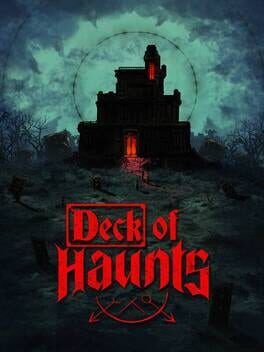
Image: IGDB
Store links: Deck of Haunts on Steam
A killer premise with a visible crack in the walls
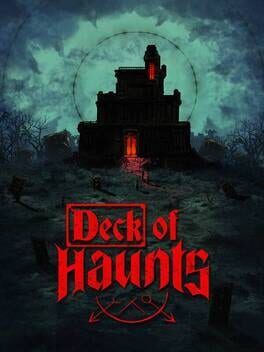
Deck of Haunts arrives with one of the cleaner horror strategy hooks of the year: you are the haunted house, and the trespassers are the resource. Press Play Media identifies the game as a strategy title developed by Mantis and published by DANGEN, built around deckbuilding, house construction, and roguelike progression. WayTooManyGames describes its campaign frame as a 28-night survival challenge in which the mansion’s dark heart must endure waves of increasingly capable intruders. That is the strongest thing Deck of Haunts has going for it. The fantasy is immediate, readable, and deliciously mean.
The tension is that the same sources do not agree on how fully the game capitalizes on that idea. TheXboxHub scored Deck of Haunts 4/5 and called it a “disturbing delight” for players willing to learn its awkwardnesses. Virus gave it 3/5, praising the concept while saying the execution becomes repetitive and, on Nintendo Switch 2, clumsy to control. Press Play Media lands closer to the middle, finding satisfaction in maze design and visitor manipulation while arguing that the experience can feel like a management puzzle wearing a spooky skin. After spending time with the loop those reviews describe, that split feels right. Deck of Haunts is clever, flavorful, and often satisfying, but its horror premise is stronger than its long-term strategic surprise.
The day-night loop gives the haunted house real tactical shape
The core structure is easy to understand and smartly themed. During the day, you expand and tune the mansion using essence gathered from previous victims. At night, intruders enter, and your hand of cards becomes the house’s vocabulary of harm: damage, sanity drain, tension, forced movement, traps, and room-based effects. Press Play Media notes that the layout of the mansion directly affects how effective cards become, with a well-placed room amplifying a modest haunting and a poor route giving visitors a dangerous path toward the heart.
That interaction between architecture and card play is where Deck of Haunts feels most like a proper haunted house strategy game rather than a reskinned deckbuilder. You are not simply choosing the highest damage card in hand. You are thinking about where someone is standing, how long they are likely to remain there, whether their mind or body is the softer target, and whether the next room can complete the job. The best moments come when the house seems to close around a visitor by design: a route funnels them where you want them, a trap triggers at the right threshold, and a card that looked ordinary becomes lethal because the room was prepared for it.
There is a strong survival pressure to that rhythm. The house is powerful, but it is not omniscient. The heart is a fixed vulnerability, and the game’s nightly structure keeps reminding you that every indulgent expansion, every inefficient card choice, and every misread visitor path can become a breach. The premise works because the mansion is predator and prey at the same time.
Cards are strongest when they exploit behavior, not when they repeat damage math
WayTooManyGames gives the clearest breakdown of the card language: hands are governed by a familiar point-spend structure, discarded cards return later, Banished cards leave until the end of the night, Nightlong cards persist for the entire night, Trap cards trigger when a room is entered, and Hexes can alter traits on human invaders. That variety gives Deck of Haunts a wider tactical palette than its first turns suggest.
The intruders help. WayTooManyGames points to a broad set of human types whose traits and roles affect their reactions, including pathfinders, police officers, occultists, and other visitors who grow more complex as the nights advance. It specifically cites behaviors such as police officers shooting open locked doors and ordinary people panicking when someone nearby goes insane. Press Play Media likewise notes that incoming groups change over time and that specialized opponents prevent every night from playing out identically.
This is the game at its sharpest. Horror strategy lives or dies on whether the victim has enough agency to be frightening back, and Deck of Haunts understands that a visitor who can adapt, panic, push deeper, or break your neat little corridor plan is far more interesting than a health bar walking through a hallway. The drawback is that, according to Press Play Media, the available options can begin to feel repetitive as efficient combinations become familiar. I felt that tradeoff in the design itself: when a chain works, it is satisfying in the way a well-set snare is satisfying. When the same chain remains the best answer too often, the house starts to feel solved.
Pacing stretches the cleverness thinner than the premise deserves
A 28-night structure gives Deck of Haunts a clear survival arc, but it also exposes the limits of its variety. Early on, the game benefits from discovery. New room possibilities, visitor traits, and card categories keep the house feeling unstable in a good way. You are learning what kind of monster you want to become, and the game rewards that curiosity with systems that interlock cleanly.
The middle stretch is where patience matters. Virus argues that the gameplay becomes repetitive quickly and that progression does not always add enough variety. Press Play Media makes a similar point from a different angle, saying that strong strategies can drift into optimization rather than surprise. Those criticisms are important because roguelike and deckbuilding progression depend on meaningful disruption. If the player is only making an existing plan incrementally better, a run can become maintenance rather than menace.
Deck of Haunts does have replay logic. WayTooManyGames notes that even if the heart is destroyed, the house is reborn, resetting the cycle through the roguelike premise. That suits the fiction nicely. Still, replay value depends less on the mere ability to reshuffle and more on whether the next run asks for different thinking. Deck of Haunts has enough room, card, and intruder interaction to justify repeat visits for strategy fans, but players expecting the constant reinvention of the very best deckbuilders should temper that expectation.
Atmosphere has style, but the horror rarely cuts deep
Deck of Haunts has a fine sense of role reversal. TheXboxHub compares its pitch to a deckbuilding twist on Dungeon Keeper and notes a resemblance in board, aesthetic, and mood to Betrayal at House on the Hill. Those are useful reference points. The game is theatrical and mischievous, with the pleasure of watching doomed visitors enter a space designed to punish curiosity.
As horror, though, it is more macabre strategy than sustained dread. Press Play Media says the limited narrative leaves the mansion feeling more like a strategic board than a character with history or personality, and that observation matches the game’s main atmospheric shortfall. A haunted house is usually frightening because it remembers. Deck of Haunts is better at systems than memory. It gives you rooms and victims and nasty little outcomes, but the house itself rarely feels like a place with buried grief or a distinct myth.
That affects audio and presentation as buying factors. The provided source material emphasizes mood, spooky exterior, and horror theming, but does not support claims of standout sound design or technical spectacle. The audiovisual package appears to serve the premise rather than elevate it into something truly unnerving. For horror players, that distinction matters. Deck of Haunts is a good pick if you want to engineer suffering. It is a weaker pick if you want to be unsettled yourself.
Controller feel is the platform warning sign
The biggest practical caution concerns controls, especially on Nintendo Switch 2. Virus explicitly lists clumsy controls as a con for the Switch 2 version and also notes the absence of touchscreen support. That is a meaningful issue for a game about card selection, room construction, targeting, and repeated tactical confirmation. A haunted house deckbuilder lives in menus and map navigation. If those actions feel sticky, every night gets a little longer than it should.
TheXboxHub also frames the game as rewarding if players can learn and master its awkwardnesses, which suggests the control and interface friction is not isolated to one reviewer’s taste. The available sources do not provide enough detail to make a platform-wide technical ranking, but they do create a clear reader takeaway: controller-first play may require tolerance. If you are choosing between versions and have access to the Steam release listed on Valve’s storefront, the PC version is the safer assumption for players who prefer direct cursor-style interaction, though Steam’s page in the provided material confirms the listing rather than detailed control performance.
On console, the question is whether the premise outweighs the friction. For many strategy players it will, because the decisions are interesting enough to pull you through some interface drag. For players who bounce off fussy card navigation, Switch 2 in particular deserves caution until you can try it or see control footage.
Verdict: a strong horror deckbuilder with haunted pacing problems
Deck of Haunts succeeds where it most needs to: the central loop makes you feel like a predatory house. Building rooms by day and spending cards by night creates a clean tactical identity, and the best intruder behaviors add pressure without betraying the fiction. It is a clever horror deckbuilder with a premise that remains enjoyable even when the machinery becomes visible.
Its limits are also hard to ignore. The 28-night structure can outpace the game’s supply of surprise, the narrative does too little to make the house feel like a memorable horror location, and controller feel is a legitimate concern on at least the Switch 2 version according to Virus. Press Play Media’s criticism that the game sometimes feels like a management puzzle with a spooky exterior is fair, but that puzzle is often good.
My recommendation is conditional but positive. If the phrase “haunted house strategy game” makes you want to optimize corridors, break minds, and harvest essence from doomed investigators, Deck of Haunts is worth entering. If you need constant deckbuilding novelty, deep horror storytelling, or seamless controller handling, wait for a sale or platform-specific impressions. The house has teeth. It also repeats a few of its favorite bites.
Final Verdict
A solid gaming experience that delivers on its promises and provides hours of entertainment.