
Review

By Apex
Premise and Platforms
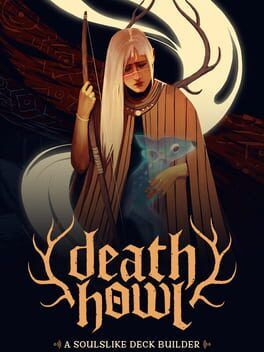
Death Howl, from three-person studio The Outer Zone and published by 11 bit studios, arrives on Xbox and PC as a day-one Game Pass title, with PS5 and Switch versions following in February 2026. You play as Ro, a grieving mother who descends into a primordial spirit world to bargain with a howling god for her dead son’s life. It is a run-based roguelike where you explore semi-open regions, trigger encounters, and resolve every fight via turn-based, card-driven tactics.
Think of it less as Dark Souls with cards and more as Slay the Spire rewritten by FromSoftware and then etched into stone with a bone chisel.
How Soulslike Is It, Really?
Death Howl wears its influences openly. You rest at campfires that refill your health and resources while respawning enemies. You spend a currency called Howls at shrines to unlock permanent blessings or new cards, then curse your own greed the moment you lose it to an overconfident push. Regions connect through shortcuts you unlock over time, and boss arenas sit ominously behind fog-like thresholds.
Crucially, the game understands that “Soulslike” is not just about difficulty. It borrows the sense of risk-weighted exploration. Wandering off the critical path might net you a powerful totem or a major story vignette, but it also means tackling a chain of encounters that can wipe a promising run. Information is scarce and deliberately obscured. New enemy types rarely explain their gimmicks; you learn through brutal failures that they counter certain card types or punish predictable patterns.
The big twist is that this is not real-time action. Enemies swing greatswords and spew curses, but you see all of it on a tactical grid, taking alternating turns as you play cards. For genre purists looking for timing-based parries and iframe rolls, that may sound like sacrilege. In practice, Death Howl captures the same mental rhythm of a Souls boss fight. Each turn is a tiny roll-dodge decision, just translated into card sequencing instead of thumb reflex.
The Deckbuilding Core
Moment to moment, Death Howl is a pure deckbuilder. Ro’s capabilities are defined by a limited deck of cards drawn each turn, covering attacks, movement, blocks, interrupts, debuffs, and one-use rituals. Five distinct schools of cards lean into different archetypes: aggressive blood-tinged attacks that amplify damage at the cost of self-harm, defensive geomantic walls and counters, cursed control effects, spiritual support, and high-risk, high-reward rituals that permanently alter the battlefield.
Runs begin with a small, focused deck and expand as you discover shrines, NPCs, and lootable card fragments scattered across each biome. You are constantly asked to trim and refine rather than just hoard. The game is ruthless about bloat. Load up on every shiny new card you see and your draw becomes a clumsy mess, which is a quick route to a failed run.
What makes the system sing is how it ties position and tempo to deckbuilding. You are not just optimizing pure numbers. Many cards care about where Ro stands on the grid, or whether she already advanced or retreated that turn. A spear thrust extends your reach in a line but may leave you exposed next round, while a sidestep strike both repositions and queues a delayed counter. Some of the strongest builds feel distinctly Soulslike in intent, using feints, baited counters, and windows of punish. You can absolutely build a “parry queen” Ro built around reaction cards that trigger on enemy actions, or a grim pyromancer who slowly paints the grid in persistent fire.
The learning curve is steep. Early hours are rough, and the game is unforgiving about poorly constructed decks. Misbuilds can doom a run twenty minutes before you realize it. But once you internalize that cards are your stats and weapons, and pruning is as important as acquiring, the design reveals itself as sharp and surprisingly elegant.
Difficulty Over a Full Run
Across a complete run through the four spirit regions and final gauntlet, Death Howl’s difficulty curve is jagged in ways that will thrill some and frustrate others.
The opening region is deliberately hostile. Enemies combine straightforward attacks with one or two nasty mechanics that hard-counter common novice mistakes. Heavy hitters punish overcommitting damage into armor, while curses stack chip damage that explodes if you do not cleanse in time. The first boss is a genuine skill check that exposes bad decks brutally. This is the point where some Game Pass dabblers will bounce off.
If you push through, the midgame settles into a fierce but fair groove. You have enough card variety and meta progression to experiment. The second and third regions showcase the system at its best, encouraging alternate routes and optional mini-bosses that tempt you with rare cards or totems. This is where the game fuses its roguelike identity with Soulslike tension most effectively. One immaculate chain of card plays can erase a fight that looked hopeless a turn before, and that swing feels delicious.
The late game can wobble. There are occasional difficulty spikes where a specific enemy combination hard-counters certain archetypes in a way that feels cheap rather than challenging. Pure glass-cannon decks, in particular, can be shredded by enemies that reflect percentage damage or punish multi-hit turns, and the available counter-tech may not show up in your run at all. This kind of build invalidation will be familiar to roguelike fans, but in Death Howl it is amplified by the emotional stakes and the longer run times.
That said, the game typically gives you enough tools to pivot. Between reshuffling at campfires, trading with weird spirit merchants, and unlocking meta-cards between runs, you are rarely locked into a single doomed archetype unless you stubbornly cling to it. The challenge remains high throughout, yet it tilts more toward testing your understanding of the system than towards asking you to grind raw stats.
Roguelike Structure and Progression
Runs send you across sprawling, hand-crafted regions stitched together by procedural layouts. You chart a path on an overworld of sorts, choosing between safer routes with modest rewards and treacherous chains packed with elite fights, story shrines, and unknown events. Death is a reset, but not a total one. New card sets, permanent blessings, and shortcuts persist, gradually turning early areas into more of a warm-up while later regions retain their bite.
This design suits Game Pass particularly well. It is easy to drop in for a single region run, try a new deck archetype, then bounce out. But it also respects players who want multi-hour deep dives into optimization and route planning. It strikes a smart balance that will feel welcoming to both roguelike veterans and Souls players trying their first pure deckbuilder.
One criticism is that the early grind toward certain build-defining cards can feel a bit stretched, especially if you are unlucky. Some reviewers have noted, and my experience echoes this, that the game sometimes mistakes scarcity for tension. When every run in a new save file is fishing for the same two or three lynchpin cards to make a concept viable, repetition creeps in.
Story, Tone, and Emotional Punch
What elevates Death Howl beyond a pure systems showcase is its grief-stricken narrative. Ro’s journey through the spirit realm is not just window dressing. Every region externalizes a facet of mourning and denial. You bargain with spirits who traded away their names to forget the dead, face boss encounters that literalize guilt and anger, and slowly uncover the cost of defying the natural order.
The writing is spare but pointed. Dialogues are less about exposition and more about emotional texture. Conversations are brief scratches on stone rather than long-winded lore dumps, and the result feels closer to classic FromSoftware obliqueness than to a traditional RPG. You can finish a successful run without “solving” every narrative thread, but the major beats surrounding Ro and her son land clearly.
Does the emotional story work? In a word, yes. Not in a manipulative, tear-jerker way, but as a slow, heavy weight that settles on each decision you make. Failing a run stings more than in other roguelikes because of the way the game frames Ro’s desperation. When you burn a powerful one-use card that represents a cherished memory, or choose a mechanical upgrade that explicitly symbolizes cutting away part of yourself, the trade-offs are both mechanical and thematic.
The melancholy is reinforced by remarkable audiovisual direction. Death Howl’s chunky, scratchy pixel art leans toward cave painting silhouettes and harsh contrasts rather than nostalgia. Regions are drenched in limited palettes of rust, ash, and bruised blue, while enemies feel carved from nightmares and folk tales. The sound design is sparse, mostly wind, distant animal calls, and the titular howls, so every sting of the soundtrack and every whispered voice line has impact.
It all builds to an ending that is more quietly devastating than grandiose. Players expecting multiple cinematic finales might find it understated, but within the game’s muted vocabulary it lands with real power.
Performance and UX on Xbox and PC
On Xbox Series X and S, performance is rock solid. The isometric battles and overworld exploration hold a consistent frame rate, and loading between regions is brisk. The low-fi art style masks any occasional hitching. On PC, Death Howl runs well even on modest hardware, a blessing given its turn-based nature and grid-based visuals.
Controller support is strong. Card selection, grid navigation, and targeting feel natural on an Xbox pad, which is critical for console players stepping into a deckbuilder. Menu navigation takes a bit of getting used to, but after a few runs muscle memory takes over. Mouse and keyboard on PC allow faster deck management, but there is no clear winner in feel during combat itself.
Quality-of-life options are decent but not exhaustive. There are accessibility toggles for colorblind modes and input remapping, yet the game is stubborn about its core difficulty. There are no traditional difficulty sliders. What you do get are optional blessings that nudge survivability or mitigate loss on death, though purists may feel compelled to shun them.
PS5 Release in February 2026
PS5 players have to wait until February 2026, but they are not getting a lesser version. The announced port includes all post-launch balance patches and quality-of-life tweaks from the Xbox and PC release window. That means some of the early-game rough edges and over-tuned enemy combinations should already be sanded down on day one.
Haptic feedback support and subtle use of the DualSense triggers are promised, mainly to emphasize heavy card plays and big enemy telegraphs. It is not a showpiece for the hardware, more a tasteful garnish. Load times on PS5 should mirror or slightly improve on Series X, while visual parity is expected across high-end consoles.
The bigger question for PS5 players is value. On Xbox and PC, Game Pass lowers the barrier to entry; it is easy to try Death Howl, bounce off the punishing early game, and come back later without feeling burned. Buying it outright on PS5 is a different proposition. My view is that if you have any affection for either roguelikes or FromSoftware-style design, the wait will be worthwhile. Just be sure you are ready for a game that demands patience and repeated failure.
For Fans of Roguelikes and FromSoftware
If your ideal night is splitting time between a Slay the Spire run and another attempt at a Souls boss, Death Howl feels tailored to you. It is intellectually demanding, mechanically dense, and emotionally heavy. The fusion of roguelike structure and Soulslike philosophy mostly works brilliantly.
For roguelike fans, the deckbuilding depth and replayability are the stars. There is enough card variety and build expression to support dozens of runs, and the procedural elements keep routes from feeling rote even when objectives repeat. The tension between short-term survival and long-term deck health is consistently interesting.
For FromSoftware devotees, the appeal lies in the way the game translates those familiar rhythms into turn-based form. You still study attack patterns, poke for openings, and pay dearly for greed. Bosses feel like puzzles with multiple viable solutions rather than stat checks, and the world’s environmental storytelling scratches that same itch of wandering into a cursed grove and piecing together what went wrong there long ago.
There are trade-offs. If your love of Soulslikes is rooted entirely in real-time, animation-driven combat, Death Howl may feel too abstract and cerebral. Conversely, if you want a breezy card game to zone out with, the severity of its systems and story might be suffocating. It inhabits a narrow but fertile middle ground.
Verdict
Death Howl is not just a curiosity for genre-mashup enthusiasts. It is one of the most confident and cohesive fusions of Soulslike sensibilities and deckbuilding design to date. The early hours are brutal, the difficulty spikes occasionally unfair, and the grind for certain meta unlocks a bit long. But for players willing to push through the initial punishment, it rewards you with a rich tactical sandbox and a resonant meditation on grief.
For Game Pass subscribers on Xbox and PC, it is an essential download, especially if you enjoy both roguelikes and FromSoftware-style action. For PS5 owners eyeing the February 2026 release, it is absolutely one to mark on the calendar, provided you know what you are getting into.
Death Howl makes every choice hurt, in ways both mechanical and emotional, and that is exactly what makes it linger long after the last card is played.
Final Verdict
A solid gaming experience that delivers on its promises and provides hours of entertainment.