
Review

By Story Mode
Wearing The Mask
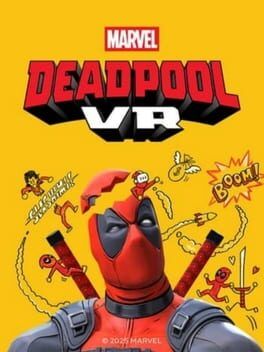
Marvel’s Deadpool VR puts you directly behind the mask of the merc with a mouth on Meta Quest, aiming for a chaotic mix of parkour, swordplay, and gun-fu. It is, unapologetically, an arcade-style action game in VR: short, loud, and drenched in meta jokes. As a VR experience it occasionally nails the fantasy of being Deadpool, but it also stumbles with shallow systems and some clumsy design that keeps it from joining the top tier of VR shooters highlighted in 2025’s Metacritic darlings.
Comfort Options: Accessible, But Not Cutting Edge
On the comfort front, Deadpool VR covers the basics well enough. You get smooth locomotion with adjustable speed and snap or smooth turning, along with optional vignetting during movement. There is teleport as a comfort fallback for players who really need it, though the game clearly wants you using full locomotion to appreciate its sliding, dashing, and wall-running beats.
The camera almost always stays locked to your head, with cinematic flair coming from Deadpool’s voice and staging instead of forced camera movements. That helps keep motion sickness at bay during the more frenetic set pieces. Where things get messy is in traversal-heavy sequences. Wall runs, slides, and exaggerated dashes can feel slightly out of sync with your physical inertia, which may bother the most sensitive players. It is not as aggressively disorienting as something like early-gen parkour VR experiments, but it also lacks the nuanced comfort tuning of the best-in-class VR shooters and action titles.
If you are used to games like Resident Evil 4 VR or the more grounded comfort presets in top-rated shooters, expect a decent but not exemplary suite of options. It checks enough boxes to be broadly playable without ever feeling like a showcase of how to design intense locomotion that still feels natural.
Interaction Design: Half Meta, Half Plastic
Interaction in Deadpool VR is very much in service of the punchline. Your hands are mapped to your controllers, so grabbing katanas from your back or holstering pistols at your hips feels straightforward and appropriately theatrical. The act of physically reaching for weapons, flicking blades, and dual-wielding fits the character and is one of the more satisfying aspects of simply existing in this world.
Beyond weapons, though, the environment feels inconsistent. Some props can be picked up or tossed for a gag, others are inexplicably static, and the game rarely tries to support systemic play. You are not experimenting with physics puzzles or emergent stealth. You are mostly pressing buttons, pulling levers, and occasionally poking at joke objects that trigger scripted reactions from Deadpool.
For a character built around chaos, the world is surprisingly rigid. Compare this with something like Saints and Sinners, where objects and systems interlock in a believable, tactile way. Deadpool VR rarely gives you that sense of a responsive sandbox. Instead, it relies on authored sequences and quips. The upside is clarity; you always know what you are supposed to grab or press. The downside is that once the novelty of hearing Deadpool riff on your actions wears off, you are left with shallow interactions that feel more like a theme park ride than a living VR space.
Gunplay: Fun In Bursts, Thin In Substance
Deadpool’s guns are flashy and loud, and there is no question that blasting away in VR can be entertaining. Dual-wielding pistols and SMGs, lining up quick hip shots, and snapping your wrists for exaggerated reload motions scratches that power fantasy. The audio feedback is punchy enough and the visual effects telegraph hits clearly.
The problems show up once you start expecting more from the gunplay than surface-level spectacle. Enemies tend to behave like moving targets in a shooting gallery. AI is mostly content to rush straight at you or stand in the open, trading fire until they drop. There is little tactical variety and almost no need to use cover creatively or reposition with care. Compared to the nuanced gunfeel and enemy behaviors in 2025’s better-reviewed shooters, Deadpool VR lands squarely in “fine for a licensed game” territory.
Hit registration is mostly solid, but the lack of recoil nuance and weapon differentiation makes everything blur together. You are not adjusting play style based on weapon choice so much as grabbing whatever is closest and unloading. In VR, where physical aiming and weapon handling can be deeply satisfying, this lack of depth is a missed opportunity.
Melee Combat: Cathartic, Clumsy, And Repetitive
If the gunplay is shallow but serviceable, melee feels like the unruly cousin that showed up late and did not finish training. Swinging Deadpool’s katanas can be wonderfully cathartic for the first few encounters. You slash, stab, and parry with big, theatrical movements that match the over-the-top violence of the character. The game happily showers you with feedback, from sliced enemies to exaggerated slow-motion flourishes.
Underneath the spectacle, though, the melee system is loose and imprecise. The tracking of your swings is good enough, but enemies rarely demand timing or technique. Many encounters collapse into frantic arm-flailing that the game still rewards with generous hit detection. There are gestures that hint at a deeper system, such as specific attack patterns or parry windows, but they are underdeveloped and largely unnecessary to succeed.
In a landscape where top VR melee titles build tension through physics-driven collisions, stamina, and precise hit zones, Deadpool VR feels like a throwback. It is not outright terrible, but it is undeniably sloppy. If you are looking for a tight, skill-based melee experience, this will feel like a toy rather than a proper combat system.
VR As A Fourth-Wall Playground
Where Deadpool VR truly leans into the medium is in its fourth-wall-breaking antics. The game constantly reminds you that you are in VR, and Deadpool is endlessly aware of your presence as a player, not just as a character. He comments on your aim, mocks your menu choices, and riffs on standard VR tropes like guardian boundaries and recentering.
These jokes are the sharpest use of VR in the entire package. Certain sequences pull you out of familiar environments into deliberately broken or glitched spaces that only really work because you are physically inhabiting them. UI elements become part of the environment, tutorial prompts get roasted in real time, and Deadpool occasionally reaches into your “play area” in ways flat games cannot easily replicate.
Still, the cleverness is mostly skin deep. The structure underneath is a very conventional linear action campaign, and outside of a few standout set pieces the game does not fundamentally rethink how superhero stories can be told in VR. It is more creative than many superhero adaptations that simply transplant flat cutscenes into a headset, but it never reaches the imaginative extremes of something like a truly bespoke VR narrative experience.
If you love Deadpool’s meta humor, being the target of his constant banter in first person is genuinely entertaining. If that brand of comedy grates on you, VR makes it more intense, not less, because you cannot easily tune him out.
How It Stacks Up Against Other Superhero VR Games
Compared to other superhero VR titles, Deadpool VR has a clear identity but an uneven execution. It is more kinetic and personality-driven than many generic hero shooters, and its parkour-lite movement does occasionally deliver those fleeting moments where you feel like a comic book panel come to life.
Yet when you line it up against games that have nailed either traversal or combat in VR, its shortcomings stand out. Spider-Man focused VR demos, for instance, put all their chips on swinging and nailed the rush of movement, even with limited content. Batman VR leaned into investigation and atmosphere, trading action for immersion. Deadpool VR tries to do a bit of everything and ends up feeling like a fun but forgettable ride, propped up mostly by its license and writing.
As a shooter, it lacks the mechanical sophistication that lands games on lists like GameSpot’s best shooters of the year. As a melee brawler, it is chaotic but shallow. As a superhero fantasy, it succeeds at making you feel like Deadpool for a few gleefully stupid hours, but not much more.
Verdict
Marvel’s Deadpool VR is a solid weekend rental of a game. It is messy, loud, and occasionally hilarious, with comfort options that are good enough for most players and interaction design that sells the fantasy just long enough to get you through its brief campaign. The gunplay is fun in short bursts but quickly reveals its lack of depth, and the melee is more flail-friendly than skillful.
What saves it from being a throwaway licensed cash-in is how directly it leverages VR for Deadpool’s fourth-wall shenanigans. Those moments, when the character is mocking your headset habits or tearing holes in the virtual fabric of the game itself, are where it feels most alive.
If you are a Deadpool fan with a Quest headset and you can tolerate some jank and repetition, you will probably have a good time inhabiting the merc with a mouth for a short run. If you are chasing the most polished, mechanically rich shooter or melee experience in VR, this sits well below the top tier and is easy to skip once the novelty of the chimichanga jokes wears off.
Final Verdict
A solid gaming experience that delivers on its promises and provides hours of entertainment.