
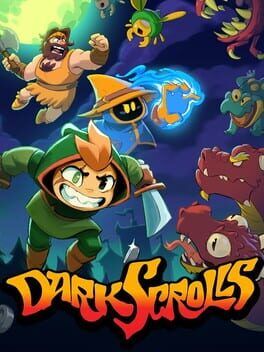
Review
By The Completionist
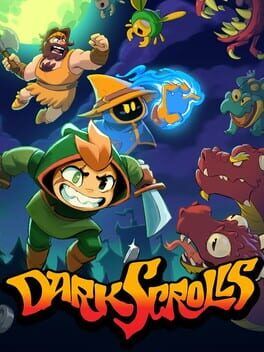
Image: IGDB
Store links: Dark Scrolls on Steam, The Elder Scrolls Online: Dark Brotherhood on Steam
A small release carrying a surprisingly divisive reputation
Dark Scrolls arrived on June 22, 2026, according to Metacritic and OpenCritic listings, with Doinksoft and Devolver Digital attached as creator and publisher on public critic aggregators. That is the concrete starting point for any Dark Scrolls review, because the tension around this dark fantasy game is already visible in its reception: Metacritic lists the PC release as “Mixed or Average” based on 15 critic reviews, while OpenCritic’s page shows scores ranging from Screen Rant’s 3/10 to Digital Chumps’ 8.6/10, with Nintendo Life at 7/10, TheSixthAxis at 6/10, and Niche Gamer at 8/10.
That spread is unusually useful for readers, because Dark Scrolls is the kind of indie release whose appeal depends heavily on what you expect it to be. The sources consistently describe it less as a conventional Dark Scrolls RPG and more as an auto-scrolling rogue-lite action platformer with dark fantasy trappings, NES-style presentation, and arcade roots. Nintendo Life calls it an indie Soulslike side-scroller influenced by roguelikes and Sonic the Hedgehog. The Games Machine, via OpenCritic, frames it as a modern roguelite take on old SonSon-style forced-scrolling arcade platformers. The Geekly Grind points to 8-bit classics such as Ghosts ’n Goblins.
That matters for the buyer’s guide portion of this review. If you are coming to the Dark Scrolls game for quest chains, dialogue choices, loot tiers, buildcraft, and lore documents, the source material suggests you will hit its ceiling quickly. If you are coming for repeatable runs, character mastery, sharp arcade pressure, and co-op chaos, it has a clearer case. My verdict lands in the middle: Dark Scrolls has a distinctive roster and strong retro readability, but its progression and worldbuilding are too thin to satisfy many RPG-first players.
Combat works best when treated as arcade discipline, not RPG expression
Dark Scrolls’ combat is built around a very small input set. DayOne’s review describes a three-button structure: jump and double jump, a main attack, and a character-specific super move. During runs, hits fill a star gauge, and once the gauge is full, the player can trigger that super. This is lean, readable design, and it fits the game’s auto-scrolling format. The screen keeps moving, enemies and hazards apply constant pressure, and the player is asked to survive while attacking, repositioning, and committing to routes quickly.
The roster is where the combat has most of its personality. Nintendo Life says the game starts with three characters and has six more unlockable characters, for nine total. The Geekly Grind also reports nine playable characters, each with distinct attacks, special abilities, jumps, and movement styles. Nintendo Life’s examples are useful: Pigeon is fast, knife-focused, and erratic until the player learns to use higher paths; Grizz is slower, axe-wielding, and easier to manage; Emerys plays as a wizard type whose energy attacks and angled dash sit between the other two starters. DayOne’s review similarly describes the Barbarian’s arcing axes, the Wizard’s bouncing magic orbs, and Cupid’s weaker but rapid arrows, with Cupid’s co-op super functioning as a group heal.
The combat’s biggest strength is that character choice can meaningfully change rhythm. A slow, heavy axe user asks for spacing and patience. A fast knife thrower turns jumps and springs into offense. A co-op healer has a different value profile than a solo damage dealer. For an RPG connoisseur, that is the closest Dark Scrolls gets to party composition or build identity.
The weakness is that this identity does not always become depth. DayOne argues that the gameplay does not change enough across repetitive runs and says the Barbarian’s butt stomp made him invulnerable through key animation windows, allowing that reviewer to clear content by repeatedly using it. Other outlets disagree on feel. The Geekly Grind praises responsive controls and immediate attacks, while a Metacritic critic excerpt complains about messy controls, poor camera movement, and weak instruction. I did not find enough source support to treat either view as universal, so the safest reading is this: Dark Scrolls is mechanically sharp for players who click with its auto-scrolling arcade grammar, but brittle for anyone who needs clearer onboarding, broader move sets, or more controlled platforming.
Progression has hooks, but the RPG layer is intentionally light
Progression is the central question for an indie RPG review of Dark Scrolls, and it is also where the game most clearly separates itself from traditional RPG expectations. Nintendo Life reports that each run lets players collect currency, and reaching 100 coins gives a blue crystal that can be spent in a shop on upgrades such as faster movement, thorns on hit, or a protective bubble. DayOne describes coins coming from kills and chests, then being used to buy upgrades or unlock a character at a well. DayOne also notes a meta-leveling currency spent in a meta-shop to unlock additional upgrades and a cheese-loving character.
The Geekly Grind’s interpretation is the kindest: permanent upgrades are limited mostly to unlocking characters and expanding the pool of perks available during runs, so success depends more on player improvement than grinding raw power. That is a valid roguelike philosophy, and it can be satisfying when the core game is expressive. There is a real pleasure in learning which character handles which route, when to spend, and how to keep a run alive without expecting permanent stats to solve every problem.
For RPG fans, though, this structure may feel underfed. A Metacritic critic excerpt criticizes the lack of information around unlocks, saying it diminishes the satisfaction of finding new items because it is unclear whether they are useful. Another excerpt calls the roguelike rewards minimal. Screen Rant’s OpenCritic blurb acknowledges multiple paths, character nuance, and secret mini-quests, but the broader source set does not support a picture of deep questing, heavy build customization, or long-form character development.
That makes Dark Scrolls a progression-light roguelite rather than a systems-rich RPG. Unlocking characters is the main long-term motivator. Perks create short-run texture. Meta unlocks expand possibility space. What the game does not appear to offer, based on the provided material, is the layered character planning that many players associate with RPG satisfaction: no evidence here of branching skill trees, gear economies, faction choices, dialogue builds, or stat-driven roleplay.
Worldbuilding is mostly aesthetic, with secrets doing more work than story
Dark Scrolls has a strong fantasy silhouette: tiny 8-bit heroes, dungeons, monsters, traps, bosses, axes, magic, thieves, barbarians, wizards, and spooky soundscapes. The Geekly Grind calls it a fantasy platformer with an NES look, while multiple sources connect it to Ghosts ’n Goblins-style dark fantasy arcade tradition. Metacritic user text describes a revenge premise involving a former dungeon partner, but because that appears as a user review excerpt rather than a publisher description in the provided material, I would treat it as player-reported context rather than a confirmed official synopsis.
What is better supported is the absence of strong in-game narrative delivery. DayOne says Dark Scrolls has little to no backstory or in-game explanation of what is happening, while noting that the developers provided a beautiful old-school manual-style review guide that would have helped if integrated into the game. A Metacritic critic excerpt also complains about no clear instruction or story and level elements. Screen Rant’s OpenCritic excerpt mentions secret mini-quests, and DayOne reports that some routes unlock only after specific conditions are met, so there are hidden objectives and route logic to uncover. Still, those elements appear to function as arcade secrets rather than robust quest design.
As a lore-aware player, I find that tradeoff limiting. Dark fantasy thrives when its world has texture: cursed economies, strange gods, doomed settlements, characters with motives, item descriptions that reframe enemies, or routes that tell stories through environmental changes. The sources suggest Dark Scrolls leans on genre memory instead. It evokes the old cartridge fantasy mood efficiently, but it does not seem interested in building a world that asks to be studied.
The art direction does more narrative work than the script. The Geekly Grind praises NES-accurate four-color sprites and clear drop shadows that keep action readable even under projectile pressure. Metacritic’s critic excerpt also acknowledges a unique art style and spooky soundtrack, although that same critic says those are the main things going for the game. For players seeking atmosphere over exposition, that may be enough. For RPG fans who read every codex entry, it probably will not be.
The challenge curve is harsh, uneven, and better with another player
Dark Scrolls is repeatedly described as hard, but the source material disagrees on whether that difficulty is energizing or exhausting. Nintendo Life says it died frequently and highlights a Soulslike challenge structure, but also argues that higher routes, springs, and character-specific movement eventually make the design click. The Geekly Grind says the game is hard yet less frustrating than Ghosts ’n Goblins, crediting sharp controls and character variety for making restarts appealing. TheSixthAxis, by contrast, says it is fun in shorter half-hour bursts but too samey as a roguelite. DayOne is much harsher, describing repetitive levels, grating audio, and a loose-feeling loop that did not become fun.
The solo fail state is a major factor. DayOne reports that in solo play, any death ends the run, meaning a missed jump deep into a run can erase roughly 35 minutes of progress. That is a serious ask when paired with auto-scrolling pressure. It can create old-school stakes, but it can also punish exploration and experimentation, especially if the player is trying to learn alternate routes or unlock conditions.
Co-op appears to soften that edge. DayOne says local co-op made instant deaths more tolerable, and The Geekly Grind reports that adding another player changes the rhythm because players can revive each other and combine abilities. OpenCritic’s Digital Chumps excerpt calls Dark Scrolls a strong co-op platformer, while also noting balance and punishing progression as constraints. The provided material supports both local and online co-op through DayOne’s review, which is practical information for anyone considering the game as a couch or remote session purchase.
Boss design is less convincing. A Metacritic critic excerpt describes bosses as HP sponges, and DayOne says runs include a mid-boss, shop, and end-boss across eight stages. If the game’s best moments come from movement, routing, and crowd control, long boss health bars risk flattening its pace. This is also where character imbalance becomes more damaging. If one character’s defensive or invulnerable movement trivializes the curve, as DayOne reports of the Barbarian, the challenge can swing from punishing to solved rather than evolving naturally.
Value is real, but expectations need to be precise
Dark Scrolls is available on Steam and Nintendo Switch, according to The Geekly Grind’s availability note, and Metacritic lists PC and Nintendo Switch review coverage. Nintendo Life cites a price of $9.99 / £8.99 for the Switch version, which frames the entire discussion. At that price, a lean arcade roguelite has more room to succeed as a compact repeat-play release than it would at a premium price.
There is limited technical evidence in the provided sources. Nintendo Life’s review uses captured Switch footage labels for docked and handheld play, and The Geekly Grind says it reviewed on Steam Deck, but neither excerpt supplied here gives detailed performance metrics. The complaints that do appear are design-facing rather than frame-rate-facing: messy controls, poor camera movement, lack of accessibility and explanation, repetition, and minimal rewards. So I would not make a firm technical performance claim beyond noting that the available source material does not foreground severe performance problems.
The practical recommendation is narrower than the premise may suggest. Buy Dark Scrolls if you want a low-cost, retro-styled, dark fantasy arcade roguelite that rewards repeated runs, character experimentation, and co-op resilience. It is especially plausible on Switch as a short-session game, a use case Nintendo Life specifically endorses when describing dipping in for runs. Consider it on Steam Deck if the idea of portable run-based play appeals, though the provided material only confirms that one outlet reviewed it there rather than giving a full compatibility assessment.
Wait or skip if your interest in a Dark Scrolls RPG is tied to RPG fundamentals: meaningful quests, lore density, long-term build planning, deep equipment progression, and a smoother tutorial curve. The game has enough character variety to be interesting, enough secrets to encourage repeat attempts, and enough style to stand apart visually. It does not have enough narrative or progression weight to carry the dark fantasy promise for players who want a role-playing centerpiece.
Score rationale
Dark Scrolls earns its recommendation only for a specific audience. Its best qualities are clear: a distinct nine-character roster, readable 8-bit art, a forceful auto-scrolling tempo, co-op that changes the survival dynamic, and a budget price that makes its limited scale easier to accept. Its problems are equally clear across the source material: inconsistent onboarding, divisive controls, thin story delivery, shallow long-term progression, repetitive runs, and a challenge curve that can feel either satisfyingly old-school or needlessly punitive depending on character choice and tolerance for restarts.
As a dark fantasy indie release, it has flavor. As an RPG-adjacent roguelite, it has some progression hooks. As an RPG for players who care about builds, quests, and worldbuilding, it falls short. That split explains the wide critic range better than any single score can. My score reflects a game with real arcade charm and roster variety, but limited RPG depth and uneven systems balance.
Final Verdict
A solid gaming experience that delivers on its promises and provides hours of entertainment.