
Review

By Pixel Perfect
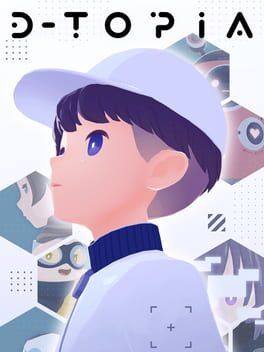
Image: IGDB
Store links: D-topia on Steam
Paradise launches with fine print
D-Topia arrived on July 14, 2026, with Cat with Monocle listing it for PC, PlayStation 5, Xbox Series X, Nintendo Switch, and Switch 2, developed by Japanese indie studio Marumittu Games and published by Annapurna Interactive. That broad platform release gives this small, thoughtful puzzle adventure a bigger stage than its soft colors and quiet daily routine might suggest. The tension is immediate: D-Topia sells you a clean, AI-managed paradise, then asks whether a system designed around “the greatest happiness for the greatest number of people” can ever make room for the people who do not fit its math.
That is the best reason to play it. D-Topia is a cozy game with an uncomfortable skeleton. You play as Shiro, also identified in Siliconera’s review as resident number 046, newly transferred into Residential District Facility Type D to serve as its Facilitator. Multiple reviews describe the Facilitator as a rare human problem-solver in a community otherwise managed by specialized AI helpers called Troids. Shiro’s job is partly maintenance, partly social work, partly moral triage: fix glitches, speak to residents, watch for anomalies, and decide what kind of happiness counts when one resident’s need rubs against the rules keeping everyone else content.
As a D-Topia game review, that premise matters because the game’s best moments come from the friction between its gentle presentation and its sharp questions. MonsterVine calls it a relaxing puzzle game that thoughtfully tackles the greater good and AI. GameHype frames it as a slow-paced blend of logic puzzles, relationship-building, and decision-making. TheXboxHub is more conflicted, arguing that it works better as mood than as argument. My read lands closer to the warmer side of that split: D-Topia’s philosophy can be blunt, but its structure gives those ideas enough tactile shape to make its paradise memorable.
The workday loop is small, readable, and quietly effective
D-Topia’s routine is built around repetition, but it is repetition with purpose. Siliconera describes each day as beginning with a light maze where Shiro must choose proper paths and gates without retracing steps, presenting the act as proof that he is mentally and physically ready to work. From there, daily Factory tasks introduce logic concepts that later reappear in resident crises. Siliconera mentions designated blocks, hidden “bugs” in a Minesweeper-like setup, and pathing challenges built around numbered gates. MonsterVine similarly describes number and block puzzles that begin simply, then expand into checkmark limits and rotating number blocks to fill grids.
The important craft choice is that D-Topia does not separate “puzzle bit” from “story bit” as cleanly as many cozy adventures do. Your maintenance work trains you for the day’s emotional problem. When Siliconera describes an early situation involving Tot, Mari, and a damaged Troid in a store, the mechanical fix leads into a human question: what happened, who caused it, and what response serves the community? That progression gives D-Topia a satisfying rhythm. You learn a rule, apply it to a system, then test it against a person.
The puzzles are pleasant rather than punishing. MonsterVine says they strike a balance between challenge and repetition across a roughly six-hour playthrough. Siliconera says the puzzle set is strong enough that the reviewer wished there were more of them, a sentiment echoed by Cat with Monocle’s complaint that the game could use additional puzzles. That is both praise and a limitation. D-Topia’s logic work is approachable and crisp, but players coming for a dense puzzle-box indie may feel the game moves on just as its systems start to bloom. As a D-Topia PC review consideration, that makes it a better fit for players who want puzzles as pacing and texture, rather than the main source of mastery.
The moral choices are strongest when they stay personal
D-Topia’s decision-making works through structured moral reasoning rather than a simple dialogue wheel. Cat with Monocle describes major decisions as a decision-tree format where players answer a question, then move through follow-up questions until a solution is found. If no solution emerges, the player returns to the beginning and tries again. MonsterVine describes a flowchart-like process where the player chooses where they stand on each issue, while Siliconera says Shiro works through statements that include facts and beliefs before deciding how a situation resolves.
That structure is clever because it turns ethics into something procedural. D-Topia is about systems, so its choices feel systematized. The game is asking you to inspect your assumptions the same way you inspect a broken machine. Should rules be followed because they preserve social stability? Should an individual exception matter if it threatens the shared paradise? Cat with Monocle gives examples involving changing the weather for someone before an exam and reporting someone who damaged a Troid for snacks. These are not world-ending dilemmas on the surface, which is exactly why they work. D-Topia finds pressure in small acts of accommodation, punishment, and silence.
The weakness is clarity. MonsterVine notes that a couple of prompts are slightly unclear, and that matters in a game where the appeal rests on ownership of a decision. If the wording muddies intent, a moral tradeoff can feel like a quiz with hidden rules. TheXboxHub’s more critical review argues that D-Topia struggles intellectually when it starts talking, which points to the same risk from another angle. The game is better when it trusts a resident’s situation, a broken machine, or an altered environment to carry the theme. When it over-explains happiness, AI, and social utility, the spell thins.
Even so, the relationship layer gives the choice system a pulse. MonsterVine highlights optional dialogue from random citizens that fills in details about other colonies, deep freezing, and the wider social structure. Cat with Monocle notes that choices can affect relationships and lead to alternative story paths, with seven chapters and multiple endings. The moral tradeoffs do create a memorable indie experience because they are attached to people you are encouraged to revisit, not abstract policy alone.
The best character is the world hiding under the world
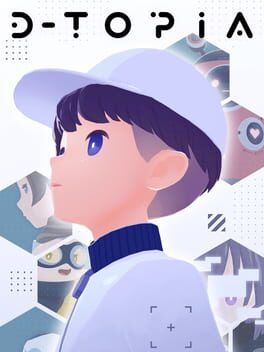
The visual split between D-Topia’s public face and its hidden machinery is the game’s most durable image. GameHype explains that Shiro can access the “block side” of D-Topia, the true environment behind the Visual Optimisation system. Residents see a futuristic minimalist community, while Shiro sees a more mechanical, factory-like architecture where the polished surface has fallen away. GamingTrend describes the contrast as stark: bright whites and greys in the main view, deep blues and blacks when the visual mode changes, and emergency reds that signal disruption.
This is where Marumittu’s small-game craft stands out. D-Topia does not need photorealism to make its world feel suspect. GameHype notes the clean aesthetic, soft colors, and cohesive character design, with many NPCs nearly blending into the environment while core characters stand out through color or design. That choice supports the fiction: a society optimized until most people become part of the scenery, with the outliers drawing the eye because the system cannot fully absorb them.
Audio reinforces that split. GamingTrend praises the soundscape, describing calm music in the bright front-end areas and a droning hum on the back end that grows more oppressive deeper inside the facility. Cat with Monocle also points to ambient sound and a relaxing soundtrack as part of the game’s appeal. D-Topia’s atmosphere works because it is cozy without being frictionless. The Garden can feel calm, according to GamingTrend, but the game keeps reminding you that serenity may be a rendering layer.
This is also where D-Topia earns its Annapurna-adjacent identity, as GameHype identifies Annapurna Interactive as publisher and notes its association with games such as Stray and Silent Hill: Townfall. That comparison should not be stretched too far, but it helps describe the buyer expectation: D-Topia is a compact, mood-forward indie where the environment and premise do much of the storytelling.
Management choices add charm, but the sim layer stays light
Calling D-Topia a management game would oversell it, but its small management choices give the day-to-day loop warmth. Siliconera says extra Factory puzzles can earn spending money for lunch, snacks, and apartment decorations. MonsterVine notes that currency can be used to buy food for Shiro and his cat, as well as decorations for the apartment unit. Cat with Monocle similarly praises the cozy futuristic feel but lists “more apartment interactions” among its complaints.
That tells you the scale. D-Topia is not about optimizing a colony, balancing resources, or running paradise from above. It is about living inside a managed paradise and nudging the lives of people caught in its edges. The apartment decoration, food purchases, and optional chats function as grounding rituals. They give Shiro a body and a home between moral cases. They also soften the harsher implications of the Utopia Project, making the player’s return to work feel human rather than purely mechanical.
Still, this layer can feel underfed. If you are drawn to the phrase “AI-run utopia” hoping for a robust management sandbox, D-Topia will likely disappoint. Its management choices are expressive and cozy, not strategic. The game’s currency loop exists to add texture to the routine and reward optional puzzle play, not to create long-term economic pressure. That restraint fits the tone, but it also contributes to the sense that D-Topia sometimes steps away from its strongest ideas early. The apartment, like the puzzles, is charming enough to make you want a little more.
Length, replay structure, and practical buying advice
MonsterVine reports spending about six hours playing through D-Topia, while Cat with Monocle says it can be completed within a weekend and identifies seven chapters with multiple endings. That makes D-Topia a compact recommendation, especially for players who like replaying scenes to test different ethical outcomes. Cat with Monocle also explains an important limitation: the game has one save file, though players can use chapter select to replay a chapter and try a different path, with later chapter progress overwritten once the replayed chapter is completed.
That save structure is worth knowing before you start. If you want to preserve several branching routes at once, D-Topia may frustrate you. If you are comfortable treating replay as a guided chapter experiment, the system is workable. Cat with Monocle specifically says the characters made them want to replay for new dialogue, and that tracks with the broader critical response. Metacritic’s public listing for the PlayStation 5 version categorizes the game’s Metascore as “Mixed or Average” based on 10 critic reviews, while showing 70 percent positive and 30 percent mixed reviews at the time captured in the provided source material. That spread reflects the game’s main divide: players and critics who connect with the mood, puzzles, and moral atmosphere are likely to forgive its thin spots, while those wanting sharper philosophical writing or deeper mechanics may come away cooler.
PC-specific technical detail is limited in the provided review material. GameHype reviewed the PC version, and Cat with Monocle lists a minimum file size of 1.3 GB, but the sources provided do not give PC requirements, pricing, frame-rate targets, Steam Deck status, or a detailed performance breakdown. Nothing in the supplied reviews flags major technical trouble, but absence of a complaint is not a benchmark. For a D-Topia indie game purchase, the safer advice is to buy for premise, tone, and approachable puzzle-story design, then check your preferred storefront for current price and PC compatibility details before committing.
Verdict
D-Topia’s paradise premise lasts because Marumittu Games makes happiness feel like a maintenance problem with emotional consequences. Its best design idea is also its best thematic idea: every clean surface has a back end, every rule has an exception, and every optimized society produces people who need something the system cannot easily calculate. The light logic puzzles are satisfying, the decision trees give moral choices a distinct shape, and the relationship-building makes the colony feel worth poking at even when the writing gets a little direct.
It does wear thin at the edges. The puzzle set could be broader, the apartment layer could use more interaction, one save file is restrictive for a branching story, and some prompts appear to lack the precision a choice-driven game needs. But the overall shape holds. This D-Topia review lands on a warm recommendation for players seeking a thoughtful, relaxing indie that can be finished in a few evenings and replayed for alternate routes. It is less successful as a rigorous philosophical argument than as a playable mood piece about overdesigned happiness, but that mood is distinctive enough to linger.
Final Verdict
A solid gaming experience that delivers on its promises and provides hours of entertainment.