
Review

By Big Brain
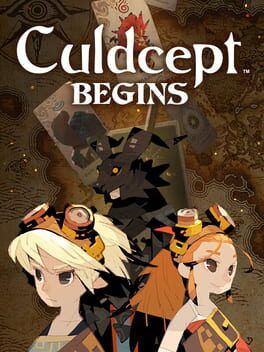
Image: IGDB
Store links: Culdcept Begins on Steam
Culdcept returns at the exact moment card strategy is ready for it
Culdcept Begins arrives on Nintendo Switch and Switch 2 as the first new entry in the series since 2016’s Culdcept Revolt, according to Netto’s Game Room, and that timing creates the central tension of this Culdcept Begins review. Deck-building games have moved from niche obsession to mainstream comfort food through games such as Slay the Spire and Balatro, yet Culdcept is still an odd proposition for a new audience: a dice-driven board game where land ownership, creature combat, deck construction, and risk management all pull on the same economy.
Polygon describes the series as dating back to OmiyaSoft’s 1997 Sega Saturn original in Japan, with later releases including Culdcept Second, Culdcept Saga, Culdcept DS, the 3DS Culdcept, and Culdcept Revolt. Siliconera frames Culdcept Begins as a sugoroku-style board game in the vein of Fortune Street or Itadaki Street, while multiple reviews compare its surface appeal to Monopoly crossed with a trading card game. That comparison is useful, but only to a point. Culdcept Begins is at its best when it stops looking like a novelty mash-up and becomes a brutally legible economy game.
The important confirmed availability details are slightly messy. Polygon reports that Culdcept Begins is available now on Nintendo Switch and Switch 2. Metacritic lists Nintendo Switch, Nintendo Switch 2, and PC under all platforms, with an initial release date of July 16, 2026, and a GameStop Switch 2 price of $54.99. Metacritic’s captured page also says critic reviews are not available yet, even though reviews from Shacknews, RPGFan, Siliconera, DayOne, and Netto’s Game Room are live in the supplied material. That does not affect the game itself, but it is a reminder that listings around niche releases can lag behind reality.
The academy setup teaches the rules, but the fiction is the weakest tutor
Culdcept Begins tries to welcome new players through an academy story. Siliconera identifies the protagonist as Kamru, a student at Royal Cept Academy training to become a Cepter, someone who uses Culd tablets to summon creatures and perform magic. Shacknews gives the same broad setup, with Kamur transferred to Cept Academy before becoming tied to a wider conflict involving elemental sigils and a returning evil. RPGFan places the story in Bavrashka, where elemental kingdoms, the Abyss, King Dagar, General Rutra, and Kamru’s search for his father form the larger fantasy backdrop.
As onboarding structure, that setup works better than it reads. The early story gives the game a reason to introduce boards, opponents, elemental rules, and deck-building concepts in sequence. Siliconera says the story mainly serves as an extended tutorial and notes that story segments can be sped up or skipped. Netto’s Game Room says mechanics are introduced as the game goes on, with story progression locking new boards while free play allows broader access once unlocked.
As drama, the campaign is less convincing. Siliconera calls the story familiar and not especially exciting, built around the gifted youngster, friend, rival, and save-the-day framework. Shacknews similarly says the story has been done many times in RPGs and does not put a fresh spin on it. RPGFan is somewhat warmer, saying the school opening becomes a more interesting epic tale as the conflict grows, while still describing many characters as one-note. The consensus is clear enough for buyers: Culdcept Begins is newcomer-friendly because the campaign gives you a structured climb, not because the narrative itself is a compelling invitation.
The better newcomer feature is optional context. Siliconera notes side story quests with additional maps and cards. Shacknews says side missions can explore characters such as Tarhunt and past events including the Eight-Year War, and that they also unlock cards. Netto’s Game Room adds that some side stories require fixed decks, creating specific challenges. That matters for learning because fixed decks can force players to understand a plan rather than copy one comfortable pile of creatures and spells through every map.
The board economy is where Culdcept Begins becomes a real strategy game
The core rules are simple enough to explain and complicated enough to obsess over. Siliconera says each board sets a target magic total, often around 8,000 G in campaign stages, with multiplayer allowing adjustment. Players move around the board, claim empty territories by summoning creatures, visit forts to collect symbols, return to the castle to complete a loop, earn more G, then win by reaching the castle after hitting the map’s total magic requirement. Shacknews describes the same rhythm as passing through forts, returning to the castle for lap bonuses, accumulating Total Magic, and making one final return to secure victory.
That lap structure is the smartest piece of onboarding in Culdcept Begins. It gives new players a clear macro objective even when the card text, tile colors, creature types, and board routes start to blur. You can understand the race before you master the engine. Then, match by match, the game reveals that the race is really about asset quality, timing, and liquidity.
Territory control is the heart of that economy. Siliconera says players use magic to summon monsters onto territories, with creatures tied to elements or no element, and those elements can affect performance or determine placement restrictions. Shacknews says matching a creature to the elemental symbol of a space grants a stat bonus. Polygon emphasizes chains, upgrading tiles, and crafting decks of monsters and spells. DayOne explains that leveled-up land extracts higher magic tolls from opponents, but also creates danger because a successful attacker can seize a developed tile and swing the match.
This is where Culdcept Begins satisfies long-time fans. The board is not a passive Monopoly track with cards pasted on top. A strong position has geography, element alignment, defensive stats, item coverage, and toll pressure. An overbuilt tile can be a win condition or a liability. A lap bonus can stabilize a losing player or fund the next land upgrade that ends the game. The game constantly asks whether you should spend magic now to strengthen a chain, hold resources for a fight, or preserve enough flexibility to survive a bad roll. That is the good kind of friction for a card strategy game.
Combat is readable, but the best decisions happen before the clash
When a player lands on an occupied territory, Culdcept Begins gives them a choice: pay the toll or challenge the defender. Siliconera says battles determine whether the challenger can take the spot, while DayOne notes that the defender often has an advantage through terrain and elemental setup, though item cards can help attackers overcome defensive stats. Polygon summarizes the same tension as paying up, battling, and potentially overtaking a tile with your own monster.
The combat layer works because it is both tactical and forecastable. A newcomer can look at a toll, a creature stat line, and an item card and make a reasonable decision. A veteran sees the larger board state: whether winning that land breaks an elemental chain, whether losing a creature opens a route for another opponent, whether spending an item now weakens the next defense, and whether the toll is cheaper than the tempo cost of a failed attack.
DayOne points out that Culds have varied effects, including creatures that attack first, creatures that do not attack, and creatures that negate item cards. It also says descriptions are not overly dense and that each Culd includes a tooltip suggesting where it fits in battle plans. That is a crucial accessibility choice. Culdcept Begins has enough moving parts that its cards cannot afford to read like legal documents. The supplied reviews suggest it largely avoids that trap.
For long-time Culdcept players, the revival appears conservative in the strongest sense. Polygon says the fundamentals remain the same. RPGFan calls it a reboot that puts a new coat of paint on a time-tested formula. The design does not seem interested in flattening Culdcept into a modern roguelike deckbuilder or a quick-session collectible battler. It keeps the dice, the property pressure, the toll economy, and the slow-burn board control. That decision may limit its audience, but it preserves the identity fans came for.
Deck-building has long legs, if the online community shows up
The best sign for Culdcept Begins’ longevity is that reviewers kept talking about decks after explaining the rules. Siliconera says this entry provides good opportunities to build decks and enjoy matches online. Netto’s Game Room says the game features robust online multiplayer alongside local SharePlay support, and the reviewer found themselves thinking about deck customization even when not playing. Shacknews says side missions unlock new cards that help make decks more powerful.
That structure creates a healthy strategic arc. The campaign teaches the format, side content broadens the card pool, fixed-deck missions test fundamentals, and multiplayer becomes the place where theory meets punishment. For a strategy player, that is exactly the right ladder. You want early rules clarity, then controlled experiments, then open-ended deck construction.
The unknown is the meta. None of the supplied source material gives patch plans, ranked ladder details, matchmaking population expectations, ban lists, card balance policy, or post-launch content cadence. Those absences should shape buying advice. If you want Culdcept Begins primarily as a campaign board strategy game, the sources support that it has enough structure and depth to stand on its own. If you are buying for competitive online play, the design looks promising, but its long-term health depends on community size and developer support that the provided materials do not confirm.
My forward-looking concern is not balance at launch, because the supplied reviews do not identify a broken card economy. It is discoverability. Culdcept’s strongest games tend to emerge after players know enough to punish greedy land upgrades, route safely around lethal tolls, and build decks for specific board shapes. If the online ecosystem cannot retain newcomers through those first painful losses, veterans may get the deep game they wanted while new players bounce off before reaching it.
Presentation and platform notes are secondary, with one crediting wrinkle
The provided sources do not support a detailed technical performance breakdown. They do, however, give some useful platform and production context. Polygon says Culdcept Begins is available on Nintendo Switch and Switch 2. Metacritic lists Nintendo Switch, Nintendo Switch 2, and PC, and its details page names Omiya Soft as developer and Neos as publisher. Polygon also attributes development of the series to OmiyaSoft historically, while RPGFan’s review platform box lists Neos Corporation as developer and Neos Corporation as publisher. Because those listings conflict, the safest reading is that public credit presentation varies by outlet and database, with Neos consistently attached as publisher in the supplied material.
On presentation, the sources are lighter. RPGFan describes the game as a reboot with a new coat of paint. DayOne notes creatures inspired by Western mythology and mentions a narrator reading creature names in a bored fashion. Siliconera’s source text credits an image via Neos. None of the supplied reviews provide frame-rate measurements, resolution details, handheld battery impressions, load-time comparisons between Switch and Switch 2, or PC requirements.
That limits the practical recommendation. There is no sourced evidence here of major technical problems, but there is also no sourced basis for promising a superior Switch 2 experience beyond the fact that reviewers such as RPGFan and Netto’s Game Room played or reviewed the Switch 2 version. If platform performance is your deciding factor, wait for direct comparison coverage. If the question is whether the core game works as a couch-and-online board strategy revival, the sources give a much clearer yes.
Verdict: an excellent rules revival with a merely serviceable story
Culdcept Begins is a strong revival because it understands what should and should not be modernized. It gives newcomers a campaign scaffold, skippable or speed-adjustable story segments according to Siliconera, side missions that teach through narrower challenges, and readable tooltips according to DayOne. It gives returning players the important stuff intact: dice movement, elemental land control, creature placement, toll pressure, route planning, spell timing, item-based combat, and deck-building that continues to matter after the tutorial glow fades.
Its weaknesses are also clear. The story is useful but rarely exciting, with Siliconera and Shacknews both calling out its familiar RPG shape. The onboarding is patient, yet Culdcept remains a game where a bad roll into an upgraded enemy tile can undo several turns of planning. That volatility is part of the design, but it will feel harsh to players who prefer card games where every loss can be traced neatly to deck construction or sequencing. The multiplayer promise is real, based on Siliconera and Netto’s Game Room noting online play, but the long-term competitive picture is still unproven from the supplied sources.
For newcomers, Culdcept Begins is the right starting point if you are willing to treat the campaign as a strategy curriculum rather than a gripping RPG. For long-time fans, it appears to be the rare revival that respects the old economy instead of sanding it flat. The result is one of the more distinctive card strategy game releases of the year, and a Culdcept review score that lands high on gameplay even as story and presentation sit closer to functional than remarkable.
Final Verdict
A solid gaming experience that delivers on its promises and provides hours of entertainment.