
Review

By The Completionist
A baroque nightmare in Hispania
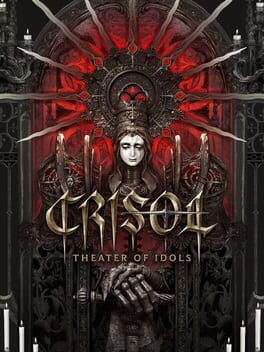
Crisol: Theater of Idols is not subtle. From the moment you step onto the island of Tormentosa as Gabriel, a soldier blessed and cursed by the Sun, you are drowning in Catholic iconography, processions of wooden saints, and the heavy, suffocating guilt of a culture built on ritual and suffering. Vermila Studios leans hard into Spanish folklore and religious horror, and it gives Crisol an identity that instantly separates it from the usual haunted houses and derelict hospitals that dominate the genre.
This is a first-person survival horror shooter where your blood is your ammunition. Every bullet, every powered altar, every puzzle solution is paid for with your health. It is a viciously simple idea, and for the most part, Vermila understands how to wring tension from that single, elegant rule.
Folklore as weapon and wound
Crisol’s greatest strength is how it embeds Spanish folklore into almost every surface. Tormentosa is a twisted Hispania that looks like a festival frozen at the moment it went straight to hell. Narrow streets are lined with processional platforms, charred paper lanterns, and cracked ceramic tiles depicting saints whose faces have been sanded into smooth, eyeless ovals. Chapels hide reliquaries stuffed with teeth and hair. You are always walking through the aftermath of some living, breathing tradition that turned rancid.
Rather than just decorating the walls, the game builds its threats out of these traditions. Enemies resemble corrupted pasos and marionettes, lacquered wood puppets nailed together into mockeries of saints, or penitents whose hoods stretch into featureless cones. Bosses are Idols, towering amalgams of relics and gilded limbs that move with a jerky, ceremonial slowness that is more unnerving than any jump scare.
The lore behind them is surprisingly dense. Scribbled notes and whispered prayers hint at real Spanish legends and folk practices, warped into this alternate history. It sits closer to Blasphemous in spirit than to Resident Evil, even though the camera is in first person. The result is a setting that feels specific instead of generic “European” horror. When you walk into a candle-choked sacristy or a plaza ringed by crucified wooden effigies, it feels like a sacrilegious parody of a culture that actually exists, which makes it land harder.
Blood as currency: a brutal risk–reward loop
At the center of Crisol is its blood sacrifice system. Gabriel’s lifebar is finite, and almost everything meaningful you do eats away at it. Firing guns consumes blood. Charging certain relic-powered abilities deals a chunk of damage to you. Even some environmental mechanisms, like opening ritual doors or purifying shrines, require you to bleed into them.
It plays out like a nastier spin on classic survival horror ammo management. In Resident Evil 2 Remake, you ask if that bullet is worth the zombie in front of you. In Crisol, you are literally asking if that bullet is worth shaving off the lifeforce that might keep you alive through the next encounter. Do you take a risky headshot from a distance, or hope to slip past in the shadows so you do not have to reload your veins afterward?
The game avoids becoming a masochistic slog by giving you ways to earn and store blood back, but never quite enough to feel safe. Shrines can top you up, certain relics let you leech health from enemies, and carefully hidden vials offer emergency surges. On higher difficulties, these become lifelines rather than conveniences.
Where this system really shines is in multi-stage fights and longer exploration stretches. A poorly handled encounter echoes twenty minutes later when you realize you are entering a new area at half health because you sprayed too many bullets at some low-tier puppets earlier. That kind of long-tail consequence is exactly what survival horror needs, and Crisol embraces it.
The one caveat is that the tuning is not always perfect. Some sections swing from genuinely oppressive to briefly trivial when the game dumps a few too many resources at once. In those pockets, the blood mechanic feels more like a cool gimmick than a constant pressure. But for most of the campaign, it quietly shapes every decision, more intelligent and more interesting than a simple shared health-mana bar.
Puzzles carved from ritual
Puzzles in Crisol lean on ritual logic instead of random contraptions, which fits the folkloric backdrop. You might need to arrange saint statues in the order of a particular procession, match votive offerings to the sins they are meant to atone for, or interpret fragments of liturgy to set the correct sequence of bells and incense burners.
These are not fiendishly obscure in the style of old-school Silent Hill, but they sit well above modern Resident Evil’s more straightforward key-and-emblem fare. Clues are usually present in the environment, tucked into frescoes, sermon notes, or the way a plaza is staged. The challenge is in reading the space like a piece of religious theater.
Crisol’s best puzzles mesh nicely with the blood system. Some locks or idols can be brute-forced by pumping in extra blood, skipping the riddle at a painful cost. Others tempt you to over-invest, asking for more blood than you can comfortably spare, forcing you to step back and look for the smarter, more “pious” solution. Sacrificing your life to bypass thinking is a wonderfully on-theme tradeoff.
The weaker moments come when the game leans on more conventional lever-dragging or symbol-matching that could have been lifted from any other horror title. These rarely last long, but they stand out in a game that otherwise feels so culturally grounded.
Combat, movement, and the feel of fear
Moment to moment, Crisol plays like a slow, deliberate shooter built on survival horror footing. Weapons range from crude, consecrated firearms to relic-powered tools that feel closer to mystical implements than standard guns. They have heft, recoil, and significant gaps between shots. You are not circle-strafing hordes here. You are planting your feet, lining up a nervous shot, and praying you have the blood to top your clip back up.
Enemy design is hit and miss. The early hours introduce some fantastic silhouettes that are instantly readable and thematically strong. Stilt-walking effigies that lurch around courtyards, wooden penitents that freeze when directly looked at, and puppets that drag incense burners, choking hallways in smoke. Later on, however, the roster leans more heavily on variations of lumbering brutes and ranged idols that feel a little too similar, sapping some of the freshness from combat.
Animation quality can also be inconsistent. Some creatures move with an uncanny, puppet-like stiffness that seems intentional, reinforcing the carved-wood theme. Others just look stiff in a less flattering, gamey way, which undercuts the terror. When everything is locked in step, the baroque horror lands. When it is not, you feel the budget constraints.
Still, the core loop of positioning, carefully spending blood to control the space, and then scrambling to recover from your own excesses stays engaging. It will not satisfy players looking for the kind of fluid power fantasy found in something like Resident Evil 4 Remake. Crisol commits to its slower pace and forces you to respect even minor threats.
How it stacks up to Amnesia, Visage, and modern Resident Evil
In terms of sheer dread, Crisol sits in an interesting middle ground between Amnesia, Visage, and the recent Resident Evil games.
Amnesia and Visage largely abandon the safety net of combat to deliver relentless psychological pressure. They thrive on helplessness. Crisol, by contrast, gives you guns but turns every shot into self-harm. You are not defenseless, but you are never comfortable. It is closer to the classic Resident Evil mentality, but with a sharper knife at your ribs.
Compared to Amnesia, Crisol is less about existential horror and more about bodily risk and sacrilegious spectacle. You will not find the same slow-burn sanity systems or prolonged stretches of absolute vulnerability. Instead, you have a more traditional progression of areas, bosses, and keys punctuated by intense resource anxiety.
Visage is more intimately oppressive, using domestic spaces and disorientation to crush you. Crisol’s horror is grander and more theatrical. Processions, plazas, and cathedrals replace living rooms and basements. The tradeoff is that Crisol occasionally feels like a haunted theme park ride, moving you from one big setpiece to the next instead of marinating you in a single suffocating location.
Modern Resident Evil, especially 2 Remake and Village, is probably the closest peer in terms of structure. Like those games, Crisol balances exploration, puzzle rooms, and cinematic boss fights. Where it diverges is in how deeply its mechanics reinforce its themes. Resident Evil manages tension through ammo scarcity and enemy placement. Crisol ratchets that up by tying every scrap of offensive capability back to your veins. It is a more extreme form of the same idea, and when it works, it makes Capcom’s approach feel almost generous.
However, Resident Evil still holds the crown when it comes to overall pacing and polish. Crisol’s tension curve can be lumpy. There are stretches where encounters become predictable or where a particularly tricky puzzle kills the forward momentum. Resident Evil’s best entries rarely let you sit still long enough to feel bored. Crisol sometimes does, and the seams show.
Atmosphere, audio, and presentation
Visually, Crisol often punches above its weight. Vermila squeezes a lot out of its art direction. The texture work and models will not fool you into thinking this is a mega-budget production, but the composition of scenes, the interplay of candlelight and shadow, and the sheer density of religious detail build a world that is hard to forget.
Lighting is a standout. Torches and candles cast long, trembling shadows across carved faces, and narrow corridors lead into cavernous chapels that feel legitimately overwhelming. When Crisol wants you to feel small in the face of its idols, it succeeds.
The audio design follows suit. Groaning wood, distant processional drums, whispered prayers layered into the background, and choral stings that crash down when an Idol reveals itself all contribute to a soundscape that feels more “cathedral horror” than generic industrial noise. Enemy cues are readable without being blunt, which is important when your health pool doubles as your ammo pool.
On the technical side, performance on console and PC at launch is acceptable but not flawless. There are occasional hitches when loading into larger plazas, and some animation pops pull you out of the moment. None of it is game-breaking, but it does remind you you are playing an ambitious mid-tier project rather than a slick blockbuster.
Verdict
Crisol: Theater of Idols is not the new gold standard of survival horror, but it is one of the most distinct entries the genre has seen in years. Its use of Spanish folklore and religious ritual is not just a coat of paint. It informs enemy design, puzzle logic, and the central blood sacrifice mechanic that turns every trigger pull into a small act of self-destruction.
Compared to the likes of Amnesia and Visage, it offers more agency but less pure psychological suffocation. Against modern Resident Evil, it is rougher and less impeccably paced, but also mechanically bolder in how it marries theme and gameplay. When the blood economy, ritual puzzles, and baroque setpieces all line up, Crisol delivers genuinely gripping horror that feels its own.
If you are tired of horror games that play it safe, Crisol is absolutely worth bleeding for, even if a few splinters of jank and uneven pacing get under your skin along the way.
Final Verdict
A solid gaming experience that delivers on its promises and provides hours of entertainment.