
Review
By Apex
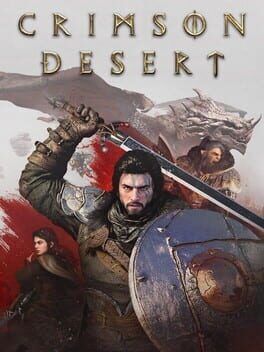
Crimson Desert Review
Crimson Desert arrives carrying years of anticipation, a mountain of flashy trailers, and the kind of expectation that only comes from a game that has spent a long time promising everything at once. It wants to be a sweeping open-world epic, a cinematic character drama, a systems-heavy action RPG, and a technical showcase for Pearl Abyss. After spending time with it in its launch state, the answer to the big question is fairly clear: some of that hype was earned, but far too much of it was not.
This is a game of undeniable scale and equally undeniable excess. Its best moments are genuinely striking. The world is huge and visually rich, with dramatic landscapes, weather effects, and enough environmental detail to sell the fantasy of a continent in motion. There are stretches of exploration where Crimson Desert looks every bit like the blockbuster it was marketed as. Ride across a ridge at sunset, crest a mountain path into a battered fortress town, or stumble into one of its larger set-piece encounters, and it is easy to see why so many players were willing to wait.
The problem is that awe does not last very long once you start pushing past the surface. For all its size, Pywel often feels more busy than alive. The map is stuffed with activities, systems, encounters, and side diversions, but too much of that content feels like filler masquerading as density. You are constantly being nudged toward something, yet not enough of it has the craftsmanship or narrative value to make the world feel meaningfully authored. Instead of giving the player a strong sense of discovery, Crimson Desert too often creates the sensation of rummaging through an overpacked box of ideas.
That sense of overreach runs through the combat as well. In trailers, the fighting looked explosive, weighty, and stylish. In practice, it lands somewhere between satisfying and sloppy. There is real punch in some of Kliff's attacks, and certain duels deliver the kind of bruising, cinematic momentum the game clearly wants to be known for. When animations sync up, abilities chain cleanly, and enemies actually give you room to read the fight, combat can feel excellent. There is heft to the blows, spectacle in the effects, and enough aggression in the enemy design to keep encounters energetic.
But that version of Crimson Desert does not show up consistently enough. Too often, battles collapse into visual clutter and mechanical noise. The camera struggles in crowded fights, enemy behavior can make encounters feel erratic rather than demanding, and the game's fondness for throwing more spectacle at the screen does not always translate into better action. Instead of building tactical depth, the combat regularly becomes a scramble of effects, stagger states, and unclear priorities. It looks impressive in motion, but it does not always play with the clarity or discipline of a truly great action game.
The same can be said for progression. There are a lot of systems here, and the game is very eager to show them off. Skills, gear, upgrades, side mechanics, and assorted subsystems accumulate at a pace that suggests depth, but depth and volume are not the same thing. Crimson Desert often confuses complexity with richness. The result is a progression loop that can feel bloated rather than rewarding. Instead of sharpening the core experience, many of these layers dull it, adding friction where there should be momentum.
The story is similarly split between what it wants to be and what it actually is. Kliff has the bones of a compelling protagonist, and there are moments where the narrative finds some real dramatic force. The game can stage a scene well. It knows how to frame a confrontation, how to use scale, and how to sell hardship through environment and spectacle. When it focuses, there are glimpses of a rugged fantasy adventure with real emotional bite.
Unfortunately, focus is exactly what the story lacks. The tone swings wildly, sometimes from one scene to the next. Grim conflict, solemn character beats, broad absurdity, and blockbuster chaos all sit side by side without much care for cohesion. That makes it hard to invest in the stakes, because the game rarely settles long enough to let its characters breathe or its themes develop. Big narrative moments arrive with a lot of noise and visual energy, but not enough buildup. The writing is not disastrous in every scene, yet it is inconsistent enough that the story never truly earns the epic weight it keeps reaching for.
This is where the mixed critical reception makes perfect sense. There is enough here to admire that calling the game a total failure would be unfair. The world can be beautiful. Some fights are thrilling. A handful of story beats land. The production values are often substantial. You can absolutely see the version of Crimson Desert that existed in everyone's imagination while it was being hyped.
But you can also feel, constantly, the gap between ambition and execution. The huge world is not disciplined enough to justify its sprawl. The combat is not consistent enough to support the hours poured into it. The story is not coherent enough to carry the dramatic weight the game asks it to bear. That would already be a problem in a polished release. In launch condition, technical performance makes the disappointment harder to ignore.
On a technical level, Crimson Desert is unstable enough to undermine its strongest qualities. It can look stunning, but visual splendor comes with too many caveats. Performance hitches, rough edges, and general jank intrude often enough to break immersion. Some of the friction comes from pure optimization, some from camera behavior and encounter readability, and some from the broader feeling that the game needed more time refining how all of its systems fit together. Even when it is functioning properly, parts of the interface and overall flow feel cluttered and inelegant.
That launch-state roughness matters because this is not the kind of game that can coast on vibes alone. A giant open-world action RPG lives or dies on consistency. Players need to trust that the next fight, the next quest, the next dramatic turn, and the next hour of exploration will build on what came before. Crimson Desert rarely inspires that confidence. It keeps presenting new things, but not enough of them are great, and too many feel half-developed.
Years of hype created the expectation that Crimson Desert might be a landmark. It is not. It is a lavish, overstuffed, intermittently exciting game with obvious craft in certain areas and obvious misjudgment in many others. If you come to it hungry for spectacle, you will find some. If you come to it hoping for a fully realized open-world fantasy adventure that justifies every year of anticipation, you are likely to walk away disappointed.
The fairest verdict is that Crimson Desert is not without merit, but it is far more notable for what it almost becomes than for what it successfully delivers. Its world is huge, but not nearly focused enough. Its combat is flashy, but not reliable enough. Its story has scale, but not the coherence to make that scale resonate. Its technical performance, especially at launch, further chips away at the illusion of prestige. The hype was built on the promise of a masterpiece. The reality is a handsome, messy game that can entertain in bursts while falling well short of greatness.
Final Verdict
A solid gaming experience that delivers on its promises and provides hours of entertainment.