
Review

By Headshot
Overview
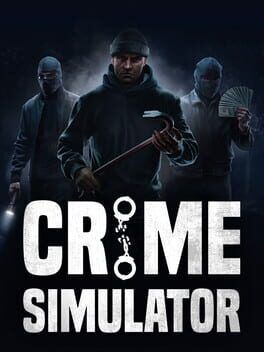
Crime Simulator arrives on Xbox Series X|S positioned as the spiritual successor to Thief Simulator, promising a bigger, more varied criminal sandbox. You step into the shoes of a freshly released con with a heavy debt hanging over your head, free to sneak, steal, and scam your way up from petty jobs to larger heists.
On paper, it sounds like exactly the sort of low-budget stealth sandpit that thrives on PC. In practice on Xbox, it feels like a rough Early Access build that escaped too early. The one-dev charm is real, and there are flashes of a compelling stealth crime sim, but they are buried under clumsy pad controls, half-awake AI, and a grindy progression loop that quickly kills the fantasy.
Pad vs PC – How It Feels On Xbox
Crime Simulator was clearly conceived around mouse and keyboard. On Xbox Series X|S, the pad implementation is technically functional but rarely comfortable.
Movement sits in a weird middle ground. Your analog stick has a light stealth walk and a full-speed jog, yet the in-between feels muddy. Trying to edge around a cone of vision or line up a perfect peek at a window is more slippery than it should be. It is usable, but it never feels precise, which is a big problem for a game that leans on methodical stealth.
The real pain comes from interaction and inventory. Every action is stacked onto multi-function buttons. The same face button that opens a drawer might suddenly leap you into a car or grab an NPC if you are a step off. Cycling tools on the D-pad lacks the immediacy and clarity of a number-row. In tense moments, you will absolutely pull out the wrong gadget or accidentally holster what you need. On PC, one mispress is mildly annoying. On pad, it becomes a pattern.
Aiming fares slightly better than the rest since this is not a twitch shooter and most ranged use is situational, but it is still far from snappy. There is just enough input lag and stiffness that lining up a quick camera shot or a thrown distraction feels clumsy.
The net effect is that Xbox Series X|S never feels like the natural home for Crime Simulator. The controls are serviceable, but they constantly fight the slow, deliberate stealth the design is aiming for.
Stealth Systems And AI
Crime Simulator is trying to step into the same shadowy space as Thief Simulator. You scout routines, crack locks, avoid cameras, and snatch loot without raising suspicion. The problem is that the AI is far too simple and inconsistent to support that fantasy.
Guards and civilians patrol on stiff, predictable loops. You can read their routes quickly, which should be satisfying, but they often get hung up on doors, corners, or each other. It is common to see an NPC pivot back and forth in place, breaking the illusion of a living space and turning “casing the joint” into watching wind-up toys.
Detection logic is just as brittle. Sometimes a guard will spot you in a dimly lit room through a window at what feels like 50 meters. Other times you can crouch in their direct line of sight, basically hugging the coffee table, and they will never react. There is a suspicion meter, but it does not communicate clearly why you are being noticed. Being punished for invisible rules is not tense, it is exhausting.
Sound is supposed to matter. Different surfaces change how noisy your footsteps are and certain tools can cause a ruckus. Yet the AI’s hearing feels disconnected from what you are doing. You might trigger an NPC from what seems like a whisper while sprinting up stairs two floors above draws nothing. There is no coherence to what the game considers suspicious.
Because of this, stealth outcomes feel random rather than earned. When you complete a perfect job, it is hard to shake the sense that you beat the system rather than outwitted it. When you fail, it often feels like the game decided to flip the table.
Mission Variety And Structure
Early on, Crime Simulator is deceptively promising. Small jobs ease you into gently prowling neighborhoods, snatching valuables from unassuming houses, and testing basic tools. There is something undeniably satisfying about prying open a back window and slipping out with a bag full of laptops and jewelry.
The issue is that the game never meaningfully builds on that loop. As your list of available contracts grows, the scenarios begin to blur into the same template. Break in, avoid a couple of cameras, grab a highlighted object, leave. Sometimes the loot is a safe, sometimes it is contraband, sometimes it is a vehicle, but the moment-to-moment play is almost identical.
Larger missions promise more complex setups, but usually just scale up the size of the space rather than the intricacy of the job. A “big heist” is frequently just a bigger house with more copy-pasted rooms and a slightly thicker patrol route. You are not planning multi-step operations or juggling multiple objectives, just running the same basic pattern across a larger blueprint.
Optional challenges and modifiers try to spice things up, like completing a job without being seen or under a time limit. Unfortunately, given the flaky AI and rough controls, these conditions tend to highlight the weakest parts rather than create exciting mastery tests. It does not feel like a carefully tuned stealth puzzle, just extra friction.
After several hours, the contract list starts to feel like a checklist of chores rather than a ladder of escalating capers. It is the same burglary, just with different labels.
Progression And Economy
The progression framework should be the glue that keeps this whole experience together. You clear jobs, you earn cash, you buy better tools, and you gain access to tougher gigs. Instead, the economy feels like a grind.
Early profits trickle in, and upgrades are expensive. That can be engaging when each purchase meaningfully unlocks new approaches. Here, though, many of the upgrades are just numerical buffs or slightly different flavors of the same tool. You spend a long time saving for incremental gains that do not fundamentally change how you play.
Crucial gadgets, like advanced lockpicks or quiet entry tools, are locked behind a mix of cash and a rudimentary skill system. Skill points come slowly, and most perks are flat statistical boosts. Something as basic as being a bit quieter or faster at picking locks is buried behind multiple levels of dull nodes. There is no sense of interesting specialization. Everyone is headed down the same boring tree to reach the same core tools.
Worse, the game loves to send you back through previously visited locations with slightly different objectives, all to grind out enough money for the next tier of kit. Instead of feeling like a rising criminal mastermind, you feel like a low-paid contractor revisiting the same sites until the budget finally lets you progress.
There is also a lack of meaningful risk and reward. Getting caught tends to mean losing some time and maybe paying off a fine, not truly setting your career back. On the flip side, pulling off a clean high-value heist does not feel significantly more lucrative than a string of mediocre jobs. Eventually the optimal play is simply to churn out easy, low-effort tasks, which undercuts the fantasy of building toward epic scores.
Performance And Presentation On Series X|S
On the technical front, Crime Simulator runs competently on Series X. Frame rates are mostly stable, and load times are acceptable thanks to the SSD. However, it still looks like a PC indie that has not been fully tuned for console.
Visuals are utilitarian. Environments are boxy, lighting is flat, and characters move with stiff, mannequin-like animations. This is not inherently a problem for a small one-dev project, but the bland presentation does little to sell the immersion of casing high-end homes or dark industrial yards.
Bugs are common enough to be noticeable. NPCs clip through doors, patrols break and leave a guard staring at a wall for the whole mission, and the occasional object refuses to highlight even when it is clearly the correct target. None of this permanently breaks progression, but it chips away at your patience.
The Series S version holds up in terms of performance, but visual compromises such as softer textures and minor pop-in are more obvious. The underlying issues with AI and design are identical across both consoles.
Thief Simulator Pedigree – Does It Live Up To It?
Thief Simulator worked because its systems, while simple, consistently supported a clear fantasy. You learned houses, read routines, and executed cleaner and cleaner jobs. Crime Simulator tries to broaden that into a full criminal career, but it forgets to tighten the fundamental stealth.
Compared directly, Crime Simulator feels like a clumsier, less focused cousin. Where Thief Simulator made even a small suburban burglary feel tense and methodical, Crime Simulator turns similar scenarios into loose, janky errands. The AI is weaker, the feedback is vaguer, and the mission design is more repetitive.
There are flashes of potential. Occasionally you will manage a quiet infiltration, sidestep a patrol by the skin of your teeth, and slide out with a bag full of loot. For a moment, you glimpse the game that could have been if the AI was stronger, the controls sharper, and the missions more bespoke.
But those moments are rare, and they do not offset the hours of grinding the same shallow contracts, fighting the pad layout, and dealing with inconsistent detection.
Verdict
Crime Simulator on Xbox Series X|S is a passion project that overreaches. The idea of a stealth-focused criminal sandbox in the mold of Thief Simulator is appealing, but the execution on console buckles under shaky AI, awkward controller mapping, and a monotonous progression loop.
If you are absolutely starved for a niche stealth crime sim and are willing to overlook a mountain of rough edges, there is a faint curiosity here, especially if you can play it on PC where the controls feel more at home. On Xbox Series X|S, though, it is hard to recommend. The heists rarely feel clever, the grind is numbing, and the fantasy of becoming a master criminal gets lost in the jank.
For now, Crime Simulator feels less like a daring score and more like a botched job that never quite goes according to plan.
Final Verdict
A solid gaming experience that delivers on its promises and provides hours of entertainment.