
Review

By Big Brain
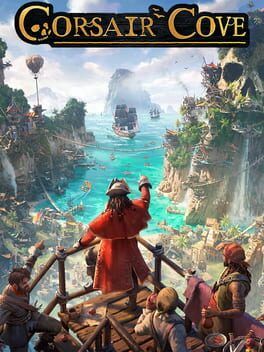
Image: IGDB
Store links: Corsair Cove on Steam
A pirate city builder launching into a real strategy gap
Corsair Cove is listed by PC Gamer as a July 31, 2026 release from publisher Hooded Horse and developer Limbic Entertainment, with a Steam page available and Steam Deck marked Playable in PC Gamer's review details. That concrete release window gives this Corsair Cove review its central tension: the game arrives with an unusually strong premise for management fans, but pirate theming alone does not make a durable city builder.
The early critical material points to a game with a clearer mechanical identity than the usual novelty pitch. PC Gamer's verdict calls it "a vibrant, playful city builder with compelling logistical conundrums." Forbes describes it as a pirate strategy game that begins as a city builder, then opens into off-island exploration once players build a ship, appoint a captain, and sail to neighboring islands for missions. Green Man Gaming's feature, based on the game's presented systems, emphasizes vertical construction, production flow, and a non-linear upgrade structure called the Technology Compass.
That combination matters for a buyer's guide because Corsair Cove is competing for the attention of players who already understand the genre's traps. A city builder can look distinctive for an hour and still collapse into rote placement, shallow production chains, or pacing that alternates between waiting and crisis spam. The available review and feature material suggests Corsair Cove's strength is that its pirate fantasy is tied directly to layout, logistics, and expansion rather than sitting on top of a conventional grid.
Vertical building gives the economy its strongest hook
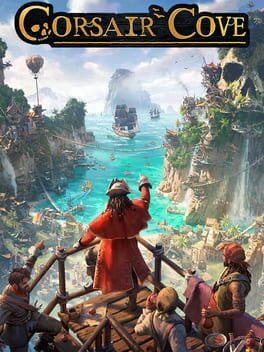
The defining mechanical idea is that Corsair Cove builds upward and around cliffs rather than across a broad flat map. Forbes reports that buildings such as pirate tents, galleys, and sawmills cling to rock faces, with some structures needing to sit near natural resources while much of the colony can be arranged within the limits of the terrain. Green Man Gaming describes settlements spanning cliff faces with housing, taverns, cannon foundries, storage, and rope walkways attached to the same vertical space.
That verticality is the main reason the Corsair Cove city builder pitch has teeth. In many management games, logistics eventually become a spreadsheet problem dressed as road planning: shorten routes, centralize storage, add workers, repeat. Corsair Cove appears to reframe that familiar loop as a three-dimensional routing puzzle. Green Man Gaming specifically cites ziplines, winches, tilted bridges, and other connections used to move raw materials and finished goods through the settlement.
The result, as reported across the sources, is a base that asks the player to think about elevation, access, resource adjacency, and throughput at the same time. That is a promising foundation for strategic depth because bad planning should have visible consequences. A sawmill placed near timber is useful only if its output can be moved efficiently to the next dependency. A cliffside storage area saves space only if the transport network feeding it does not become the bottleneck. The better Corsair Cove's late-game balance holds up, the more this layout model can sustain repeated play.
Production chains sound substantial, but pacing depends on friction
Forbes highlights intricate production chains and resource management as major parts of Corsair Cove's challenge, adding that the game demands careful planning. PC Gamer's verdict similarly points to compelling logistical conundrums, while its review setup describes a pirate colony that looks carefree on the surface, full of booze, dancing pigs, and ziplines, but takes effort to maintain.
That contrast is important. Corsair Cove's tone is playful, but the strategic appeal rests on whether the game forces interesting tradeoffs before the player has already solved its economy. The sources suggest it does. The cliff layout limits easy sprawl. Certain buildings have resource-placement requirements. Materials have to move through unconventional transport links. The population is framed less as orderly citizens and more as a rowdy pirate settlement with concerns such as plunder, rum, and hygiene, according to Green Man Gaming's preview.
For pacing, the most encouraging reported feature is the transition from settlement management to seafaring. Forbes says the game starts as a city builder but reveals extra depth after the first ship is built, letting players appoint a captain and sail to neighboring islands to complete missions and expand the story. That matters because management games often need a pressure valve. If Corsair Cove spends too long inside production-chain housekeeping, island missions can reset the player's attention. If those expeditions become mandatory errands with thin rewards, the rhythm could drag. Based on the cited coverage, the design appears aware of that risk and uses seafaring as both progression and relief.
Ships, captains, and the Technology Compass add long-term planning
The most relevant progression detail for strategy players is the Technology Compass, described by Green Man Gaming as a non-linear upgrade system with Wealth, Seafaring, Empire, and Notoriety paths. The same feature says investing in Seafaring can lead to stronger ship hulls, making vessels tougher in combat and allowing them to remain at sea longer for exploration and pillaging.
That is the kind of progression structure Corsair Cove needs if it wants replay value beyond a single charming campaign. Non-linear upgrades only become meaningful when specializations change the order of problems players solve. A Seafaring-heavy approach should ideally bring earlier reach, safer expeditions, and better mission tempo, while a Wealth or Empire direction should reshape internal production and settlement scaling. The source material confirms the categories and gives the Seafaring example, but it does not provide enough detail to judge the full balance between the branches.
Forbes' account of shipbuilding and captain appointments suggests the game has a second strategic layer outside the base. That layer is not purely deterministic, though. Forbes reports that ship combat uses a card and dice-roll system and says it can feel chance-dependent. For management fans, that is the sharpest caveat in the current material. Randomness can produce great stories when the player has tools to prepare, mitigate, or recover. It becomes frustrating when an optimized economy feeds ships into outcomes that feel too loosely connected to planning. Corsair Cove's long-term meta will likely hinge on how much agency those combat systems preserve once players understand the odds.
A playful pirate tone helps readability without erasing complexity
Corsair Cove's presentation seems to work because the sources describe a game that embraces fantasy rather than grim nautical realism. PC Gamer frames the premise as escaped prisoners beginning again on a deserted island dominated by a skull-shaped mountain and sheer cliffs, then building a colony where pirates drink, dance with pigs, and ride ziplines. Forbes calls the city building gorgeous, with detailed structures hanging off cliffs and linked by precarious rope bridges.
That matters for usability as much as style. Dense management games live or die by whether the player can read their own mistakes. A bright, exaggerated pirate settlement should make production states, movement paths, and crowded cliffside layouts easier to parse than a visually muddy colony sim. The available coverage does not include a detailed interface breakdown, so UI quality remains less firmly documented than the construction and progression systems.
There is also useful studio context. Green Man Gaming identifies Limbic Entertainment as the developer best known for Tropico 6. The comparison should not be overplayed because Corsair Cove's vertical construction and ship layer are its own pitch, but it does help explain the game's interest in unruly populations, island politics, and economy-first humor. Management players who enjoy a bit of chaos in their city builders are the most obvious fit. Players who want clean, austere optimization with minimal randomness may be more cautious, especially given Forbes' note about chance-driven ship combat.
PC readiness, Steam Deck signal, and the buy-or-wait call
The available platform information is narrower than many buyers will want. PC Gamer lists a Steam link and says the game was reviewed on an RTX 4090, Intel i9-13900K, and 32GB of RAM, while also marking Steam Deck as Playable. Those are useful signals, but they are not the same as broad performance data. A high-end desktop review setup cannot tell us how Corsair Cove behaves on midrange CPUs during a dense late-game settlement, and the provided source material does not include pricing.
For a Corsair Cove PC review aimed at management fans, the recommendation comes down to appetite for logistics complexity. The strongest supported case for buying at launch is the combination of vertical construction, transport routing, production chains, and an expedition layer that appears to keep the campaign from becoming a single-screen optimization exercise. PC Gamer's positive verdict and Forbes' praise both align on the idea that Corsair Cove has real strategic substance beneath its cheerful pirate surface.
The reason to wait is more specific. If you are highly sensitive to randomness in strategy games, Forbes' description of card-and-dice ship combat as sometimes chance-dependent is worth taking seriously. If you primarily play on Steam Deck or modest PC hardware, the Playable label is encouraging but incomplete without broader benchmarks. If your main concern is replay value, the Technology Compass and seafaring progression are promising, yet the cited sources do not fully establish how differently later runs play across Wealth, Seafaring, Empire, and Notoriety.
GameLoop's verdict: Corsair Cove looks like one of the rare pirate strategy games where the setting actively shapes the management loop. Its cliffside construction gives city planning a strong spatial identity, its logistics appear demanding enough for genre veterans, and its ships add an outward-facing progression track. The risk is that randomness and late-game balance may decide whether it becomes a long-term management staple or a memorable one-run city builder. On the current evidence, it earns a strong recommendation for players who enjoy production puzzles with personality.
Final Verdict
A solid gaming experience that delivers on its promises and provides hours of entertainment.