
Review

By Story Mode
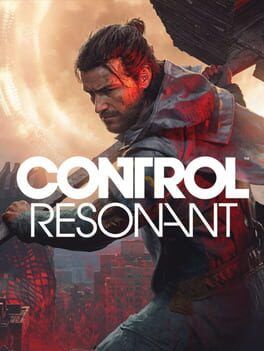
Image: IGDB
Store links: Control Resonant on Steam
A bigger sequel arrives with a clearer risk
Control Resonant launches on PC on September 24, 2026, according to PC Gamer’s review listing, with Remedy Entertainment named there as both developer and publisher and an expected price of $60 or £50. Rock Paper Shotgun also lists Control Resonant among the week’s PC releases and links to the Steam page, placing it on Thursday, September 24. That concrete release window matters because the conversation around the game is already unusually split: Remedy has made a larger, melee-driven follow-up to Control, but the very scale that gives Resonant its spectacle also threatens the focused unease that defined the original.
The strongest version of Control Resonant is a supernatural action game with enormous visual confidence. Across the source material, critics agree that Remedy’s Manhattan is full of striking paranormal imagery, warped vistas, and standout sequences. The tension is in the cost. GamesRadar calls the game gorgeous and praises some stunning sequences, but argues that repetitive combat and a world stretched too thin leave the investigation muddled. PC Gamer’s verdict is similarly mixed, describing a welcome return to Remedy’s hellscapes that spends too many hours in middling combat. GameSpot lands far more positively, calling it Remedy’s best gameplay experience and praising its buildcraft. For players searching “Control Resonant review” before buying, that split is the useful signal: this sequel delivers atmosphere, but whether it delivers rhythm depends on how much tolerance you have for open-city repetition.
Manhattan has scale, but the Oldest House had pressure
The confirmed setup, as described across GameSpot, PC Gamer, GamesRadar, and The Escapist, places Control Resonant seven years after the first game. The Oldest House remains connected to the Hiss crisis, Jesse Faden is absent or missing under unclear supernatural circumstances, and Dylan Faden becomes the reluctant operative sent into a Manhattan being reshaped by interdimensional forces. GameSpot frames Dylan as a former Hiss puppet offered a chance at redemption, while PC Gamer describes Jesse waking him from a seven-year coma before disappearing and leaving the Bureau desperate enough to rely on him.
That premise gives Resonant a clean dramatic hook: the city is broken, the Bureau is wounded, Jesse is gone, and Dylan is both weapon and liability. On paper, it is an ideal Remedy setup. In practice, the move from one impossible building to a fractured urban sprawl changes the emotional temperature. The Escapist’s review summary, drawing from Eurogamer’s review, argues that Manhattan blunts Control’s weirdness because threats and points of interest become visible across a larger map rather than discovered through suffocating architectural uncertainty. That is the central tradeoff. The Oldest House made the player distrust a hallway. Resonant makes the player survey a skyline.
That shift will work for some players. GameSpot calls the Manhattan setting stunning and unforgettable, and its praise suggests that Remedy’s strange visual language still cuts through the larger format. But as an action-adventure space, the city appears to be less consistently unsettling than the original’s sealed Bureau corridors. The supernatural imagery is there. The question is whether mystery survives when the game keeps pulling the camera back and asking you to manage a map.
The Aberrant gives combat a new identity
Control Resonant’s most decisive mechanical change is that it moves away from the first game’s third-person shooter center of gravity and into melee-focused action. GameSpot identifies Dylan’s main weapon as the Aberrant, a shape-shifting metal armament with multiple forms, including fast clubs, a slower sweeping scythe, and an intermediate form with bonus damage from behind enemies. GameSpot also reports a large upgrade tree, respec tokens, up to six special abilities equipped at a time, and tools such as shields, telekinetics, and friendly summons.
Those details make Control Resonant sound less like a direct continuation of Jesse’s launch-and-gun rhythm and closer to an action-RPG interpretation of Remedy combat. That is a meaningful choice. If the original Control made power feel elegant and dangerous, Resonant seems designed to make power feel editable. Builds can shift. Forms can be swapped. Dylan can become a different kind of combatant depending on the player’s choices.
The disagreement among critics comes from encounter pacing. GameSpot argues that the build variety and power climb are deeply satisfying, calling the combat a major breakthrough for Remedy. GamesRadar reaches almost the opposite conclusion, saying the combat encounter design becomes repetitive and is spread across too large a world. PC Gamer’s verdict supports the concern about duration, praising the return to Remedy’s strange spaces while criticizing the amount of middling combat. The fairest read is that Resonant’s combat system has stronger bones than its mission structure always knows how to use. Players who enjoy experimenting with builds may find the Aberrant rewarding. Players who want every fight to feel authored, tense, and narratively charged may feel the loop flatten long before the finale.
Pacing is where the sequel takes the hardest hit
For a supernatural action game, Control Resonant’s problem is not a lack of events. It is that too many events appear to compete for the same emotional space. The Escapist describes a marker-heavy Manhattan with world activities involving FBC rangers, cargo defense, worker protection, escort missions, and fetch quests. The same source notes that Remedy has apparently pushed back on calling the structure a traditional open world, but the practical concern remains the same for players: a larger explorable city brings the chores and interruptions that Control avoided by trapping the player inside a hostile institution.
This is where Resonant’s atmosphere and combat pacing pull against each other. A strange vista can stop you cold once. A repeating objective can turn that vista into scenery you jog through on the way to another marker. GamesRadar’s criticism that the game is spread thin lines up with The Escapist’s complaint about narrative sprawl, especially when the story reportedly sends Dylan into lesser errands after major revelations. In a mystery-driven game, that kind of delay can be fatal. Suspense needs compression. Resonant often appears to choose expansion.
That does not erase the set-piece strength. Multiple sources point to spectacular moments, and Remedy has a long history of building unforgettable sequences out of architecture, music, and metaphysical rules. But a strong set piece hits harder when the surrounding hours tighten around it. Resonant’s reported issue is that the city can act like padding between the moments players will remember.
Dylan Faden is a strong idea with an uneven role
Replacing Jesse Faden with Dylan is the sequel’s boldest narrative decision. The source material consistently frames him as a man marked by possession, confinement, guilt, and Bureau exploitation. The Escapist notes that Agent Zoe de Vera serves as a buffer between Dylan and an organization that treated him as a specimen during childhood. GameSpot emphasizes the redemption angle, with Dylan reluctantly given a chance after being blamed for past carnage. PC Gamer’s description makes the setup even harsher: the Bureau is relying on a man associated with the deaths of hundreds of its staff because Jesse is gone and Manhattan is collapsing.
That is fertile ground for a darker protagonist story. Dylan should bring friction to every room he enters. He is family, threat, victim, suspect, and emergency solution at once. Yet the critical response suggests the game does not always convert that tension into satisfying forward motion. GamesRadar’s verdict says Dylan is no Jesse, a blunt line but a useful one for expectation-setting. The issue is not that Dylan lacks story material. The issue is that a protagonist built around trauma, suspicion, and reluctant duty can be weakened when the game repeatedly sends him into routine open-map work.
For players invested in the Control mythology, Resonant still sounds important. Jesse’s absence, Dylan’s status, the Hiss breach, and Manhattan’s transformation all advance the fiction in substantial ways. For players who valued the original because every document, corridor, and office ritual seemed to tighten the same knot, Resonant’s looser structure may make the mystery feel less dangerous even when the lore itself grows bigger.
Control Resonant PC details and buying guidance
The confirmed PC information in the provided sources is straightforward. PC Gamer lists Control Resonant as a September 24, 2026 release, priced at $60 or £50, developed and published by Remedy Entertainment. Rock Paper Shotgun lists it as a PC release for the same week and links to the Steam page. PC Gamer also says its review was conducted on a GeForce RTX 4070 Super, Intel i7-14700K, and 32GB of DDR5 memory, although the excerpt provided does not include a detailed performance breakdown. Because the source material does not give minimum or recommended PC requirements, Steam Deck status, console availability, or a broad technical analysis, those questions remain outside what can be responsibly confirmed here.
As a buyer’s guide, Control Resonant PC looks safest for three groups: players who want Remedy’s universe to keep getting stranger, players who enjoy melee buildcraft, and players who can forgive open-world style repetition if the visual design and lore stay interesting. It is a riskier day-one purchase for anyone who primarily loved Control for its density, its oppressive indoor pacing, or Jesse’s particular presence as protagonist.
The divided critic response is useful rather than confusing. GameSpot’s praise suggests there is a version of Resonant that clicks hard if the Aberrant’s systems become your center of gravity. GamesRadar, PC Gamer, and The Escapist all signal that the larger structure can dull the mystery and overextend the combat. If your priority is atmosphere, Resonant appears to deliver striking supernatural imagery. If your priority is combat pacing, the warnings are loud enough to consider waiting for post-launch technical impressions, player consensus, or a sale.
Verdict: a beautiful fracture that cannot always hold its shape
Control Resonant is an ambitious follow-up with a fascinating lead switch, a visually arresting Manhattan, and a combat system that clearly tries to give Remedy action a new physical language. The Aberrant, as described by GameSpot, gives Dylan a flexible melee identity, and the city’s warped supernatural vistas sound capable of producing the kind of images that linger after the credits.
But the sequel’s biggest swing is also its biggest liability. By trading the Oldest House’s claustrophobic pressure for a broader city structure, Resonant risks making the uncanny feel scheduled. The mystery expands, yet the pacing loosens. The combat deepens, yet repeated encounters can sand down the excitement. Dylan’s story has sharper moral weight than a simple hero’s journey, yet he appears to spend too much of the game serving systems that do not always honor that weight.
For players asking whether Control Resonant delivers a strong supernatural action follow-up, the answer is qualified. It is strong in imagery, premise, and mechanical ambition. It is weaker in sustained tension and encounter rhythm. Remedy’s sequel still has the charge of a major paranormal event, but it sometimes lets the map explain the impossible before the mystery can take hold.
Final Verdict
A solid gaming experience that delivers on its promises and provides hours of entertainment.