
Review
By Big Brain
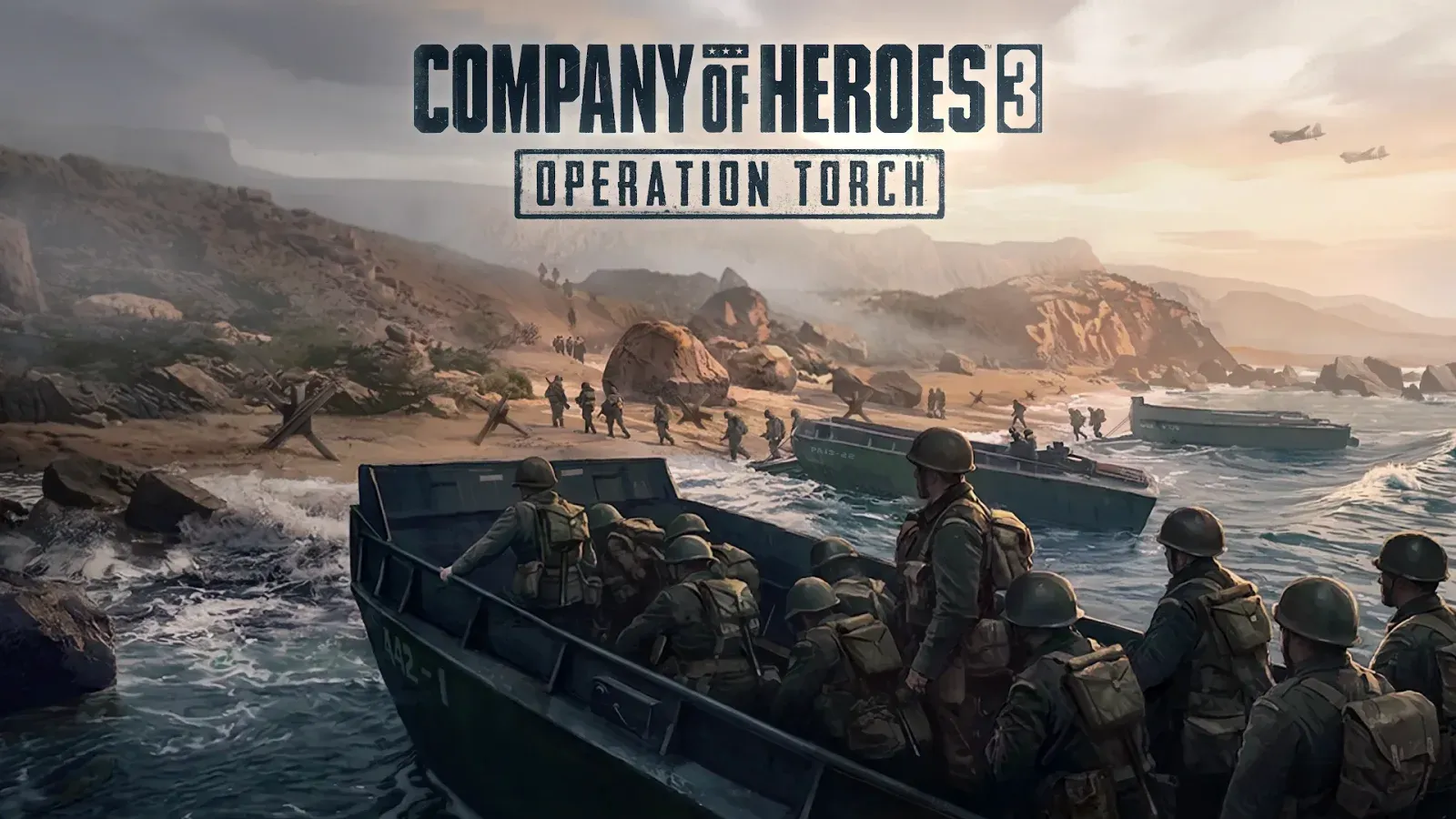
Image: kicksandgrips.com
A new North Africa campaign finally arrives, but the date trail is messy
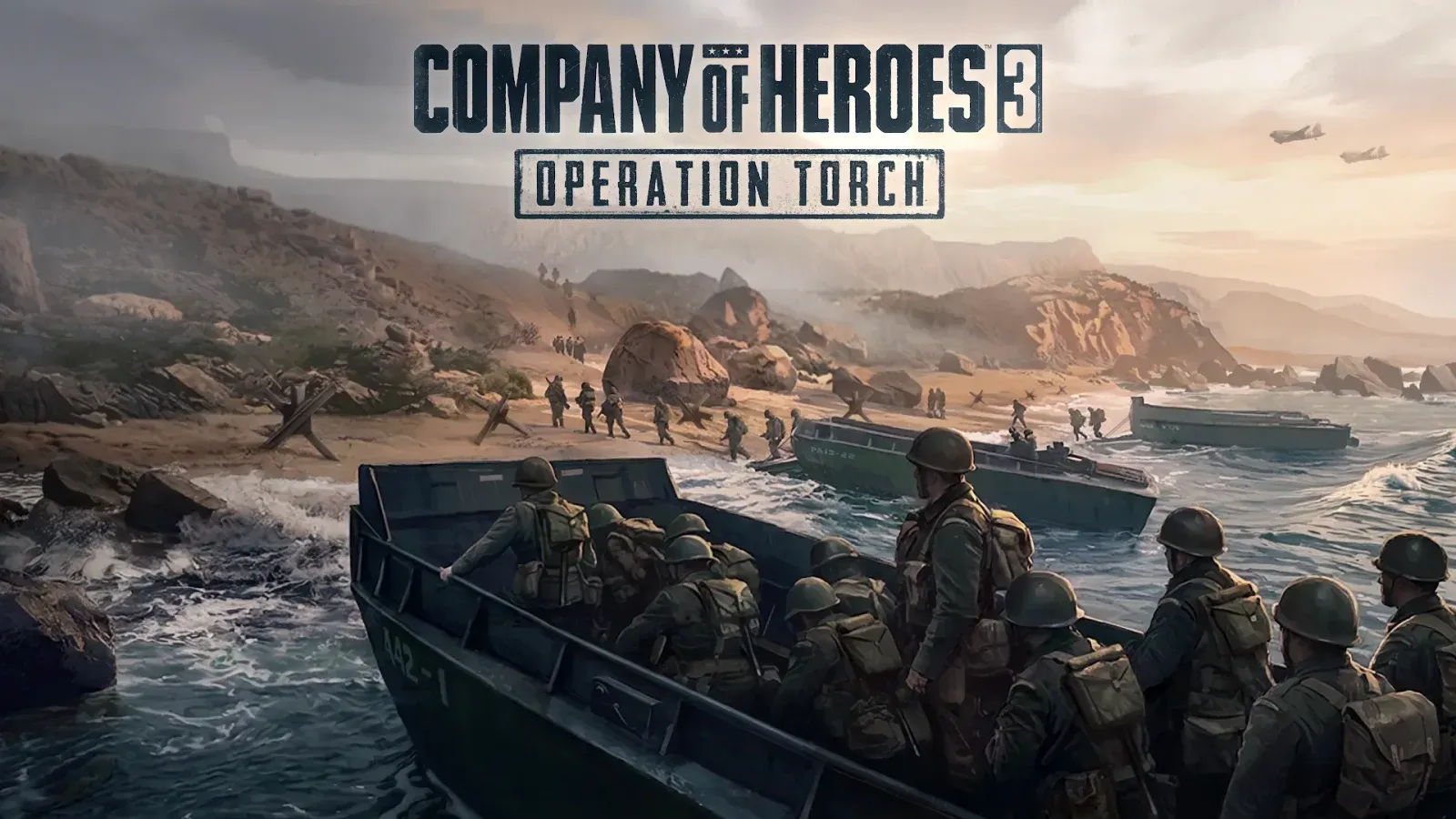
Company of Heroes 3: Operation Torch is the single-player campaign expansion many solo RTS players had been waiting for: a 15-mission North Africa DLC focused on U.S. forces fighting the German Afrika Korps. Rock Paper Shotgun describes it as a new campaign following two U.S. officers trying to break the Afrika Korps' hold on the region, while CGMagazine says it covers major Operation Torch beats from the U.S. landings through Kasserine and Hill 609.
That is the strongest pitch for this Company of Heroes 3 DLC. After earlier add-ons leaned into multiplayer rosters or alternative modes, Operation Torch gives the game a conventional scripted campaign again. HappyGamer also reports that the DLC is out now and puts players in command of U.S. forces during the Allied invasion of North Africa in World War II.
There is one practical complication: the provided sources conflict on release timing. CGMagazine lists the PC DLC release date as 11/23/2026. DualShockers' review was published on Nov. 24, 2026. 217GS, however, says Operation Torch released on Oct. 15, 2026. HappyGamer only says it is out now. Without an official storefront or publisher listing in the source pack, the safe conclusion is that Operation Torch is available according to contemporary coverage, but the exact release date is disputed by the sources here.
The platform picture is narrower. CGMagazine lists its review platform as PC, specifically Microsoft Windows. None of the provided source text confirms a console version for Operation Torch, pricing, system requirements, or upgrade entitlements, so buyers should verify those details on the storefront before purchasing.
The campaign has a clearer identity than Company of Heroes 3's earlier desert material
Operation Torch's best structural decision is perspective. CGMagazine notes that the DLC revisits the Mediterranean from an Allied-heavy point of view, in contrast to the base game's North African operation, which focused on the Axis Deutsches Afrikakorps. DualShockers says the campaign follows three American soldiers from the U.S. Army's 34th Infantry Division, moving from the landings in Algeria to the defeat of Axis resistance in Tunisia.
That matters for the campaign's rhythm. Operation Torch is about a force learning under pressure. DualShockers frames the historical setup as the U.S. Army's first major land fight against German and Italian forces, with green troops facing veteran enemies. CGMagazine similarly describes the player rebuilding and shaping the army into a more disciplined force across demanding tactical challenges.
As a campaign premise, that is strong material for Company of Heroes. The series is at its best when tactical competence has to be earned under collapsing conditions rather than assumed from the start. Operation Torch can stage retreats, beach assaults, narrow-pass engagements, supply problems, and desperate defensive stands inside a coherent theater. CGMagazine also says the campaign uses three command and field perspectives to add flavor, while avoiding some of the local-perspective issues it associates with the first North African campaign.
The writing appears functional rather than transformative. DualShockers calls the principal characters likeable and distinct, but also points to immersion-breaking tutorial-style dialogue late in the campaign, such as a commander reminding the player to defend fuel points because fuel is needed to build tanks. For veterans, that kind of line undercuts the fiction. For new or returning players, it may serve as a soft reintroduction to Company of Heroes 3's economy, but the sources suggest there is no confirmed option to disable that style of guidance.
The strongest missions understand pressure, attention, and limited control
Operation Torch can produce the right kind of Company of Heroes panic. Rock Paper Shotgun's clearest praise comes from a mission built around a retreat under German pressure. The player has to hold a front line with limited forces while driving a vulnerable supply truck between structures to evacuate crews. The danger is concrete: German troops slip past the line, and one anti-tank gun can potentially end the evacuation.
That is excellent RTS design on paper because it attacks the player's attention economy. You are not solving one clean tactical problem. You are triaging a front, babysitting a logistics unit, watching flanks, and deciding when to sacrifice ground. Company of Heroes has always thrived on those moments where the right move is not perfect control, but damage limitation.
CGMagazine also points to a narrow-pass mission that discouraged simply throwing tanks at the objective and pushed more deliberate staging. That kind of constraint is exactly what a campaign DLC should add for returning players. Multiplayer already tests build orders, counters, and timings. A campaign has license to create asymmetrical problems that bend normal habits: fewer resources, vulnerable units, awkward terrain, forced withdrawals, or objectives that make brute force inefficient.
There are signs of meta-aware experimentation too. CGMagazine says Operation Torch incorporates roguelite-style upgrade choices, sometimes asking the player to choose between one of two upgrades or two of four, each with intentional effects. That sounds inherited from Relic's recent Final Stand work, which CGMagazine says arrived with Update 3.0 and used roguelite upgrade mechanics in an RTS format. Used well, those choices can create light campaign builds, encouraging players to lean into stealth, armor, infantry sustain, or artillery over the 15-mission run.
The problem is that scripting and passive AI flatten too many tactical questions
The same mission that shows Operation Torch at its best also illustrates its ceiling. Rock Paper Shotgun says that after the evacuation phase, the player is ordered to pull back to a hill. The mission then shifts into a stealth sequence where two sniper squads enter town to kill German officers searching abandoned buildings for missed intelligence. On paper, that is a clever pivot from macro crisis management to small-unit infiltration. In execution, according to Rock Paper Shotgun, the player's weakened army sits on the hill without being pressured, while German units in town either stand still or move in simple patrol loops.
That creates the wrong kind of slowdown. A stealth segment in an RTS needs risk escalation: patrols tightening, reinforcements responding, a timer that bites, or enemy units that punish a botched shot. Rock Paper Shotgun reports that even when snipers come out of camouflage, shoot officers, and are spotted, they can walk away without German troops giving chase. The outlet allows that standard difficulty may be part of the issue, but also says the AI is oddly passive throughout Operation Torch.
For a returning Company of Heroes player, this is the central buying concern. Tactical variety is not measured by how many objective types a campaign presents. It is measured by whether the systems force different decisions. If a stealth phase, a defense, an evacuation, and a bombardment all resolve through predictable AI behavior, the campaign can look varied while playing narrower than advertised.
Rock Paper Shotgun's most damaging observation is the repeatability of a cheese tactic. The reviewer says they repeatedly placed a stealth-capable unit behind cover near enemies, ordered it not to fire, then used it as an invisible spotter for safe mortar fire. Because enemies often did not respond effectively, the same solution worked again and again. That is a balance and scripting failure in campaign terms. It lets players optimize the fun out of the mission, and in a strategy game, players will almost always take the reliable advantage unless the scenario pushes back.
Updates give the DLC a stronger technical base, but performance details are thin
Operation Torch benefits from arriving after Company of Heroes 3's broader update cycle. CGMagazine says the DLC builds on mechanics and technology from recent updates and DLC, specifically citing Update 3.0's visual improvements, photorealistic shading, weather changes, and sound adjustments. DualShockers likewise says Company of Heroes 3 has come a long way since its rough 2023 release and identifies Update 3.0 as a major step toward the game's potential.
That context matters because campaign DLC lives or dies on readability. Desert warfare can become visual noise if dust, vehicle silhouettes, cover states, and infantry positions do not read at a glance. Better lighting, weather, and sound can help sell North Africa as a place while also making battle states easier to parse. The source material does not provide frame-rate data, hardware specifications, loading times, or bug counts, so this review cannot make a firm technical-performance claim beyond the reported update improvements.
The design tradeoff is clearer than the performance picture. Operation Torch appears to have the presentation and mechanical foundation to support a proper scripted campaign. It has a historical arc, Allied-side framing, upgrade decisions, and missions that sometimes force careful staging. The weak link, as reported most sharply by Rock Paper Shotgun, is the campaign's ability to react when the player finds a dominant solution.
From a strategy perspective, that matters long term. RTS campaigns are replayed when mission rules interact with army progression in surprising ways. If stealth spotting plus indirect fire solves too many encounters, the upgrade layer risks becoming decorative. If higher difficulties make the AI more aggressive, that could change the experience, but the provided sources do not establish that difficulty fully fixes the issue.
Verdict: meaningful campaign content, uneven tactical resistance
Operation Torch gives Company of Heroes 3 something it needed: a focused, story-driven North Africa campaign from the Allied side. The 15-mission structure, the U.S. Army framing, the landings-to-Tunisia arc, and the use of campaign upgrades make it a meaningful addition for players who wanted solo content rather than another multiplayer-centric expansion. On that level, the Operation Torch DLC answers a real gap in Company of Heroes 3.
It is less convincing as a test for hardened RTS players. The best reported moments, especially evacuation and retreat scenarios, understand how to make Company of Heroes feel like battlefield management under stress. The weaker reported moments replace that stress with staged sequences where enemies wait, patrol predictably, or fail to punish obvious exploitation. A campaign can be scripted and still be dynamic. The problem is when the script becomes visible and the AI stops making the player adapt.
So the recommendation depends on what you need from a Company of Heroes 3 North Africa expansion. If you want a new Allied campaign, historical framing, and 15 missions to work through after the game's post-launch updates, Operation Torch is a worthwhile but imperfect return to single-player. If you are coming back mainly for demanding tactical variety, wait for difficulty impressions from players you trust, or a patch that addresses passive AI behavior if Relic identifies it as a problem.
Score: 6.5 out of 10. Operation Torch is a welcome campaign DLC with strong scenario ideas and a better perspective on the North African theater, but its tactical promise is held back by scripting, exploitable stealth spotting, and AI that reportedly too often lets the player dictate the fight without enough resistance.
Final Verdict
A solid gaming experience that delivers on its promises and provides hours of entertainment.