
Review
By Big Brain
A Rusty Cell, A Cruel Machine
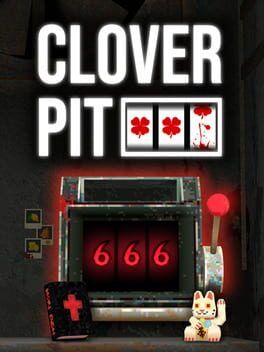
CloverPit’s pitch is brutally simple: you wake up in a cramped, grimy cell with a single way out, a slot machine that decides whether you inch toward freedom or drop into literal ruin. On Xbox Series X|S, that premise lands hard. The game looks like a lost PS2 experiment in psychological horror, all jagged geometry, sickly lighting, and analog fuzz, and that low-fi ugliness works in its favor. It sells the idea that someone built this machine in a basement, not a casino.
The question for this new console release is not whether the concept is clever. It is whether this roguelite slot-machine horror stays tense and varied over long sessions, and whether pulling the lever with a controller feels natural instead of clumsy. After several multi-hour runs on Series X, the answer is that CloverPit mostly pays out, even if the house still wins a little too often.
Roguelite Structure Built Around The Reels
Each run starts the same. You owe a debt and a cold, unseen captor wants payment. The only resource that matters is what the machine spits out when you pull the lever. Spins generate cash, modifiers, hazards, and strange events that twist the rules. Between spins you can walk around your tiny environment, buy short-term boosts or safety nets, and try to mitigate the machine’s cruelty.
The roguelite layer comes from the way spins unlock new reel symbols and meta-progression. As you survive longer sessions or suffer particularly gruesome failures, fresh modifiers and new machine states are added to the pool. Over time, the reels grow denser with wild symbols, cursed icons that raise stakes in exchange for better payouts, and bizarre event tiles that temporarily change how the machine works. That evolving pool gives CloverPit its long tail. A three-hour session on Xbox never feels like a simple loop of pull, lose, repeat. Instead, you begin to recognize patterns, build risk thresholds in your head, and aim for specific combinations the way a deckbuilder pushes toward a certain synergy.
Run variety is better than it first appears. Early on, the reels feel bare and outcomes straightforward. A few hours in, you are juggling status effects, ticking time bombs on the grid, and conditional payouts that only trigger if you dare to stack enough danger on the board. There are clear "builds" to chase, from ultra-conservative safety play that focuses on staying above ruin, to high-volatility setups where a single miracle spin can wipe your debt. The game is at its best when a run snowballs into something you clearly engineered, even if it all comes crashing down due to one greedy pull.
The downside is that in long sessions you start to feel the limits of the symbol pool. Certain events repeat too often and specific optimal lines of play become obvious. Once you know which modifiers are almost always good and which are almost always bait, the psychological tension of gambling shifts into a more standard roguelite calculus. The game still has teeth, but the initial feeling of staring into unknowable odds softens.
Gambling As Horror Over Hours
Where CloverPit really shines is in how it uses gambling logic as horror fuel. Every lever pull is a tiny act of self-harm you talk yourself into. Audio design on Xbox sells that with unsettling mechanical clanks, wet thuds when hazards trigger, and a reel spin sound that grinds just a little too long. The controller rumbles in short, sharp bursts that mimic a faulty motor, keeping you on edge.
Over multi-hour sessions, the repetition of that sound and motion becomes oppressive in a deliberate way. The cell never truly changes and there is almost nothing to distract you from the machine. That makes even minor variations in lighting, incidental whispers, or environmental glitches feel significant. On Series X|S, the game holds a steady frame rate and loads briskly between attempts, which paradoxically amplifies the dread. There is never much downtime to catch your breath. You crash, reset, and the machine is right there waiting, demanding another attempt.
Importantly, CloverPit does not glamorize the gambling fantasy. There are no triumphant casino jingles or flashy win screens. Big payouts feel uncanny, like the machine is luring you into overextending. Failures are abrupt and humiliating. When a run ends because you misread a modifier or chased one more high-risk spin, the camera lingers on the aftermath just long enough to make you question why you pulled again. That slow psychological erosion holds up surprisingly well in a five-hour binge, though players looking for traditional horror set pieces or heavy narrative will find the experience sparse.
Controller Tuning On Xbox
Given that CloverPit started life on mouse-friendly platforms, controller tuning is vital, and the Xbox version does competent work here. Moving between interactable points in the cell is snappy, snapping the reticle to key objects so you are not wrestling with finicky positioning. Interacting with the machine, reviewing modifiers, and confirming spins are all mapped logically to the face buttons and triggers.
The reel interface, which demands frequent reading of small icons and tooltips, is the one area where the port shows its origins. On a large TV the default font and icon size can be a strain while sitting back at couch distance, and hovering over symbols with an analog stick is noticeably slower than mousing over them. There are accessibility toggles to bump text size but not enough granularity for visual comfort. If you settle into a long marathon on Series X or Series S, this low-level friction adds up.
That said, the physicality of pulling spins on a controller is satisfying in a way clicking a mouse is not. Binding the main spin to the right trigger, complete with a firm rumble, helps sell the fantasy that you are physically yanking a stubborn lever. Quick-cast shortcuts for common actions keep later runs flowing quickly. Once you internalize the button layout, muscle memory takes over and the machine’s loop becomes pleasantly automatic, which reinforces the theme of compulsive play.
Performance, Atmosphere, And The Long Haul
Technically, CloverPit is not doing anything that should stress modern hardware, and the Xbox Series X|S ports run accordingly well. Load times between runs are near-instant, crashes are rare, and the grime-coated visuals render cleanly at higher resolutions. The intentionally ugly art direction, with smeared textures and harsh lighting, maintains its charm on a big screen. It looks like a horror game that might have been banned from your local rental shop in 2003, and that throwback flavor never really gets old.
From an atmospheric standpoint, the game holds up for multi-hour stretches by leaning into monotony. The cell is your entire world. The only real variance comes from the machine’s behavior and the small environmental reactions it triggers. If you are the type of player who needs constant new backdrops and explicit story beats, CloverPit will start to feel like solitary confinement. For everyone else, that focused repetition reads as a thematic strength. It mirrors the way real gambling addiction compresses a person’s world into a single glowing screen.
Over time, though, the lack of broad structural surprises becomes noticeable. There are new reel types to unlock and escalating layers of modifiers, but the overarching loop of sit, spin, suffer, repeat rarely shifts. Xbox players coming in expecting massive updates or console-exclusive flourishes will not find them. What is here is faithful, tight, and mostly well tuned, but it is clearly designed as a compact, systems-first experience rather than a sprawling roguelite epic.
Verdict
CloverPit on Xbox Series X|S is a grim little machine that pays out in tension, not content volume. Its fusion of roguelite structure, slot-machine randomness, and psychological horror is sharp enough to stay compelling over long sessions, especially if you enjoy systems-heavy games where risk management is the real antagonist. Controller tuning is good, if not perfect, and performance on console keeps the loop fast and relentless.
The downsides are real. Symbol variety eventually hits a ceiling, some interface elements are not ideally adapted for couch play, and the narrow setting will bore players who crave constant novelty. Yet even with those caveats, CloverPit sticks in the mind. Few games make you feel this complicit in your own downfall every time you press a button.
On Xbox, the house still wins, but losing has rarely felt this thematically satisfying.
Score: 8/10
Final Verdict
A solid gaming experience that delivers on its promises and provides hours of entertainment.